

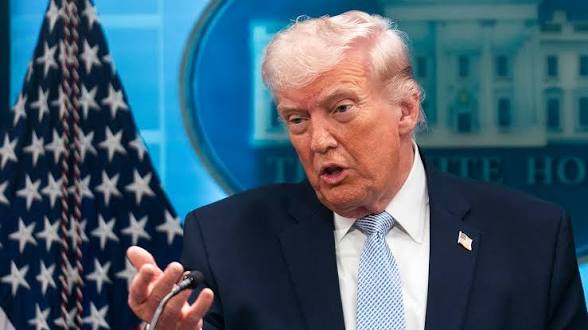
The global political and economic landscape has been shaken following a bold announcement by Donald Trump, declaring that any country supplying military weapons to Iran will face an immediate 50 percent tariff on all goods exported to the United States.
This move marks one of the most aggressive uses of trade policy as a geopolitical weapon in recent history. It blends economic pressure with foreign policy strategy, sending a strong warning not only to Iran but also to its global partners.
This article explores everything you need to know about this development, including the background, implications, global reactions, and what it means for international trade moving forward.
Understanding the Announcement and Its Immediate Impact
The announcement was made via a public statement where Trump emphasized that the tariffs would take effect immediately and apply universally to any country found supplying weapons to Iran. He made it clear that there would be no exemptions or special considerations.
Get TikTok SEO Cheat here
This means that:
- Any nation exporting military equipment or related components to Iran could face steep economic penalties
- All goods from such countries entering the United States market would be taxed at a 50 percent rate
- The policy applies broadly and is designed to act as a deterrent rather than just a punishment
This type of policy is often referred to as a secondary tariff, where a country is penalized not for its direct actions toward the United States, but for its dealings with another nation.
The Geopolitical Context Behind the Decision
The announcement did not occur in isolation. It is deeply tied to ongoing tensions involving Iran, including military confrontations and diplomatic negotiations.
Recent developments include:
- A temporary ceasefire agreement between the United States and Iran after weeks of escalating conflict
- Ongoing concerns about Iran’s military capabilities and regional influence
- Renewed global focus on Iran’s nuclear ambitions and defense partnerships
Trump’s tariff threat appears to serve multiple purposes:
- To discourage countries from strengthening Iran’s military capacity
- To apply indirect pressure on Iran by targeting its supply chain
- To reinforce the United States’ position as a dominant force in global security policy
Which Countries Could Be Affected
Although no specific countries were officially named in the initial announcement, analysts and global observers have pointed to major powers such as:
- China
- Russia
These nations have historically had defense or technological ties with Iran. Reports suggest that they may have provided components or support related to drones, missiles, and other military technologies.
The implications are significant because:
- China has massive export volumes to the United States, meaning tariffs could disrupt global supply chains
- Russia, while trading less with the US, remains strategically important in military cooperation with Iran
How the 50 Percent Tariff Works
To understand the scale of this policy, it is important to break down how tariffs function in international trade.
A tariff is essentially a tax imposed on imported goods. In this case:
- If a country exports goods worth one billion dollars to the United States
- A 50 percent tariff would add an additional five hundred million dollars in costs
This increase would likely:
- Raise prices for American consumers
- Reduce demand for foreign goods
- Force exporting countries to reconsider their trade relationships
Read More On:
Economic Implications for Global Trade
This move could have wide ranging consequences for the global economy.
1. Disruption of Supply Chains
Countries like China supply a vast range of products to the United States, including electronics, machinery, and consumer goods.
If tariffs are enforced:
- Prices of everyday products could rise sharply
- Businesses may shift sourcing to alternative countries
- Global trade routes could be restructured
2. Pressure on Emerging Markets
Developing countries that rely on trade with both the US and Iran may face difficult choices:
- Continue trading with Iran and risk tariffs
- Or cut ties with Iran to maintain access to the US market
3. Market Volatility
Financial markets often react quickly to geopolitical shocks.
Following the ceasefire and related announcements:
- Oil prices experienced sharp movements
- Stock markets showed volatility due to uncertainty
Legal and Policy Challenges
Despite the boldness of the announcement, there are legal questions surrounding its implementation.
Earlier rulings by the United States Supreme Court have limited the executive branch’s ability to impose sweeping tariffs under certain emergency powers.
This means:
- The administration may need to rely on alternative trade laws
- Implementation could face legal challenges
- Enforcement may vary depending on how “military weapons” are defined
Strategic Purpose Behind the Tariffs
Beyond economics, this policy is clearly strategic.
It aims to:
- Isolate Iran from international military support
- Use economic leverage instead of direct military escalation
- Send a strong signal to global powers about US foreign policy priorities
This approach reflects a broader shift toward economic statecraft, where financial tools are used as instruments of diplomacy and conflict management.
Read More On:
Potential Global Reactions
The international response is expected to be mixed.
Supportive Reactions
- Allies concerned about Iran’s military activities may view the move as necessary
- Some countries may comply to avoid economic penalties
Opposition and Concerns
- Countries targeted by the tariffs may retaliate with their own trade measures
- Global trade organizations could raise concerns about fairness and legality
- Economists warn about long term instability in global markets
Impact on the United States Economy
While the policy is aimed at foreign nations, it could also affect the US economy.
Possible Benefits
- Increased domestic production as imports become more expensive
- Strengthened geopolitical influence
Possible Downsides
- Higher costs for consumers
- Strained relationships with major trading partners
- Risk of trade wars that could harm exports
The Bigger Picture: Trade as a Weapon
This announcement highlights a growing trend in global politics where trade is no longer just about economics.
It is now:
- A tool for enforcing foreign policy
- A method of applying pressure without direct conflict
- A way to shape global alliances and rivalries
The concept of secondary tariffs is becoming more common, signaling a new era where economic policies are deeply intertwined with security strategies.
What Happens Next
Several key developments are expected in the coming weeks:
- Clarification on which countries will be targeted
- Legal and regulatory frameworks for enforcing the tariffs
- Reactions from global markets and governments
- Possible negotiations or diplomatic engagements to ease tensions
The situation remains fluid, and its full impact will depend on how aggressively the policy is implemented.
Conclusion
The announcement of a 50 percent tariff on countries supplying weapons to Iran represents a major turning point in global trade and geopolitics.
It is not just a policy decision. It is a strategic move that combines economic power with international diplomacy.
For businesses, governments, and everyday consumers, the ripple effects could be far reaching. From rising prices to shifting alliances, the world is entering a new phase where trade decisions carry significant geopolitical weight.