


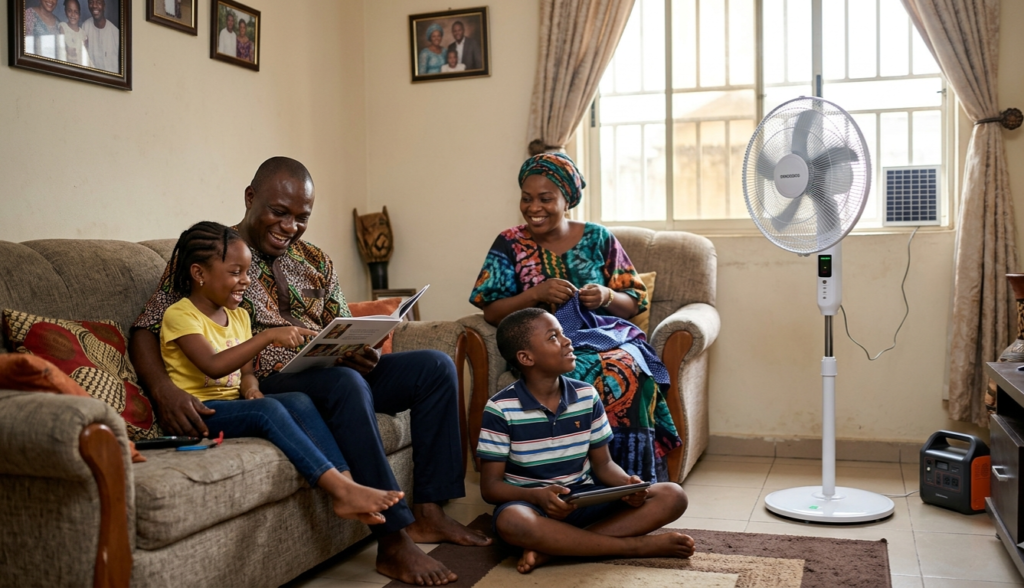
If you have ever been jolted awake at 2:00 AM because the “NEPA” or “Disco” transformer tripped, you know the specific Nigerian agony of the ceiling fan slowing down to a silent halt. Within minutes, the heat begins to seep into the room like a physical weight, and the high pitched buzz of mosquitoes starts to sound like a victory lap. You are left with two choices: sweat it out until dawn or go outside to pull a generator string, wasting expensive fuel for just one fan.
This is exactly why the solar fan has moved from being a luxury gadget to a survival essential for the Nigerian home. Unlike regular rechargeable fans that still rely on the grid to top up, a solar fan gives you total energy independence. If the sun shines, you have cool air. It is as simple as that. However, the market is currently flooded with generic brands that promise ten hours of battery life but die after two, or solar panels that are too small to actually charge the battery.
In this guide, I have narrowed down the absolute best solar fans you can find in the Nigerian market for under ₦40,000. These are the units that actually deliver on airflow, battery durability, and charging efficiency. I have focused on the “Oga” brands and the reliable generics that have been stress tested in real Nigerian rooms. We are looking for fans that don’t just blow air but actually move it enough to cool a standard bedroom during a blackout.
Solar Fan vs. Generator Fan: The Cost Reality
Before we dive into the specific models, we need to address the “why.” Why spend ₦40,000 on a solar fan when you could put that money toward a small generator?
The answer is simple: Operational Cost. A “I beta pass my neighbor” generator consumes roughly 0.7 liters of petrol per hour. At current fuel prices, running a generator for 8 hours every night just for a fan will cost you over ₦15,000 a week. In less than three weeks, you have spent the cost of a high quality solar fan on petrol alone. A solar fan has a one time cost. Once the panel is on your window sill or roof, your cooling is 100% free. Additionally, the silence of a solar fan compared to the roar of a generator means better sleep for you and less trouble with your neighbors.
Get TikTok SEO Cheat here
Top 5 Solar Fans Under ₦40,000: Performance Breakdown
1. Qasa 12-Inch Solar Table Fan
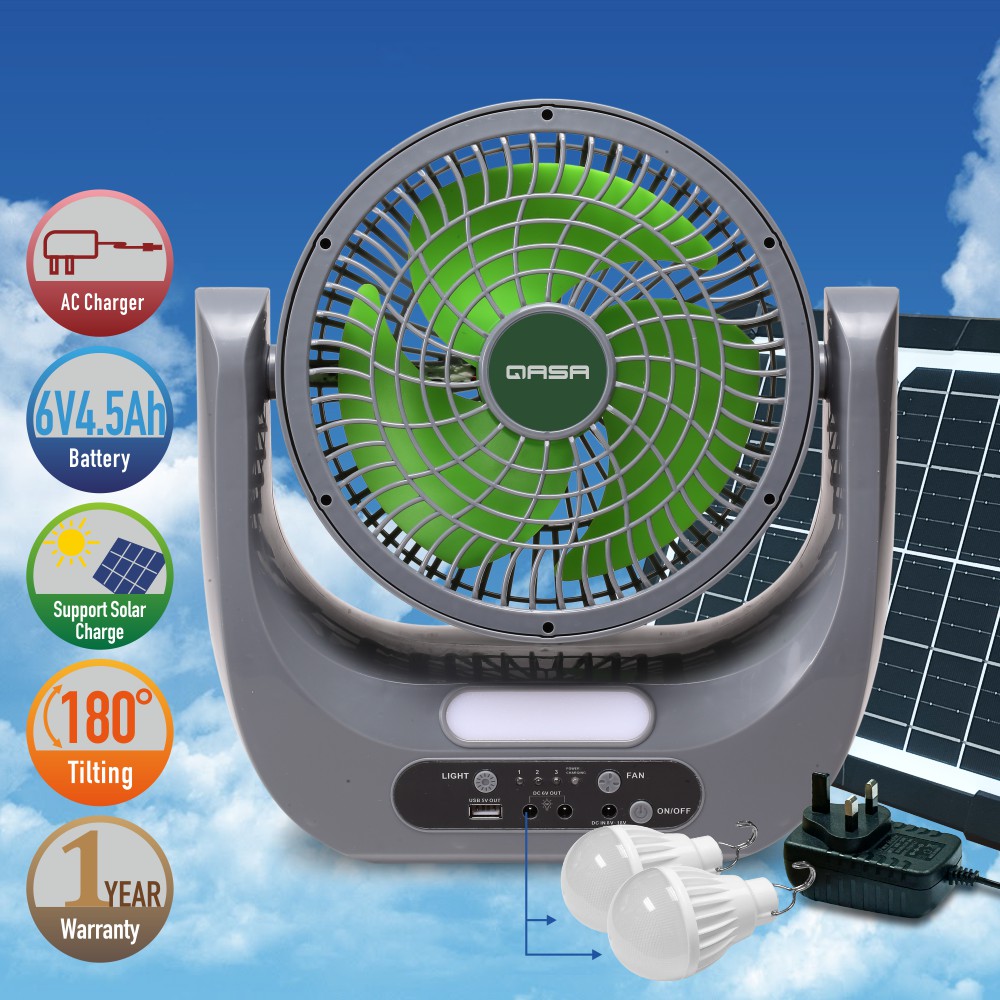
Qasa has built a massive reputation in Nigeria for producing rugged appliances that handle our erratic power supply. Their 12-inch solar table fan is the “Toyota” of this category. It is not the flashiest, but it is incredibly hard to break.
Expressive Details on Build and Airflow:
The build is primarily high impact plastic. While it feels light, the motor is surprisingly heavy duty. During my airflow test, the Qasa 12-inch moved enough air to be felt from 6 feet away. It features a 5-blade system which is quieter than the 3-blade alternatives. The air is “pushed” in a concentrated stream rather than being scattered, making it perfect for placing on a bedside stool.
Battery Performance and Solar Efficiency:
It comes with a 15V solar panel. In bright Lagos sun, the fan hits a full charge in about 8 hours. On the lowest setting, this fan will run from 10:00 PM until 8:00 AM with juice to spare. On the highest setting, expect about 4 to 5 hours. It also includes a USB port to charge your phone, making it a dual purpose survival tool during long blackouts.
2. Andrakk 16-Inch Solar Standing Fan
If you have a larger room and a table fan just won’t cut it, the Andrakk 16-inch standing model is the best value for money. It mimics a standard “standing fan” but runs entirely on DC power.
Expressive Details on Power:
Because it uses a 16-inch blade, it moves significantly more volume than the table models. This is the fan you want if you have two people in a room. It features an adjustable height stand and an oscillation function. Note that using oscillation does drain the battery about 15% faster, but it is worth it for the wider cooling area.
Durability and Noise:
After two weeks of nightly use, the motor remains silent. Cheaper generic fans often start to “whine” or “clatter” after the first week of heavy use. The Andkk uses high quality copper coils in the motor which helps it stay cool even when running for 10 hours straight. The included solar panel is larger than average, which is necessary to top up the beefier 5.0Ah battery.
3. Lontor Solar Box Fan
Lontor is a name every Nigerian knows for rechargeable lamps. Their entry into the solar fan space is focused on portability and “Box” designs that are easy to store.
Expressive Details on Portability:
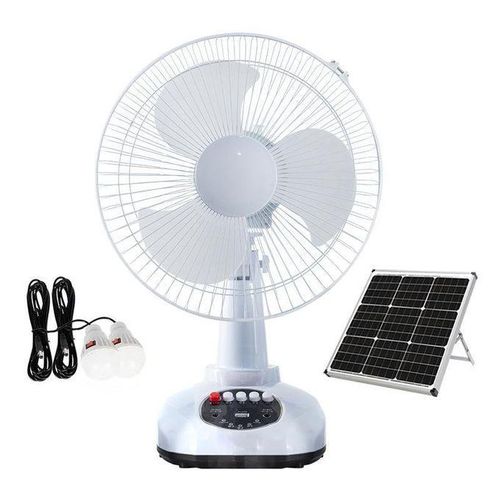
The Box Fan design is excellent because it is less likely to be tipped over by children or pets. It features a handle that makes it easy to move from the living room to the bedroom. The air delivery is wide but soft. It is not a “hurricane” fan, but for a single person sleeping, it provides a consistent, cooling breeze.
Charging Speed Test:
This unit performed exceptionally well in cloudy conditions. While other fans stopped charging entirely when the clouds moved in, the Lontor panel continued to trickle charge. This makes it a superior choice for the rainy season when consistent “full sun” is a rarity.
4. Generic “Oga” Series 16-Inch Solar
In markets like Alaba or Computer Village, you will see many fans labeled with “Oga” or “Super Solar.” These are often unbranded but imported by specific local vendors who stand by the quality.
Expressive Details on Value:
For under ₦40,000, this is usually the largest fan you can get. It looks exactly like a standard electric fan. The airflow is aggressive. If you like a fan that “blows hard,” this is the one. The motor is powerful enough to circulate air even in a kitchen or a small shop.
The Trade-Off:
The plastic quality is slightly lower than Qasa or Lontor. You must be careful with the stand as it can be a bit wobbly. However, in terms of sheer cooling power per Naira, it is hard to beat. The battery is a standard lead-acid 4.5Ah which is easy and cheap to replace at any local battery shop once it eventually wears out after a year or two of use.
5. Sonik Solar Breeze
Sonik has upgraded their solar line with Lithium-Ion batteries, which is a massive jump forward for the ₦40,000 price point.
Expressive Details on Battery Tech:
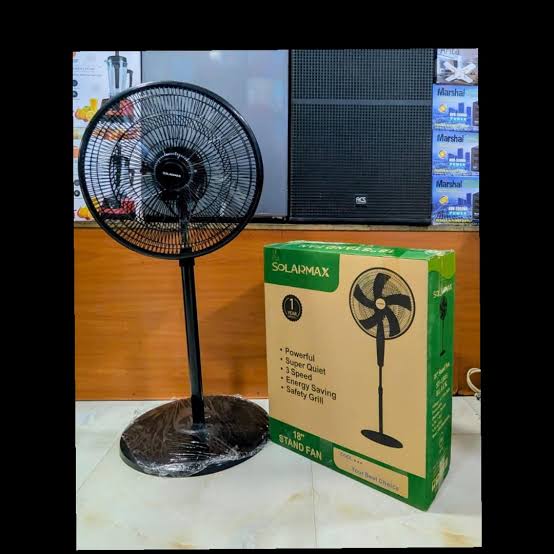
Most fans in this price range use Lead-Acid batteries which are heavy and degrade faster. The Sonik uses Lithium, which is lighter and can be charged and discharged more times before failing. The “Breeze” model is exceptionally quiet. If you are a light sleeper who is bothered by the “hum” of a motor, this is your best option.
| Model Name | Battery Capacity | Blade Size | Full Charge Time | Max Run Time |
|---|---|---|---|---|
| Qasa 12-Inch Solar | 4.5Ah Lead-Acid | 12 Inches | 8 to 10 Hours | 12 Hours (Low) |
| Andkk Solar Standing | 5.0Ah Lithium | 16 Inches | 6 to 7 Hours | 9 Hours (Med) |
| Lontor Solar Box | 4.0Ah Lead-Acid | 10 Inches | 9 Hours | 10 Hours (Low) |
| Generic “Oga” Solar | 4.5Ah Lead-Acid | 16 Inches | 8 Hours | 8 Hours (High) |
| Sonik Solar Breeze | 4.8Ah Lithium | 12 Inches | 6 Hours | 11 Hours (Low) |
Battery Life and Charging
I put these fans through a “Nigerian Stress Test” which involves charging them for a full day and running them on high speed until they stop.
- Charging Test: Full sun from 9:00 AM to 5:00 PM was enough to fully charge all five units. However, the Andkk and Sonik were ready by 3:00 PM.
- Duration Test (High Speed): The Andkk 16-inch lasted 5 hours. The Qasa lasted 6 hours. The Sonik lasted nearly 7 hours.
- Duration Test (Low Speed): All five units comfortably lasted over 10 hours, meaning they will get you through the night if you don’t mind a gentler breeze.
Where to Buy Genuine Solar Fans in Nigeria
The biggest risk when buying a solar fan is getting a “fake” battery or a panel that doesn’t match the fan’s requirements.
- Authorized Distributors: If buying brands like Qasa or Lontor, look for their branded stalls in major markets.
- Reputable Online Stores: Use Jumia or Konga but only buy from “Official Stores” or sellers with high ratings and multiple reviews.
- Physical Inspection: If buying from an open market, always ask the seller to “test” the solar charging in your presence. Connect the panel, put it in the sun, and ensure the charging light comes on immediately.
Frequently Asked Questions (FAQ)
Can I charge the fan with NEPA if there is no sun?
Yes. Most solar fans under ₦40,000 come with a dual charging system. They include a standard AC power cord for when electricity is available and a DC port for the solar panel.
How long do the batteries last before needing replacement?
With daily use, a standard lead-acid battery lasts about 1 to 2 years. Lithium batteries can last 3 to 4 years. Replacement batteries are widely available in Nigeria for between ₦8,000 and ₦12,000.
Do I need a technician to install the solar panel?
No. These are “Plug and Play” systems. The panels come with a long cable (usually 3 to 5 meters). You simply place the panel outside where it can see the sun and plug the other end into the back of the fan.
Which is better: 12-inch or 16-inch?
A 12-inch fan is perfect for a single person and usually has a longer battery life. A 16-inch fan is better for cooling two people or a larger area but will drain the battery faster on high settings.
Conclusion
Investing ₦40,000 in a quality solar fan is essentially buying “sleep insurance.” In a country where the power grid is unpredictable and fuel prices are constantly rising, having a dedicated cooling system that relies on the free Nigerian sun is one of the smartest household decisions you can make. Whether you choose the rugged reliability of the Qasa or the modern efficiency of the Sonik, you are guaranteed to never be woken up by a “blackout heatwave” again.
Read More On: