


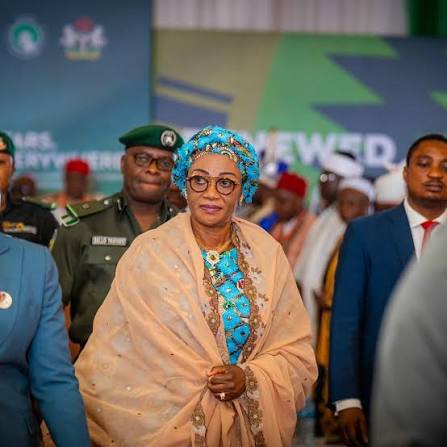
Nigeria’s approach to social welfare and philanthropy entered a new phase on Thursday, April 2, 2026, with the official launch of the National Community Food Bank Programme in Abuja.
The initiative, championed by Oluremi Tinubu through her Renewed Hope Initiative, brought together an extraordinary coalition of public and private sector leaders. The event marked one of the most ambitious hunger relief efforts in the country’s recent history, with pledges exceeding thirty point five billion naira. Total commitments are reported to have crossed sixty five billion naira.
Held at the State House Conference Centre, the launch attracted top business leaders, senior government officials, and political figures. The scale of participation and the volume of financial commitments signaled a shared urgency to address food insecurity and child malnutrition across the nation.
A Detailed Look at the Contributions
The success of the programme at launch was largely driven by major financial and material commitments from key institutions and individuals. These contributions are structured to support the initiative over several years, ensuring continuity and impact.
Get TikTok SEO Cheat here
Major contributors include:
- Aliko Dangote Foundation
Represented by Zouera Youssoufou, the foundation committed twenty billion naira in kind over a period of five years. The focus of this contribution is the supply of fortified and nutrient rich food products designed to combat malnutrition in young children. Special attention will be given to children below the age of six, a group considered highly vulnerable to stunting. - NNPC Limited
The national oil company pledged ten billion naira to be released over five years. According to its representative, Sofia Mbakwe, the funding will support logistics and infrastructure. This includes storage systems, transportation networks, and operational facilities required to keep the food banks running efficiently. - Nigeria Governors’ Forum
Led by Abdulrahman AbdulRazaq, the forum pledged the cooperation of all thirty six state governors. In addition to political backing, state governments are expected to provide counterpart funding. This ensures that the programme reaches communities at the grassroots level in every part of the country. - Other notable contributions
- Sir Emeka Offor Foundation committed five hundred million naira as an upfront donation.
- Anonymous donors contributed five hundred thousand dollars, equivalent to about seven hundred and fifty million naira, to support early operations.
- Association of Local Governments of Nigeria pledged to oversee implementation at the local government level, ensuring that the programme is effectively managed within communities.
Strategic Vision Behind the Programme
During the launch, Senator Oluremi Tinubu made it clear that the initiative is not designed as a temporary relief measure. Instead, it is structured as a long term and sustainable intervention aimed at addressing systemic issues.
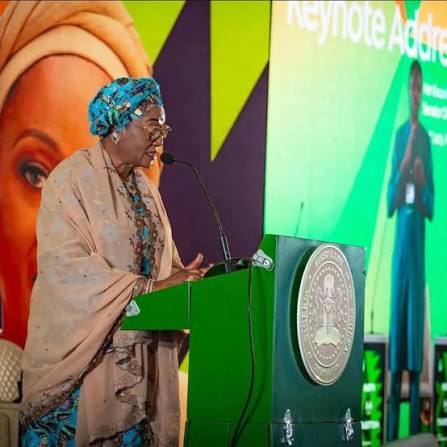
The programme is built around three core objectives:
Read More On:
- How To Use Limewash to Create a Soft and Textured Interior
- Nigeria Faces Inflation Uncertainty Despite Recent Economic Gains.
- How To Smarter Living in 2026: The Systems Changing How We Work and Live
- “Admin Night” Productivity: How to Turn Boring Chores into High-Focus Power Sessions
- Naira vs Dollar: A Steadier Finish to Q1 in the Cardoso Era
1. Addressing the crisis of malnutrition
The First Lady described child malnutrition as a pressing national emergency. She emphasized the importance of proper nutrition during the first one thousand days of a child’s life, a period that is critical for physical growth and brain development.
The programme will prioritize support for:
- Pregnant women
- Nursing mothers
- Children under six years of age
- Low income households
- Persons living with disabilities
2. Partnership with Bank of Agriculture
To ensure efficiency and accountability, the initiative is working closely with the Bank of Agriculture. This partnership is designed to create a seamless link between farmers and the food bank system.
Key benefits of this integration include:
- Reduction in post harvest losses
- Reliable sourcing of locally produced food
- Improved distribution channels from farms to communities
3. The “Every Home a Garden” initiative
The food bank programme is connected to a broader vision of self sufficiency through the “Every Home a Garden” project. While the food banks provide immediate support, households are encouraged to grow their own food.
This approach aims to:
- Promote small scale farming in both urban and rural areas
- Reduce dependency on external food sources
- Empower families to sustain themselves over time
Read More On:
- Redmi Note 15 SE: The Smartphone That Redefines Affordable Excellence
- Nigeria Releases Oil and Gas Reserves Data with Fresh Insights
- Lenovo Legion 5i Gen 10: The Mid Range Champion
- The Complete Guide to Nigerian Network Updates for Data and Airtime in 2026
- No Resignation: Adebayo Adelabu Dismisses Viral Claims
How the Food Bank System Will Function
According to the Minister of Agriculture, Abubakar Kyari, the programme represents a shift from emergency response to a structured national system.
The operational framework includes:
- Community based procurement
Food will be sourced directly from local farmers within communities. This ensures freshness while also supporting local economies. - Board of Trustees oversight
A dedicated Board of Trustees has been established to manage the funds and operations. This is intended to ensure transparency and prevent political interference. - Nationwide expansion plan
The programme is already active in twenty four states, including recent expansion into Taraba. The long term goal is to establish functional food banks in all seven hundred and seventy four local government areas across Nigeria.
Why This Initiative Is Timely
The launch of the programme comes at a critical moment in Nigeria’s economic journey. Ongoing reforms have contributed to an increase in the cost of living, placing additional pressure on households.
By securing multi year commitments from major players such as the Aliko Dangote Foundation and NNPC Limited, the initiative creates a financial buffer that operates independently of annual government budgets.
During the event, Muhammad Ali Pate highlighted the importance of nutrition in national development:
“Health does not begin in hospitals; it begins in our homes and in our communities with adequate nutrition.”
Final Assessment
The more than thirty point five billion naira pledged at launch represents one of the most significant collaborations between the public and private sectors in Nigeria’s social welfare space.
If managed with the level of transparency and accountability promised by the Board of Trustees, the National Community Food Bank Programme has the potential to reshape how the country addresses hunger and malnutrition.
Beyond immediate relief, it offers a pathway toward long term food security, stronger local economies, and improved public health outcomes.
Read More On:
- The Endurance King: Vivo V70 FE Delivers Unmatched Battery Life
- Africa Technology Expo Targets Massive Deal Growth in Lagos.
- Motorola Razr Ultra: The New Gold Standard for Flip Phones
- How To Smarter Living in 2026: The Systems Changing How We Work and Live
- “Admin Night” Productivity: How to Turn Boring Chores into High-Focus Power Sessions