


The global television industry is experiencing one of the most dramatic economic transformations in modern media history. For decades, traditional television networks controlled how audiences consumed entertainment, how advertisers reached households, and how brands measured campaign success. That era is rapidly fading into the background as Connected TV advertising reshapes the entire structure of media consumption.
Connected TV, often referred to as CTV, represents internet enabled television environments where viewers stream content through smart TVs, digital media devices, gaming consoles, and streaming applications. Unlike traditional cable broadcasting, Connected TV operates inside a highly intelligent digital ecosystem powered by data analytics, audience segmentation, machine learning, and programmatic advertising technologies.
This transformation is no longer a future prediction. It is actively redefining the economics of the global media industry. Advertising budgets that once flowed into cable networks and satellite broadcasters are now migrating toward streaming platforms and smart TV ecosystems at an accelerated pace. The living room has become one of the most valuable battlegrounds in digital advertising.
At the center of this power shift stand three dominant technology giants: Google, Amazon, and Netflix.
Get TikTok SEO Cheat here
According to major industry forecasts presented by global media analysts, these three companies are projected to collectively capture half of the entire worldwide Connected TV advertising market. Such concentration of market power signals more than simple corporate growth. It marks the complete digitalization of television itself.
For digital marketers, advertising agencies, publishers, media buyers, and technology platforms like digiconceptng.com, this development changes everything about audience targeting, campaign execution, media planning, customer attribution, and advertising profitability.
The implications stretch far beyond entertainment alone.
The companies controlling the television interface now control data collection, consumer discovery, behavioral targeting, retail integration, algorithmic recommendations, and increasingly, purchase decisions themselves. Television is evolving from a passive viewing experience into a fully interactive commercial ecosystem where entertainment, shopping, advertising, and artificial intelligence operate together in real time.
This new media economy is creating extraordinary opportunities for advertisers while simultaneously threatening traditional broadcasters that can no longer compete with the scale, infrastructure, and data superiority of modern streaming giants.
What is unfolding is not simply the decline of cable television.
It is the rise of a completely new advertising empire.
Understanding the Connected TV Revolution
Connected TV refers to television content delivered through internet powered platforms rather than traditional cable or satellite infrastructure. This includes streaming applications installed directly on smart TVs as well as external devices connected to televisions.
Examples include:
| Connected TV Platforms | Primary Function |
|---|---|
| YouTube TV | Streaming video and live content |
| Prime Video | Subscription and ad supported streaming |
| Netflix | Premium streaming entertainment |
| Android TV | Smart TV operating system |
| Google TV | Content aggregation interface |
| Roku | Streaming hardware ecosystem |
| Samsung Tizen | Smart TV operating system |
| LG webOS | Smart television platform |
The fundamental difference between traditional television and Connected TV lies in data intelligence.
Linear television broadcasts the same advertisement to millions of viewers simultaneously with limited targeting capabilities. Connected TV platforms, however, personalize advertising based on viewing behavior, interests, search activity, demographics, location patterns, and even purchasing behavior.
This makes Connected TV advertising significantly more attractive to modern brands seeking measurable returns on advertising spend.
The Explosive Revenue Forecast Reshaping Global Media
Industry researchers estimate that the global Connected TV advertising market will nearly double in valuation, scaling from approximately $44 billion to an astonishing $81 billion within the projected forecast window.
This extraordinary growth illustrates how aggressively advertisers are reallocating budgets away from traditional television channels toward streaming ecosystems.
The projected market distribution reveals an extraordinary concentration of power.
Projected Global Connected TV Advertising Market Share
| Company | Estimated Market Share | Strategic Advantage |
|---|---|---|
| 26% | Infrastructure dominance and YouTube scale | |
| Amazon | 13% | Retail data and commerce integration |
| Netflix | 9% | Premium entertainment engagement |
| Other Platforms | 50% | Fragmented competition among broadcasters and device makers |
Combined together, Google, Amazon, and Netflix are expected to command approximately half of all Connected TV advertising revenues worldwide.
This level of dominance is rare even within the digital economy.
The situation resembles the earlier consolidation phases seen in search advertising, social media advertising, and mobile app ecosystems where a few major technology platforms ultimately controlled most monetization channels.
The same pattern is now unfolding inside the television industry.
Google: The Infrastructure King of the Living Room
Why Google Is Positioned to Dominate
Google possesses perhaps the strongest strategic position in the entire Connected TV ecosystem because it controls both audience scale and infrastructure simultaneously.
Its dominance begins with YouTube, which has become one of the most watched streaming applications on television screens globally. Millions of households now consume YouTube content directly through smart TVs instead of mobile devices.
This shift dramatically increases advertising value because television viewing sessions are longer, more immersive, and often involve multiple viewers inside a household.
However, YouTube alone is not Google’s greatest advantage.
The real power comes from operating system control.
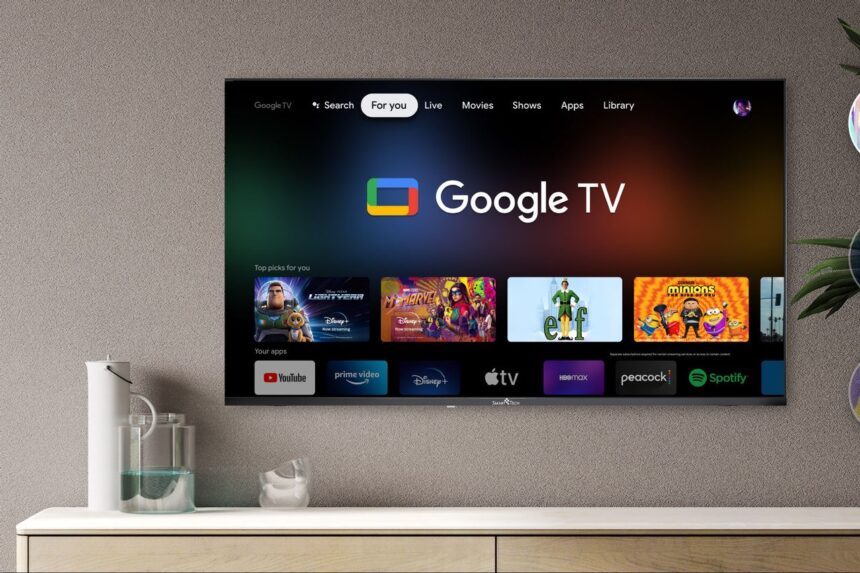
Google owns Android TV and Google TV, which serve as foundational software environments powering millions of smart televisions worldwide. By controlling the television interface itself, Google gains access to:
| Google Strategic Control Areas | Business Impact |
|---|---|
| TV operating systems | Controls user experience |
| Content recommendation algorithms | Influences viewer behavior |
| Advertising exchanges | Monetizes viewing sessions |
| Search integration | Enhances discoverability |
| User behavior analytics | Improves targeting precision |
| Programmatic infrastructure | Automates ad buying |
This creates a vertically integrated ecosystem where Google controls content discovery, advertising auctions, behavioral data, and monetization simultaneously.
The television home screen itself has effectively become a digital advertising platform.
Sponsored recommendations, promoted applications, featured banners, and personalized suggestions all generate monetizable engagement opportunities.
For advertisers, Google’s ecosystem offers unmatched scalability and audience precision.
For competitors, it creates a nearly impossible infrastructure gap to overcome.
Amazon: Turning Television Into a Shopping Marketplace
The Rise of Commerce Driven Streaming
Amazon approaches Connected TV from a completely different strategic angle.
Where Google dominates through infrastructure and audience scale, Amazon dominates through commerce intelligence.
The company’s transformation accelerated significantly after moving Prime Video users into an ad supported environment by default. This instantly created one of the largest premium advertising audiences in the streaming industry.
Yet the true innovation lies in Amazon’s retail integration capabilities.
Unlike traditional television networks, Amazon can directly connect advertisement exposure with real purchasing behavior.
This closed loop attribution model changes the economics of advertising entirely.
An advertiser can now:
- Display a product advertisement on Prime Video
- Track whether the viewer searched for the product afterward
- Monitor whether the customer purchased the product on Amazon
- Measure revenue generated from the campaign
- Optimize future targeting automatically
Traditional television broadcasters simply cannot compete with this level of commercial intelligence.
Amazon effectively transforms television advertising from a branding exercise into a measurable sales engine.
Netflix: The Premium Attention Economy
From Ad Free Purity to Advertising Powerhouse
Netflix originally built its brand identity around uninterrupted entertainment without advertisements.
That philosophy changed dramatically after the streaming industry entered a more competitive and financially demanding era.
The introduction of Netflix’s lower cost ad supported subscription tier fundamentally altered its long term business model.
The results have been remarkable.
A substantial percentage of new subscribers now choose the advertising supported plan because it lowers subscription costs while maintaining access to premium content.
Netflix possesses a unique competitive advantage that few companies can replicate.
It owns globally influential entertainment properties capable of generating immense cultural attention and viewer engagement.
Popular original productions create highly attentive viewing environments where audiences remain deeply immersed for extended periods. Advertisers are willing to pay premium CPM rates to place their campaigns inside these high engagement ecosystems.
Why Netflix Advertising Commands Premium Value
| Netflix Advertising Advantage | Marketing Benefit |
|---|---|
| Premium original content | Higher viewer engagement |
| Binge watching behavior | Longer ad exposure |
| Global subscriber base | International scalability |
| High attention retention | Improved ad recall |
| Cultural relevance | Stronger brand association |
Netflix is not simply selling ad inventory.
It is selling premium audience attention.
In modern digital marketing, attention has become one of the world’s most valuable commodities.
The Real Battlefield: Smart TV Operating Systems
The future of Connected TV advertising may ultimately depend less on content ownership and more on interface control.
Whoever controls the television operating system controls the viewer journey.
This includes:
| Smart TV Control Layer | Strategic Importance |
|---|---|
| Home screen recommendations | Shapes viewing choices |
| Search functionality | Controls content discovery |
| Viewing analytics | Collects consumer data |
| Sponsored placements | Generates advertising revenue |
| User profiles | Enables personalized targeting |
When viewers turn on a smart television, they are no longer entering a neutral environment.
They are entering a highly monetized digital ecosystem carefully optimized to maximize engagement and advertising revenue.
Several companies are aggressively competing for operating system dominance, including:
| Smart TV Ecosystem | Parent Company |
|---|---|
| Android TV | |
| Google TV | |
| Tizen | Samsung |
| webOS | LG |
| VIDAA | Hisense |
| Roku OS | Roku |
Each interface functions as both an entertainment gateway and an advertising platform.
The battle for the living room is increasingly becoming a battle for software control.
The Death of Traditional Linear Television
One of the most important trends accelerating Connected TV growth is the rapid decline of linear television.
Consumers are abandoning rigid broadcasting schedules in favor of on demand streaming flexibility.
This shift has enormous implications for advertisers.
Traditional television suffers from several growing disadvantages:
| Linear TV Limitations | Connected TV Advantages |
|---|---|
| Limited targeting | Precision audience targeting |
| Weak measurement systems | Real time analytics |
| Fixed schedules | On demand viewing |
| Broad demographics | Behavioral segmentation |
| Manual ad buying | Automated programmatic auctions |
As younger audiences spend less time watching cable television, brands are reallocating budgets toward digital streaming platforms where engagement levels are stronger and measurement systems are far more sophisticated.
Linear television is gradually losing its monopoly over household attention.
The Rise of Programmatic Television Advertising
Programmatic advertising is transforming television into an automated digital marketplace.
Instead of manually negotiating ad placements months in advance, advertisers increasingly purchase Connected TV inventory through real time bidding systems powered by artificial intelligence and machine learning.
This creates several advantages:
Benefits of Programmatic TV Advertising
| Benefit | Impact |
|---|---|
| Real time optimization | Better campaign efficiency |
| Audience segmentation | Improved relevance |
| Automated bidding | Faster media buying |
| Performance analytics | Accurate ROI measurement |
| Dynamic creative delivery | Personalized advertising |
Television advertising is evolving into a highly dynamic data driven environment similar to social media and search advertising ecosystems.
The era of static television campaigns is disappearing.
Shoppable Television Is Changing Consumer Behavior
One of the most revolutionary developments inside Connected TV advertising is the rise of shoppable television experiences.
Viewers can now purchase products directly from television advertisements using QR codes, voice commands, mobile synchronization, and integrated commerce systems.
This fundamentally changes television from a passive awareness medium into an active sales channel.
Examples include:
| Shoppable TV Features | Consumer Action |
|---|---|
| QR code integrations | Instant purchases |
| Interactive overlays | Product exploration |
| Voice enabled shopping | Hands free transactions |
| Mobile synchronization | Cross device commerce |
The convergence of media and commerce is creating entirely new forms of consumer behavior.
Entertainment is becoming transactional.
What This Means for Digital Marketers
For digital marketers and media agencies, this industry transformation creates both extraordinary opportunities and significant risks.
Major Opportunities
| Opportunity | Strategic Value |
|---|---|
| Massive household reach | Scalable campaign delivery |
| Advanced audience targeting | Better conversion efficiency |
| Cross device attribution | Accurate performance tracking |
| Interactive advertising formats | Higher engagement |
| Retail data integration | Improved sales measurement |
Major Challenges
| Challenge | Industry Impact |
|---|---|
| Platform dependency | Reduced negotiating leverage |
| Rising ad costs | Increased competition |
| Data ownership concentration | Limited transparency |
| Smaller publisher decline | Reduced media diversity |
Brands must now rethink creative strategy entirely.
Advertising content must function seamlessly across televisions, smartphones, tablets, streaming devices, and retail ecosystems simultaneously.
The future belongs to screen agnostic marketing strategies optimized for algorithmic distribution environments.
The Future of Television Has Become Digital
The transformation of television into a fully digital advertising ecosystem is no longer theoretical.
It is already happening.
Google, Amazon, and Netflix are not merely competing for viewers.
They are competing for ownership of consumer attention, advertising infrastructure, behavioral data, retail attribution, and household influence itself.
As Connected TV advertising continues its explosive expansion, these companies are positioning themselves as the gatekeepers of the future media economy.
Traditional broadcasters now face an existential challenge.
Without advanced data infrastructure, scalable digital ecosystems, and programmatic monetization capabilities, many legacy television companies risk becoming increasingly irrelevant in the streaming era.
For marketers, the implications are profound.
The future of advertising will revolve around intelligent targeting, measurable engagement, automated optimization, and integrated commerce experiences delivered directly through the largest screen inside the home.
The living room is no longer just a place for entertainment.
It has become the next great digital advertising battlefield.
Read More On: