


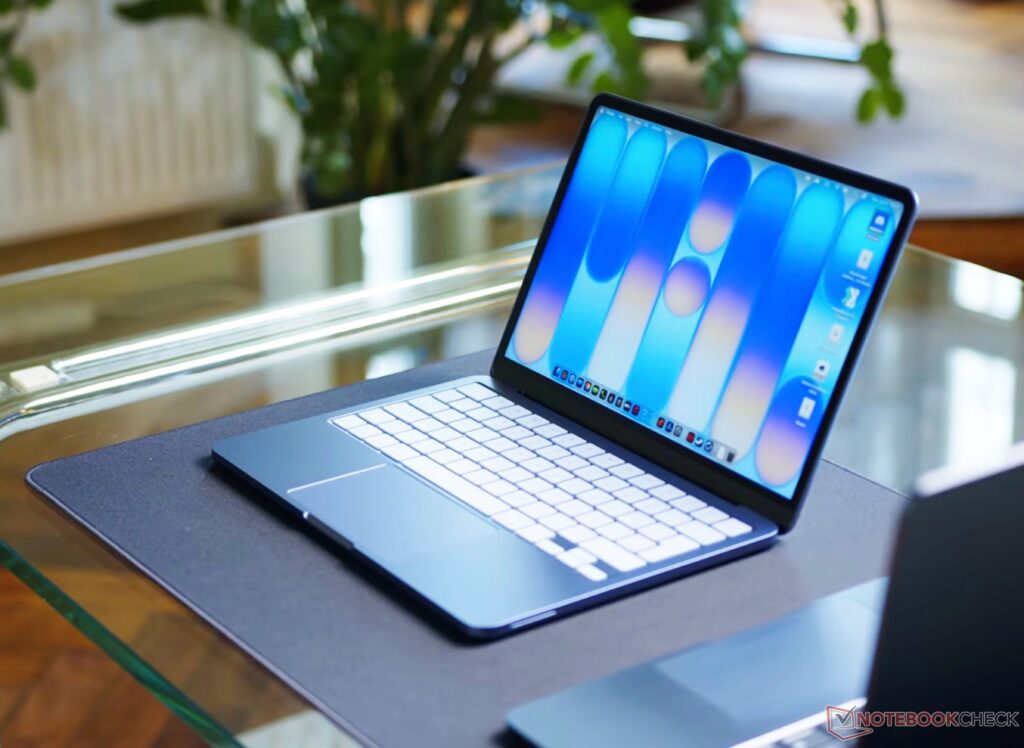
There are moments in technology when a product does not merely improve on what came before it, but instead forces an entire industry to reconsider what is possible at a given price point. The Apple MacBook Neo represents one of those moments. It enters the laptop landscape with an ambition that feels almost disruptive, challenging long standing assumptions about what a modern portable computer should cost, what level of performance it should deliver, and how far a premium computing ecosystem can be stretched downward without collapsing its identity.
At first glance, the MacBook Neo appears to be Apple’s attempt to democratize access to macOS computing in a way that feels both strategic and deeply intentional. It is designed for users who have always admired the Apple laptop experience but have historically been priced out of it. Students navigating academic workloads, digital creators building early stage portfolios, remote workers managing cloud based productivity tools, and writers who value a distraction free environment will immediately recognize the appeal of a machine that promises premium build quality without the traditional financial barrier.
What makes the MacBook Neo especially interesting is not just its price positioning but the philosophical shift it represents. Instead of relying on traditional Mac silicon families, it experiments with smartphone derived architecture. This decision alone changes how we interpret performance expectations, thermal behavior, battery endurance, and long term usability. It is not simply a cheaper MacBook. It is a reinterpretation of what a MacBook can be when stripped down to its most efficient computational core.
This review takes a deep and practical look at the MacBook Neo as a real world productivity machine. Rather than focusing on marketing language or surface impressions, it evaluates how the device behaves under sustained daily use, what compromises were introduced to achieve its pricing, and whether those compromises meaningfully affect its value for the target audience. Every major component is examined in detail, from processing architecture to display quality, memory behavior, input experience, port selection, and battery endurance.
Get TikTok SEO Cheat here
By the end, the goal is to clearly understand whether the MacBook Neo is simply a budget experiment or a genuinely transformative entry into Apple’s laptop ecosystem.
Overall Design Philosophy And Positioning
The MacBook Neo is clearly designed around efficiency rather than excess. Every decision in its construction appears to follow a consistent logic. Reduce unnecessary cost, preserve essential user experience, and maintain the emotional appeal of owning an Apple product.
The chassis follows Apple’s familiar aluminum unibody approach, giving it a solid and refined physical presence. Despite its lower cost positioning, it does not feel fragile or stripped down in hand. Instead, it retains the reassuring rigidity associated with higher tier Apple laptops.
Its design language prioritizes portability and silence. The absence of internal cooling fans contributes to a completely silent operation profile. This is particularly meaningful for environments such as libraries, classrooms, and shared workspaces where noise can be distracting.
While it does not attempt to compete with professional grade MacBook models in raw capability, it aims to replicate the feeling of using a premium device while focusing its engineering resources on everyday usability.
Full Specifications Overview
Below is a structured breakdown of the MacBook Neo hardware configuration presented in a clear specification format.
Processor and graphics
Processor type: Apple A18 Pro based architecture
CPU configuration: Six core design consisting of performance and efficiency cores
Graphics unit: Five core integrated GPU
Neural processing unit: Sixteen core neural engine
Architecture origin: Smartphone class silicon adapted for laptop thermal envelope
Memory and storage
Unified memory option one: Eight gigabyte shared architecture
Memory bandwidth: Approximately sixty gigabytes per second
Storage option one: Two hundred fifty six gigabyte solid state storage
Storage option two: Five hundred twelve gigabyte solid state storage
Memory behavior: Shared pool between CPU and GPU for unified data handling
Display system
Display size: Thirteen inch class panel
Resolution: Two thousand four hundred eight by fifteen hundred six pixels
Pixel density: Approximately two hundred nineteen pixels per inch
Brightness level: Up to five hundred nits peak output
Color standard: RGB color space
Special features: No notch design with uniform bezel layout
Physical design
Build material: Aluminum unibody construction
Cooling system: Fanless passive thermal design
Weight: Approximately two point seven pound class
Form factor: Thin and lightweight portable notebook
Input system
Keyboard type: Scissor switch mechanism
Backlight support: Not included
Trackpad: Mechanical click based system without haptic engine
Biometric security: Touch identification available only on higher storage configuration
Connectivity
Port configuration: Two universal serial bus type C ports
High speed port: USB three class with display output support
Secondary port: USB two class limited speed port
Wireless: WiFi and Bluetooth modern standards supported
External display support: Single external display up to four kilobyte at sixty hertz
Battery system
Battery capacity: Thirty six point five watt hour class
Video playback endurance: Up to sixteen hours
Web usage endurance: Approximately fifteen hours typical usage
Charging method: USB C power delivery

Display Experience And Visual Performance
The MacBook Neo’s display is one of its strongest selling points within its category. The panel delivers sharp text rendering that makes reading, writing, and browsing exceptionally comfortable for extended periods. At this resolution and pixel density, individual pixels are virtually indistinguishable during normal viewing distances.
Brightness performance is another strong advantage. With peak output reaching five hundred nits, the screen remains usable in brightly lit environments such as outdoor shaded areas or rooms with strong natural lighting. This is a meaningful improvement over many competing devices in the same price bracket that often struggle with visibility under similar conditions.
Color reproduction remains accurate within the sRGB range. While it does not extend into wide color gamuts typically reserved for professional creative workflows, it still provides rich and consistent visuals for media consumption, document editing, and light creative tasks.
The absence of a display notch also contributes to a more symmetrical and distraction free viewing experience. Content flows naturally across the screen without interruption, which enhances immersion during video playback and multitasking scenarios.
Performance And Real World Responsiveness
At the core of the MacBook Neo is its A18 Pro based silicon, originally designed for mobile devices but adapted here for sustained computing workloads. This is where the device becomes particularly interesting from a technical standpoint.
Despite being smartphone derived, the chip performs efficiently under the expanded thermal environment of a laptop chassis. The larger body allows heat to dissipate more effectively, enabling the processor to maintain consistent performance over longer periods without significant throttling.
In practical usage, the MacBook Neo handles typical productivity workloads with ease. Web browsing with multiple tabs, document editing, communication applications, streaming services, and light image editing all run smoothly without noticeable lag.
The unified memory system plays a significant role in this responsiveness. By allowing the processor and graphics unit to share the same memory pool, data movement becomes more efficient, reducing delays associated with traditional separated memory architectures.
However, the eight gigabyte memory ceiling does introduce limitations for heavier workflows such as large scale video editing, virtual machine usage, or complex software development environments. The system remains stable, but memory pressure becomes more noticeable under demanding multitasking conditions.
Keyboard, Trackpad, And User Interaction
The typing experience on the MacBook Neo is comfortable and familiar for users accustomed to modern Apple keyboards. Key travel is balanced and feedback is consistent, making it suitable for long writing sessions.
The absence of keyboard illumination is a noticeable compromise. In low light environments, users may need external lighting or strong muscle memory for efficient typing. This is one of the most tangible cost saving decisions in the device.
The trackpad shifts away from advanced haptic feedback and returns to a mechanical click system. While still accurate and responsive, it lacks the refined sensation of higher tier models. It remains fully functional for navigation, gestures, and precision work, but the tactile experience is more conventional.

Port Selection And Connectivity Limitations
Connectivity on the MacBook Neo reflects its budget conscious design philosophy. The inclusion of two USB C ports provides basic flexibility, but the imbalance between them introduces practical constraints.
One port supports higher data speeds and external display output, making it suitable for docking and high performance peripherals. The second port is significantly slower and is best reserved for charging or low bandwidth accessories.
The absence of advanced high speed expansion standards limits its appeal for power users who rely on multiple external devices, high speed storage arrays, or multi display setups.
Battery Life And Thermal Behavior
Battery performance is one of the strongest achievements of the MacBook Neo. The combination of efficient silicon and fanless design results in impressive endurance across daily workflows.
In typical usage scenarios, the device consistently delivers a full day of productivity without requiring mid day charging. Video playback endurance is particularly strong, making it suitable for travel, study sessions, and extended remote work periods.
Thermally, the device remains cool under normal workloads. The fanless architecture ensures complete silence, which enhances comfort in quiet environments and reinforces its appeal as a distraction free productivity tool.
Final Evaluation
The Apple MacBook Neo is not designed to compete with professional grade laptops in raw performance or expansion capability. Instead, it focuses on delivering a refined and stable computing experience at a significantly more accessible entry point.
Its strengths lie in its display quality, battery endurance, build consistency, and overall system fluidity for everyday tasks. Its compromises are intentional and clearly targeted toward maintaining affordability while preserving core usability.
For users whose computing needs revolve around writing, research, communication, media consumption, and general productivity, the MacBook Neo presents a compelling and well balanced option. It successfully lowers the barrier to entry into the macOS ecosystem without stripping away the essence of what makes the platform desirable.
It is best understood not as a reduced MacBook, but as a carefully reimagined one built for a broader audience.
Read More On: