


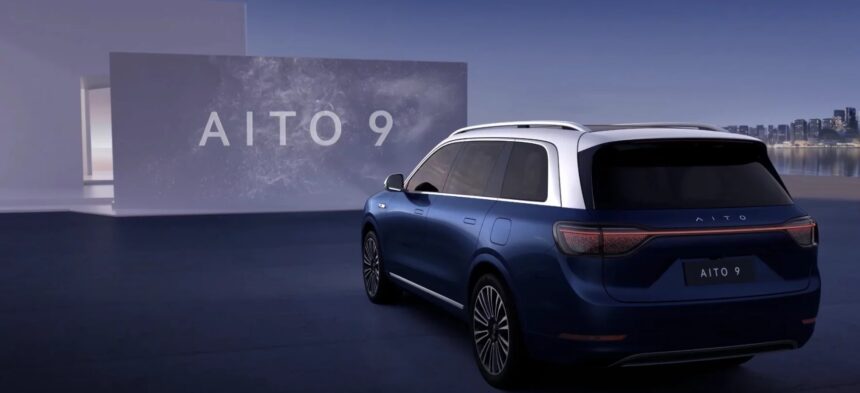
The automotive industry is undergoing a transformation that goes far beyond incremental improvements in engine efficiency, infotainment upgrades, or incremental safety enhancements. What is emerging now is a complete redefinition of what a vehicle can communicate, how it interacts with its surroundings, and how it serves both the driver and the outside world as a dynamic intelligent system.
At the center of this shift is a new class of optical technology that merges illumination, projection, and environmental awareness into a single unified module. Instead of headlights being treated as simple tools for visibility, they are now becoming intelligent interfaces capable of displaying information, enhancing safety awareness, and even delivering entertainment experiences when the vehicle is stationary.
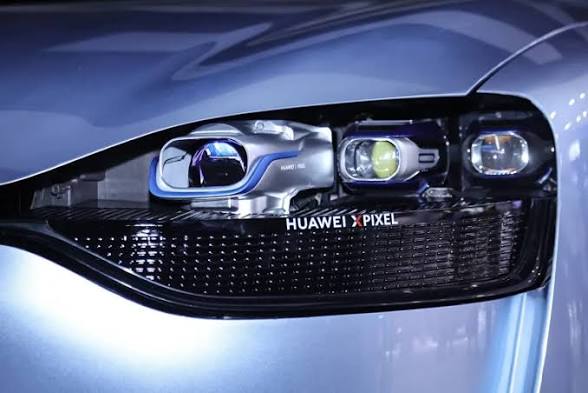
One of the most talked about breakthroughs in this category is the Huawei XPixel Headlights Full Color Auto Projector system. This innovation moves far beyond traditional automotive lighting. It introduces a layered optical architecture that transforms the front lighting system into a responsive digital canvas. It is designed not only to illuminate the road but also to communicate directly with drivers, pedestrians, and surrounding environments through visual projection.
What makes this system particularly compelling is its attempt to unify three previously separate domains. These include advanced road illumination, adaptive driving intelligence, and immersive projection based media output. Instead of treating these functions as independent systems, Huawei integrates them into one compact headlight unit that operates in harmony with the vehicle’s broader intelligent driving ecosystem.
Get TikTok SEO Cheat here
From a user perspective, this means the vehicle no longer depends solely on dashboard screens or voice prompts to convey important information. Instead, critical navigation cues can be projected directly onto the road surface. Safety warnings can be visually displayed in the driver’s natural line of sight. And when the vehicle is parked, the same system can transform into a full scale visual entertainment platform.
This review takes a deep and practical look at the Huawei XPixel Headlights system. It explores its internal architecture, functional modes, real world usability, safety implications, and its potential to redefine what automotive lighting means in modern mobility design. The goal is not just to describe what it does, but to evaluate how meaningful this technology is in everyday driving experiences and whether it represents a genuine leap forward or an over engineered novelty.
Core Technology And Engineering Structure
The Huawei XPixel Headlights system is built on a highly integrated optical and electronic architecture. At its core, it combines multiple lighting and projection technologies into a single compact module.
The system is structured around three primary layers of functionality:
• A high precision adaptive lighting matrix responsible for standard road illumination
• A full spectrum color projection engine capable of rendering detailed visual output
• An intelligent control system that synchronizes lighting behavior with vehicle sensors and driving data
This combination allows the headlight to behave less like a static beam source and more like a responsive visual processor.
Unlike conventional headlights that rely on fixed beam patterns, the XPixel system uses individually controlled micro light elements. Each element can be adjusted in intensity, direction, and color output. This creates a flexible lighting field that can adapt in real time to driving conditions, road curvature, and surrounding traffic behavior.
The projection engine is the most visually transformative component. It enables the system to cast structured images onto external surfaces. These projections are not limited to simple shapes or warnings. They can include navigation guidance, animated directional indicators, and full visual media output when conditions allow.
The control system acts as the central intelligence layer. It continuously processes input from vehicle sensors, navigation systems, and environmental detectors. Based on this data, it determines how the headlights should behave at any given moment.
Functional Experience And Real World Usability
In practical driving conditions, the Huawei XPixel system is designed to operate in multiple distinct modes. Each mode serves a specific purpose and adjusts the behavior of the headlights accordingly.
Driving illumination mode
In standard driving conditions, the system functions as an advanced adaptive lighting unit. It automatically adjusts beam distribution based on road geometry, vehicle speed, and the presence of other road users.
The most important advantage here is precision control. Instead of illuminating a broad uncontrolled area, the system selectively brightens critical sections of the road while dimming regions where glare could affect other drivers.
This creates a more comfortable visual environment for everyone on the road while improving visibility for the driver.
Navigation projection mode
One of the most innovative features is the ability to project navigation instructions directly onto the road surface.
Instead of relying solely on dashboard screens or voice instructions, the system displays directional arrows and path indicators in real time. These visuals appear to extend from the vehicle itself and align with the actual road trajectory.
This reduces cognitive load on the driver and allows for more intuitive decision making during navigation.
Safety interaction mode
The system also introduces a new layer of pedestrian and traffic communication.
When pedestrians are detected near crossing zones, the headlights can project clear visual cues indicating safe crossing conditions. In some scenarios, a virtual crossing guide can appear on the ground, helping pedestrians interpret vehicle intent more clearly.
For oncoming vehicles, the system can selectively mask portions of its light output to prevent glare while maintaining full visibility of the road.
Stationary entertainment mode
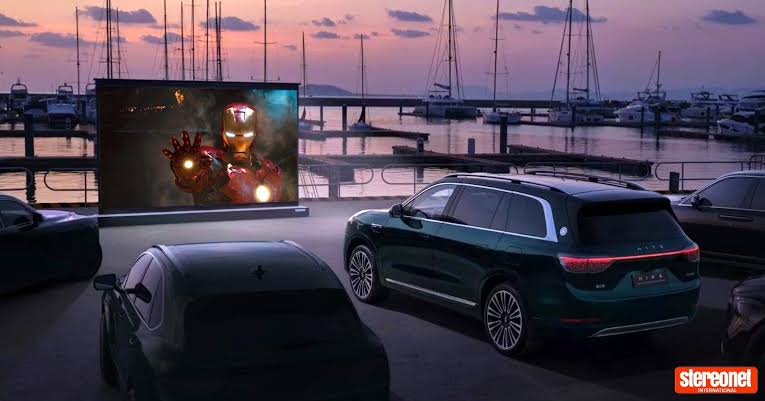
When the vehicle is parked, the system transitions into a full projection entertainment platform.
It can display large scale visuals on flat surfaces ahead of the vehicle, effectively turning any open space into a temporary viewing area. This includes video playback, live media content, and synchronized visual effects that respond to audio output from the vehicle system.
Display and projection capabilities
One of the most impressive aspects of the Huawei XPixel system is its projection scale and clarity.
The dual headlight configuration enables the system to generate a projection equivalent to a very large viewing surface when conditions are suitable. The image quality is maintained through precise pixel level control and color calibration.
The projection is designed to remain visible across different lighting conditions, although optimal performance is achieved in low light environments.
Full Technical Specifications
Below is a structured overview of the system specifications based on its described capabilities and engineering design.
| Component | Specification | Function |
|---|---|---|
| Lighting engine | Micro pixel controlled LED matrix | Adaptive road illumination and beam shaping |
| Projection system | Full spectrum RGB optical projector | Visual projection onto external surfaces |
| Control processor | Integrated automotive AI lighting controller | Real time adjustment of lighting behavior |
| Sensor integration | Multi source environmental and traffic sensing | Detection of vehicles, pedestrians, and road conditions |
| Navigation interface | GPS synchronized projection mapping | Road surface directional guidance |
| Safety module | Adaptive glare reduction system | Dynamic dimming and masking of light segments |
| Weather adaptation | Atmospheric condition detection system | Automatic color temperature adjustment |
| Entertainment output | High resolution projection mode | Video and media display when stationary |
| Connectivity | Vehicle ecosystem integration module | Synchronization with infotainment and driving systems |
| Operating modes | Driving, navigation, safety, stationary entertainment | Multi scenario functionality |
Safety implications and driving intelligence
From a safety standpoint, the XPixel system introduces a fundamentally new way of interacting with road environments.
Traditional driving relies heavily on instrument clusters and windshield mounted indicators. This system reduces that dependency by shifting critical information directly into the driver’s forward visual field on the road itself.
This reduces distraction and helps maintain focus on the driving environment.
The adaptive lighting system also plays a significant role in preventing accidents caused by poor visibility or glare related issues. By intelligently shaping light output, it ensures that both the driver and surrounding road users experience improved visual comfort.
Entertainment and lifestyle integration
Beyond its technical capabilities, the system also introduces a lifestyle oriented dimension to vehicle ownership.
The ability to transform a parked vehicle into a projection based entertainment space adds a social and recreational layer to automotive usage. This is particularly relevant in outdoor gatherings, travel scenarios, and leisure environments where traditional screens may not be practical.
The experience is not just about watching content. It is about creating an ambient visual environment that extends beyond the vehicle itself.
Final evaluation
The Huawei XPixel Headlights Full Color Auto Projector represents a significant shift in how automotive lighting systems are conceptualized.
It moves headlights from passive illumination tools into active communication and interaction systems. By merging safety intelligence with projection based visualization, it introduces a multi functional platform that enhances both driving awareness and user experience.
While its entertainment features may initially appear secondary, the core value lies in its safety enhancements and intelligent navigation support.
The system is ambitious, highly integrated, and clearly designed for future oriented vehicles that prioritize digital intelligence and user interaction.
If automotive lighting continues to evolve in this direction, the boundary between vehicle, interface, and environment will continue to blur, creating a driving experience that is not only safer but also significantly more immersive.
Read More On: