

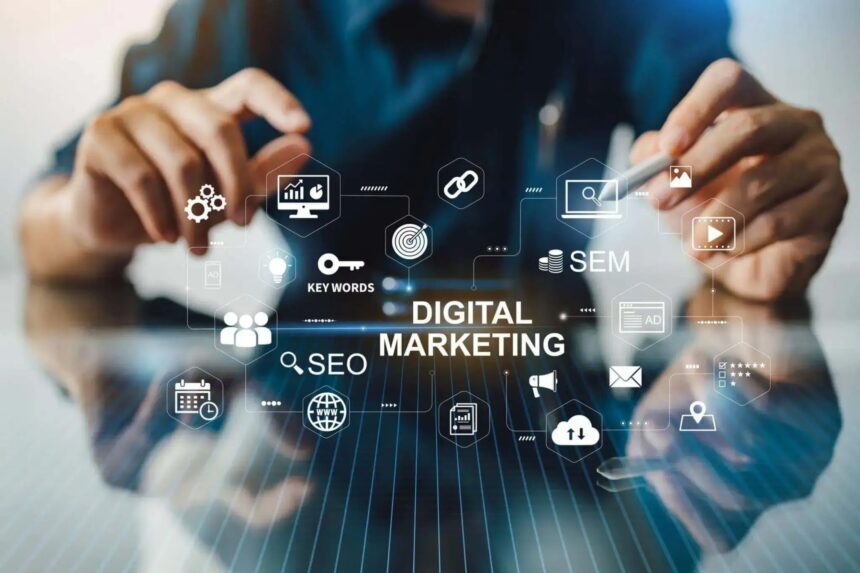

The digital marketing industry is entering one of its most disruptive and unpredictable phases yet. Across the global business landscape, brands are no longer competing merely on the quality of products or the affordability of services. They are now competing for attention, emotional relevance, cultural influence, and digital trust.
Consumers have become more sophisticated, more distracted, and significantly harder to impress. Traditional advertisements that once dominated television screens and social media feeds are rapidly losing their effectiveness. Audiences now scroll past polished promotional campaigns within seconds unless the content offers immediate value, entertainment, emotional resonance, or practical usefulness.
This dramatic shift has forced brands to rethink everything.
The companies currently dominating the digital conversation are not necessarily the ones with the biggest advertising budgets. Instead, they are the brands that understand modern internet psychology. They know how people think, how they consume content, what captures attention, what triggers emotional responses, and what motivates online engagement.
Get TikTok SEO Cheat here
In today’s digital economy, successful marketing is no longer about simply “selling.” It is about creating experiences people voluntarily participate in. It is about building communities instead of audiences. It is about becoming culturally relevant rather than merely commercially visible.
Several major brands have successfully decoded this new reality.
These companies have mastered the ability to blend artificial intelligence, social entertainment, personalized engagement, emotional storytelling, community participation, and data intelligence into powerful marketing ecosystems that continuously generate visibility, loyalty, and revenue.
What makes these brands particularly fascinating is that their strategies are not built on mysterious secrets. Their success follows patterns. Their systems can be studied. Their methods can be adapted. Their principles can be replicated by businesses of all sizes, including startups, creators, local brands, and entrepreneurs across Africa.
For digital entrepreneurs and business owners reading on digiconceptng.com, understanding these strategies is no longer optional. It is becoming a survival requirement in a marketplace where visibility determines relevance and relevance determines profitability.
This report takes a deep journalistic dive into five influential brands currently redefining the rules of digital marketing. Rather than offering surface level admiration, this feature breaks down exactly how these companies are attracting attention, sustaining loyalty, and converting engagement into long term business growth.
More importantly, this report explains how ordinary businesses can apply the same psychological triggers, marketing frameworks, and engagement strategies within their own industries.
From social media disruption to AI driven personalization, from gamified loyalty systems to entertainment based branding, these are the companies currently shaping the future of digital communication.
And the rest of the business world is watching closely.
Why Traditional Marketing Is Losing Its Power
Before examining the brands themselves, it is important to understand why older marketing systems are rapidly becoming less effective.
Modern audiences are overwhelmed with content every single day. Social media users encounter thousands of promotional messages within hours. This constant exposure has created what analysts describe as “attention fatigue.”
As a result, consumers have developed automatic resistance to anything that feels overly corporate, excessively polished, or aggressively promotional.
Several major changes are driving this shift:
| Consumer Shift | Impact on Marketing |
|---|---|
| Shorter attention spans | Brands must capture interest instantly |
| Ad fatigue | Traditional promotions are ignored |
| Demand for authenticity | Audiences prefer relatable content |
| AI driven personalization | Generic marketing performs poorly |
| Community culture | Consumers trust peer interaction more than ads |
| Entertainment preference | Content must entertain before it sells |
This new environment explains why unconventional brands are outperforming companies still relying heavily on traditional marketing structures.
Duolingo and the Rise of Entertainment Driven Branding
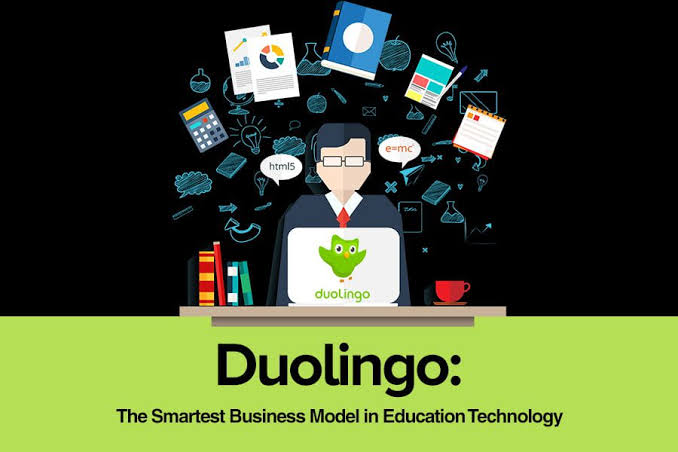
Among the most talked about marketing phenomena in the digital world is the transformation of Duolingo from a simple language learning application into a full scale entertainment powerhouse.
The company achieved this by completely abandoning the rigid, overly professional tone traditionally associated with educational brands.
Instead of acting like a corporation, Duolingo began behaving like a chaotic internet personality.
Its mascot, Duo the Owl, evolved into a mischievous social media character known for sarcastic humor, internet trolling, dramatic reactions, trending memes, and highly unpredictable content.
This strategy radically changed audience perception.
Consumers stopped viewing Duolingo as an app trying to sell language lessons. Instead, the brand became part of internet culture itself.
How Duolingo Cracked the Attention Economy
The company’s social media success relies heavily on emotional interruption.
While most corporate content feels calculated and carefully sanitized, Duolingo content feels spontaneous, messy, humorous, and human.
This creates what marketing analysts describe as “organic familiarity.”
People engage because they feel entertained, not targeted.
Core Elements of Duolingo’s Strategy
| Strategy Element | Purpose |
|---|---|
| Humorous mascot personality | Creates emotional attachment |
| Fast reaction to trends | Keeps brand culturally relevant |
| Informal communication style | Removes corporate barriers |
| Meme participation | Encourages virality |
| Community interaction | Builds audience loyalty |
How Businesses Can Replicate This Approach
Businesses do not necessarily need a cartoon mascot to benefit from this strategy.
What matters most is developing a recognizable personality.
Brands must begin asking critical questions:
- What emotional feeling does our content create?
- Would audiences voluntarily share our posts even if they were not customers?
- Does our content sound human or robotic?
- Can people instantly recognize our brand voice without seeing our logo?
In the current digital era, personality is becoming one of the strongest marketing currencies available.
Nike and the Power of the Omnichannel Ecosystem
While many brands still separate physical retail from digital marketing, Nike has built one of the world’s most integrated customer ecosystems.
The company no longer operates as simply a sportswear retailer.
It functions as a digital lifestyle infrastructure.
Nike’s ecosystem combines mobile applications, fitness tracking, personalized recommendations, community participation, in store experiences, and social engagement into one continuous customer journey.
The brilliance of this system lies in its seamlessness.
A customer can interact with Nike through workouts, health tracking, product browsing, event participation, community challenges, and direct purchases without feeling disconnected at any stage.
The Importance of First Party Data
Nike’s dominance largely comes from its control of first party customer information.
Unlike brands that depend heavily on third party advertising platforms, Nike gathers information directly from users through its applications and services.
This gives the company powerful insight into customer behavior.
If a customer regularly engages with running content, Nike automatically adjusts recommendations accordingly.
The experience feels personalized rather than random.
Why This Strategy Is So Effective
| Nike Strategy | Customer Effect |
|---|---|
| Personalized recommendations | Customers feel understood |
| Fitness tracking integration | Daily brand interaction |
| Mobile ecosystem | Increased convenience |
| Community challenges | Emotional engagement |
| Data based targeting | Higher conversion rates |
Lessons for Smaller Businesses
Businesses do not need billion dollar technology systems to apply this principle.
Even small brands can begin building first party data through:
| Simple Data Collection Method | Potential Benefit |
|---|---|
| Email newsletters | Audience segmentation |
| Free downloadable guides | Customer insights |
| Quizzes and calculators | Personalized recommendations |
| Loyalty forms | Purchase behavior analysis |
| Community groups | Direct audience interaction |
The ultimate goal is simple.
Businesses must stop relying entirely on social platforms to understand customers and start creating direct relationships with audiences.
Liquid Death and the Rise of Shock Value Branding
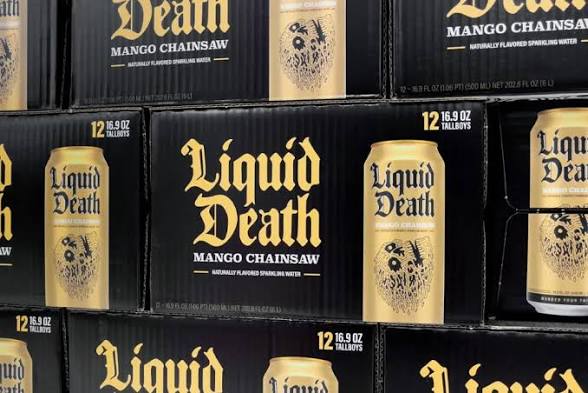
One of the most unconventional marketing success stories in recent memory belongs to Liquid Death.
At first glance, the brand appears almost absurd.
It sells water.
Yet its marketing resembles a rebellious rock band rather than a beverage company.
This contrast is precisely what made the brand impossible to ignore.
While competitors promoted purity, health, and calmness, Liquid Death embraced aggressive humor, dark aesthetics, outrageous advertisements, and provocative branding.
The company transformed ordinary bottled water into a cultural statement.
Why the Strategy Works
Modern digital platforms reward emotional reactions.
Content that shocks, surprises, confuses, or amuses people tends to spread faster than safe and predictable messaging.
Liquid Death understood this perfectly.
Its advertisements often look more like comedy sketches than traditional commercials.
This creates strong “scroll stopping” power across social platforms.
Core Marketing Philosophy
| Liquid Death Tactic | Psychological Effect |
|---|---|
| Extreme visual branding | Instant attention |
| Dark humor | Memorable identity |
| Anti corporate tone | Authenticity perception |
| Entertainment focused campaigns | Higher sharing potential |
| Merchandise culture | Community identity |
How Businesses Can Adapt This Model
Brands operating in “boring” industries can benefit significantly from this strategy.
Instead of blending into industry expectations, companies should identify opportunities to create contrast.
- If competitors are formal, become conversational.
- If competitors are overly serious, experiment with humor.
- If competitors look identical, build a visually disruptive identity.
- The objective is not recklessness.
- The objective is memorability.
Starbucks and the Psychology of Gamified Loyalty
Customer loyalty programs are not new.
However, Starbucks transformed the concept by turning customer participation into an interactive experience.
Rather than simply rewarding purchases, the company created a system that psychologically encourages continued engagement.
The Starbucks rewards structure taps deeply into human behavioral patterns associated with progress, achievement, anticipation, and completion.
Customers feel motivated to continue purchasing because they can visually track advancement toward rewards.
This transforms ordinary coffee buying into a psychologically satisfying activity.

Why Gamification Increases Spending
Gamification activates emotional triggers connected to achievement and competition.
Even simple visual progress indicators can significantly influence purchasing decisions.
Consumers naturally dislike abandoning progress once they feel invested.
Starbucks Loyalty Mechanics
| Gamified Feature | Customer Reaction |
|---|---|
| Progress tracking | Increased engagement |
| Reward milestones | Repeat purchases |
| Tiered status levels | Emotional investment |
| Exclusive perks | Brand loyalty |
| Limited challenges | Urgency and participation |
Practical Applications for Businesses
Small businesses can implement simplified versions of gamification without expensive software.
Examples include:
| Simple Loyalty Concept | Possible Result |
|---|---|
| Referral point systems | Increased customer acquisition |
| VIP customer tiers | Stronger retention |
| Milestone rewards | Repeat purchases |
| Progress based discounts | Higher engagement |
| Exclusive member access | Community feeling |
The psychology behind gamification remains powerful because customers enjoy feeling rewarded for consistency.
Airbnb and the Shift Toward AI Driven Intent Marketing
Airbnb has fundamentally transformed the concept of online search.
Traditional search systems depend heavily on keywords and filters.
Airbnb increasingly focuses on understanding emotional intent.
Instead of merely processing location requests, the platform attempts to interpret the user’s deeper motivation.
Someone searching for a “quiet creative retreat” receives recommendations optimized around atmosphere, lighting, isolation, comfort, and emotional suitability.
This creates an experience that feels deeply personalized.
Why Intent Marketing Is Becoming Essential
Consumers no longer want endless choices.
They want intelligent recommendations.
AI driven intent systems reduce decision fatigue by simplifying the customer journey.
This creates faster trust and stronger satisfaction.
Airbnb’s Discovery Based Marketing Model
| Traditional Search | Intent Driven Search |
|---|---|
| Keyword dependent | Emotion dependent |
| Filter heavy | Recommendation focused |
| User does the work | AI assists decision making |
| Generic results | Personalized results |
How Businesses Can Use Intent Marketing
Content creators and businesses should begin optimizing for customer intent rather than isolated keywords.
Instead of targeting broad search phrases like:
- “Digital marketing services”
Businesses should answer deeper customer concerns such as:
- “How can a small business attract customers online without spending heavily on ads?”
This approach aligns more naturally with modern search engine behavior and conversational AI systems.
Comparison of the Five Brand Strategies
| Brand | Primary Strategy | Core Strength |
|---|---|---|
| Duolingo | Entertainment branding | Viral engagement |
| Nike | Omnichannel personalization | Customer retention |
| Liquid Death | Provocative identity | Attention domination |
| Starbucks | Gamified loyalty | Repeat purchases |
| Airbnb | AI intent discovery | Personalized experience |
What Nigerian Businesses Should Learn Immediately
For startups, creators, and businesses across Nigeria, these strategies contain several important lessons.
First, attention has become more valuable than advertising budgets.
Second, audiences increasingly reward authenticity over perfection.
Third, businesses that create emotional experiences outperform those focused only on transactions.
Finally, technology alone is not enough.
The brands dominating modern marketing combine technology with psychology, storytelling, entertainment, and human connection.
That combination is what truly cracks the digital marketing code.
Conclusion
The future of digital marketing is no longer being shaped by traditional advertising agencies alone. It is now being shaped by brands capable of understanding internet culture, emotional behavior, audience psychology, and personalized engagement at extraordinary depth.
The companies leading this transformation are not simply promoting products.
They are building ecosystems.
They are creating communities.
They are manufacturing emotional relevance.
And perhaps most importantly, they are making audiences feel something.
For businesses hoping to remain competitive in the rapidly evolving digital economy, the message is becoming increasingly clear.
Visibility is no longer enough.
Engagement is no longer enough.
Modern brands must become experiences people actively want to participate in.
That is the real code these companies have cracked.
Read More On: