
The intellectual property landscape in Nigeria’s broadcasting ecosystem has long simmered beneath the surface, defined by quiet tensions, regulatory ambiguities, and fierce competition for premium content. What was once a largely behind the scenes struggle between content owners and distributors has now erupted into a full scale legal confrontation, drawing in powerful institutions and exposing deep structural questions about ownership, access, and fairness in the digital age.
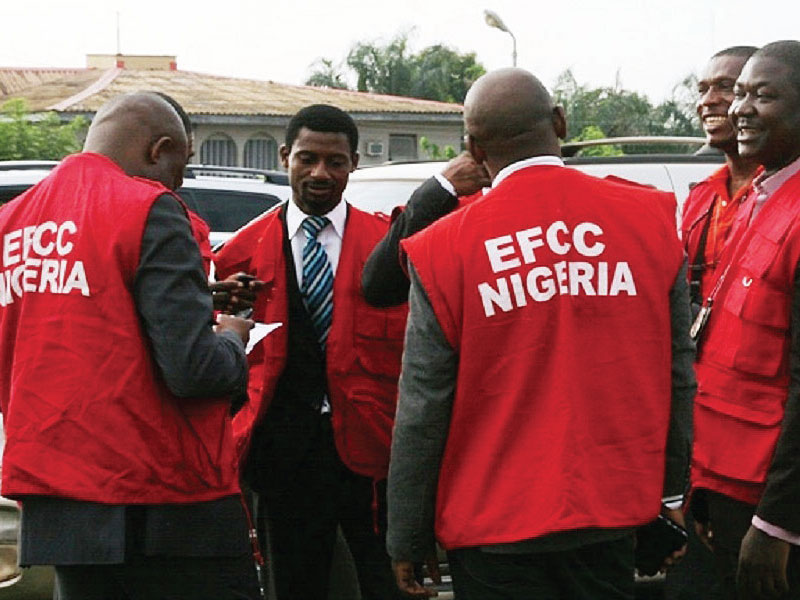
At the center of this unfolding storm is the Economic and Financial Crimes Commission, Nigeria’s foremost anti corruption agency, and Metro Digital Limited, the indigenous pay television company behind SLTV. Opposite them stands MultiChoice Nigeria Limited, the dominant force in subscription broadcasting and the custodian of widely consumed platforms such as DStv and GOtv.
This is not merely a courtroom dispute. It is a defining moment that cuts across law enforcement authority, intellectual property rights, regulatory oversight, and market competition. It raises fundamental questions about who controls content, how that content should be distributed, and whether existing laws are equipped to handle the complexities of modern digital broadcasting.
What makes this case particularly compelling is the collision of narratives. On one side, allegations of deliberate signal interception and unauthorized redistribution framed as cybercrime and economic sabotage. On the other, a defiant defense positioning the matter as a commercial disagreement rooted in regulatory obligations and anti monopoly principles.
Get TikTok SEO Cheat here
The result is a legal firestorm that has already produced conflicting judicial interpretations, heightened public interest, and triggered widespread debate within Nigeria’s media, technology, and legal communities. For industry stakeholders, this is more than news. It is a potential turning point that could redefine how content is shared, protected, and monetized across West Africa.
A Defining Collision Between Law, Technology, and Market Power
In an era where digital content flows seamlessly across borders and devices, the question of who owns what and who is allowed to distribute it has become increasingly complex. Nigeria, with its rapidly expanding media market and youthful, content hungry population, sits at the heart of this transformation.
The broadcasting sector, once dominated by traditional terrestrial signals, has evolved into a sophisticated network of satellite transmissions, encrypted decoders, and subscription based ecosystems. Within this space, control over premium content such as international sports leagues and blockbuster entertainment programming is not just a business advantage. It is the foundation of market dominance.
This is precisely why the confrontation between Metro Digital Limited and MultiChoice Nigeria Limited has captured national attention. At its core, the dispute is about access to premium broadcast signals and whether smaller, indigenous operators have a legitimate pathway to share in that ecosystem.
The involvement of the Economic and Financial Crimes Commission introduces an entirely different dimension. By framing the matter as a criminal offense under cybercrime legislation, the dispute moves beyond contractual disagreements into the territory of alleged economic sabotage and unlawful digital interference.
Yet, the situation is far from straightforward. Conflicting court rulings have already exposed a tension between criminal enforcement and civil adjudication. One arm of the judiciary appears to validate the enforcement approach, while another strongly questions its legitimacy, describing aspects of the intervention as excessive and misplaced.
For observers, this creates a layered narrative filled with legal contradictions, institutional overlaps, and high stakes implications. For consumers, it raises the possibility of a future where access to premium content could either become more competitive and affordable or remain tightly controlled by dominant players.
As proceedings unfold, every argument, ruling, and piece of evidence will contribute to shaping not just the outcome of this case, but the broader trajectory of Nigeria’s broadcasting and intellectual property regime.
Allegations of Signal Interception and Digital Piracy
The formal arraignment of Metro Digital Limited represents a significant escalation in the dispute. By bringing criminal charges, the Economic and Financial Crimes Commission signals its belief that the actions in question extend far beyond regulatory non compliance.
At the heart of the prosecution’s case are allegations that Metro Digital orchestrated a sophisticated operation designed to intercept and redistribute protected broadcast signals belonging to MultiChoice Nigeria Limited. These signals, typically encrypted and accessible only through authorized subscription channels, form the backbone of the pay television business model.
According to the charges, the company allegedly deployed specialized technological infrastructure capable of decoding, processing, and retransmitting premium content to its own subscriber base. This includes high value programming such as live sports events and exclusive entertainment channels that are ordinarily restricted to MultiChoice platforms.
The prosecution frames this not just as copyright infringement, but as a deliberate act of digital intrusion. By invoking cybercrime legislation, the case is positioned within a broader narrative of protecting digital assets and preventing unauthorized access to proprietary systems.
If proven, these allegations could establish a precedent that elevates signal piracy from a civil matter into a serious criminal offense, thereby expanding the enforcement powers of agencies like the EFCC in the digital content space.
A Regulatory Dispute Disguised as a Crime
Metro Digital Limited’s defense introduces a sharply contrasting perspective, one that challenges both the legal framing and the jurisdiction of the case.
Rather than accepting the characterization of their actions as criminal, the defense insists that the dispute is fundamentally commercial in nature. They argue that the issue revolves around sub licensing rights and regulatory obligations within Nigeria’s broadcasting framework.
Central to this argument is the role of the National Broadcasting Commission, the statutory body responsible for overseeing the broadcasting sector. The defense contends that existing regulatory provisions require dominant market players to make their content available to smaller operators under fair terms, thereby promoting competition and preventing monopolistic control.
From this perspective, Metro Digital positions itself not as a violator of rights, but as a participant in a contested regulatory environment where the boundaries of access and exclusivity remain unclear.
The defense also raises concerns about institutional overreach. By questioning the involvement of the EFCC, they argue that the matter should be handled by specialized regulatory or intellectual property bodies rather than a financial crimes agency.
This line of reasoning introduces a critical legal question. Where does the line lie between a breach of contract and a criminal act in the context of digital broadcasting? The answer to this question could have far reaching implications for how similar disputes are handled in the future.
The Controversial Ruling on Enforcement Actions
In a dramatic twist, a separate judicial decision has already cast doubt on the enforcement approach taken by the authorities.
A ruling from a State High Court delivered a strong rebuke, describing earlier enforcement actions as excessive and unjustified. The court not only criticized the manner in which the operation was conducted but also questioned the underlying premise that the dispute warranted such intervention.
The judgment included financial compensation awarded against both the Economic and Financial Crimes Commission and MultiChoice Nigeria Limited, signaling judicial disapproval of their actions. Additionally, an injunction was issued to prevent further interference with Metro Digital’s operations in relation to the dispute.
This development introduces a striking contradiction within the legal process. On one hand, criminal proceedings continue in a Federal High Court. On the other, a State High Court has effectively challenged the legitimacy of the enforcement actions that led to those proceedings.
Such conflicting positions underscore the complexity of the case and highlight the challenges of navigating overlapping jurisdictions in Nigeria’s legal system.
A Sector at a Crossroads
The implications of this case extend far beyond the parties directly involved. For Nigeria’s broadcasting industry, the outcome could reshape the competitive landscape in profound ways.
Below is a breakdown of potential impacts across key areas:
| Sector Dimension | Potential Outcome if Metro Digital Prevails | Potential Outcome if EFCC and MultiChoice Prevail |
|---|---|---|
| Market Competition | Increased access for smaller operators leading to a more competitive environment | Reinforcement of exclusivity and dominance of established providers |
| Content Pricing | احتمال reduction in subscription costs due to competition | Continued premium pricing driven by exclusive rights |
| Regulatory Authority | Strengthening of broadcasting regulators over law enforcement agencies | Expansion of law enforcement role in intellectual property disputes |
| Legal Precedent | Recognition of sub licensing as a critical right | Criminalization of unauthorized signal access |
| Consumer Access | Broader availability of premium content across platforms | Restricted access limited to official providers |
This table illustrates the high stakes nature of the case. Each possible outcome carries significant consequences for businesses, regulators, and consumers alike.
A Trial Loaded with Technical and Legal Complexity
As the case progresses, it is expected to evolve into a highly technical legal battle. The prosecution is likely to rely on digital evidence, including signal logs, decoding equipment, and expert testimony on how the alleged interception was carried out.
The defense, in turn, will likely focus on regulatory interpretation, contractual frameworks, and expert opinions on broadcasting standards. Representatives from the National Broadcasting Commission may play a crucial role in clarifying whether sub licensing obligations exist and how they should be enforced.
The courtroom will effectively become a convergence point for law, technology, and policy. Judges will be tasked with interpreting not only statutes but also the technical realities of modern broadcasting systems.
Key Stakeholders and Their Positions
| Stakeholder | Role in the Case | Position |
|---|---|---|
| Economic and Financial Crimes Commission | Prosecutor | Asserts criminal wrongdoing and digital piracy |
| MultiChoice Nigeria Limited | Complainant | Claims violation of exclusive broadcasting rights |
| Metro Digital Limited | Defendant | Argues for regulatory rights and denies criminal intent |
| National Broadcasting Commission | Industry Regulator | Holds the key to interpreting sub licensing obligations |
A Legal Battle That Could Redefine Broadcasting in Nigeria
What is unfolding is far more than a dispute between two companies. It is a pivotal moment that could redefine the rules governing content distribution, intellectual property protection, and regulatory authority in Nigeria.
The eventual outcome will likely influence how digital content is accessed, how businesses compete, and how laws are enforced in an increasingly interconnected media environment.
For now, the industry watches closely, aware that the decisions made in this case will echo far beyond the courtroom, shaping the future of broadcasting not just in Nigeria, but across the wider region.
Read More On: