



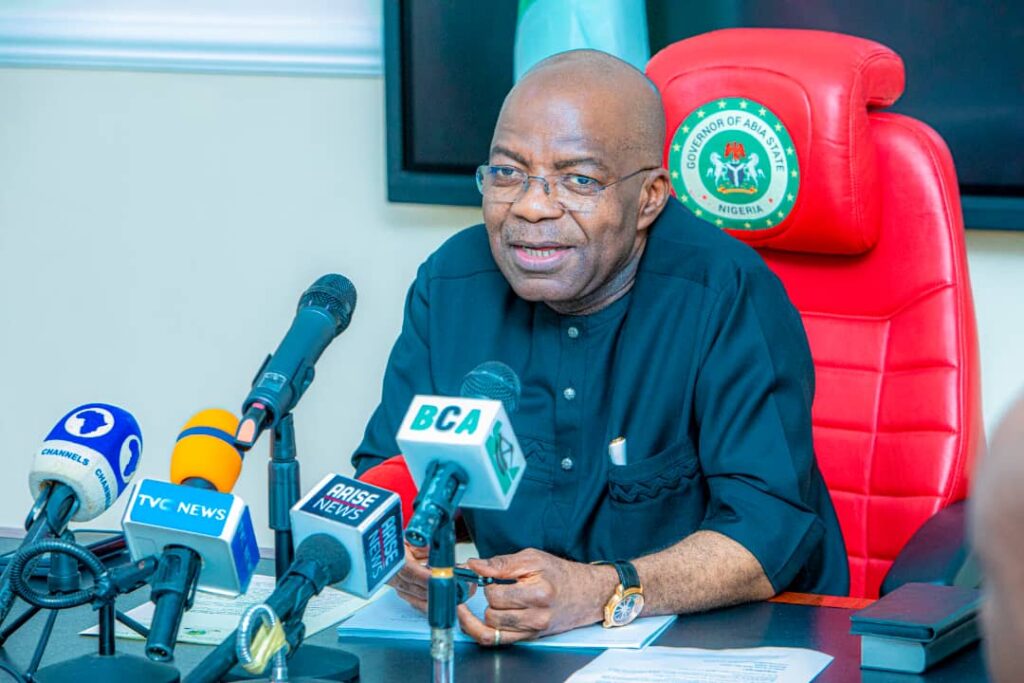
In what many observers are already describing as a defining moment in public sector accountability, the Abia State Government has taken a bold and deeply symbolic step toward correcting a long standing injustice that has lingered for decades. With the approval of ₦10 billion as an initial intervention fund, the administration of Governor Alex Otti has signaled a clear break from a painful legacy that left thousands of retirees stranded without their rightful earnings.
For years, pensioners in the state lived in quiet desperation. These were individuals who had dedicated the most productive years of their lives to public service, only to face uncertainty, hardship, and in many cases, neglect after retirement. The announcement of this allocation is not merely a fiscal policy decision. It is a moral statement, one that acknowledges past failures while laying the foundation for a more humane and structured future.
This report takes a comprehensive look at the origins of the pension crisis, the mechanics of the ₦10 billion intervention, the broader economic implications, and what this could mean for governance standards across Nigeria.
Understanding the 20 Year Debt
The pension backlog in Abia State did not emerge overnight. It is the result of years of systemic neglect, administrative lapses, and inconsistent policy direction.
Get TikTok SEO Cheat here
Historical Accumulation of Debt
Over successive administrations, pension obligations were either partially met or completely ignored. What began as minor delays gradually snowballed into a massive liability. Verified reports indicate that the total pension and gratuity debt has grown beyond ₦60 billion.
This figure represents more than just unpaid money. It reflects broken trust between the government and its workforce.
Humanitarian Consequences
The real impact of this crisis is best understood through the lived experiences of retirees.
Many pensioners struggled to afford basic necessities such as food, healthcare, and housing. Families were forced to shoulder financial burdens that should never have existed. In some tragic instances, retirees passed away without receiving a single kobo of their entitlements.
The emotional weight of this situation cannot be overstated. For many, retirement became a period of suffering rather than rest.
Detailed Breakdown of the ₦10 Billion Allocation
The ₦10 billion fund represents a structured and intentional approach rather than a one time payout.
Priority for the Most Vulnerable
A significant portion of the allocation is directed toward retirees from the Abia State Agricultural Development Programme. These individuals were previously excluded from pension benefits due to policy inconsistencies that created a gap in entitlement recognition.
By addressing this group first, the government is prioritizing those who have endured the longest period of neglect.
Digitized Verification System
To ensure accountability, the state has introduced a modern verification framework.
This system is designed to achieve several objectives:
- Eliminate fraudulent claims linked to ghost pensioners
- Accurately identify legitimate beneficiaries
- Ensure direct and transparent disbursement of funds
This shift toward digital verification marks a critical improvement in governance processes.
Phased Payments and Sustainable Support
Rather than attempting to clear the entire backlog at once, the government has adopted a phased payment structure.
Batch Based Disbursement
Payments will be made in carefully organized batches. Priority is given to retirees with the oldest outstanding claims, ensuring that those who have waited the longest are attended to first.
This method allows for better financial control while maintaining fairness in distribution.
Introduction of Monthly Stipends
In addition to clearing arrears, the government has implemented a consistent monthly stipend system for current pensioners.
This ensures that:
- Existing retirees receive regular income
- New arrears do not accumulate
- Financial predictability is restored
By combining backlog clearance with ongoing payments, the state is addressing both past and future challenges simultaneously.
Economic Impact on Abia State
The release of ₦10 billion into the hands of pensioners is expected to have far reaching economic effects.
Revitalization of Local Markets
Pensioners typically spend within their immediate communities. This includes:
- Food purchases from local vendors
- Healthcare services
- Transportation and small scale commerce
As a result, cities such as Umuahia, Aba, and Ohafia are likely to experience increased economic activity.
Improved Healthcare Access
With additional financial resources and supportive policies such as free medical care for senior citizens, retirees will be better positioned to seek timely healthcare.
This reduces long term medical complications and eases pressure on families.

Broader Fiscal Reforms Under the Current Administration
The pension intervention is part of a wider effort to address legacy financial obligations across multiple sectors.
Cleared Salary Arrears Across Institutions
The administration has already made progress in settling outstanding salaries in key institutions.
Below is a structured overview:
| Sector | Arrears Settled | Duration of Neglect |
|---|---|---|
| ADP Retirees | Pension arrears | Over a decade |
| Abia Polytechnic Staff | 32 months | Several years |
| ABSUTH Staff | 26 months | Extended period |
| University Staff | 11 months | Nearly a year |
| General Pensioners | ₦10 billion initial payment | Over two decades |
This pattern of settlement demonstrates a consistent approach to clearing inherited liabilities.
Transparency and Governance Implications
One of the most significant aspects of this intervention is the emphasis on transparency.
Restoring Public Confidence
By openly addressing the scale of the debt and outlining a clear repayment strategy, the government is rebuilding trust with citizens.
Transparency in financial management encourages:
- Greater civic engagement
- Increased investor confidence
- Improved institutional credibility
A Model for Other States
Abia State’s approach could serve as a template for other regions facing similar challenges.
Key lessons include:
- The importance of accurate debt verification
- The need for phased financial planning
- The value of prioritizing vulnerable populations
A Turning Point in Public Sector Responsibility
Economic analysts and governance experts have described this move as both pragmatic and transformative.
The decision to tackle such a large debt head on suggests a commitment to fiscal discipline and ethical governance.
For businesses and investors, this creates a more stable environment. When governments meet their obligations, it signals reliability and strengthens the overall economic ecosystem.
Conclusion
The ₦10 billion pension intervention in Abia State represents far more than a financial transaction. It is a long awaited acknowledgment of responsibility and a deliberate effort to restore dignity to thousands of retirees.
While the journey toward clearing the entire backlog is still ongoing, this initiative marks a critical first step. It demonstrates that even deeply entrenched problems can be addressed with the right combination of political will, strategic planning, and transparency.
For the people of Abia State, particularly its senior citizens, this moment carries renewed hope. It is the beginning of a transition from neglect to recognition, from uncertainty to stability, and from silence to accountability.
Read More On: