


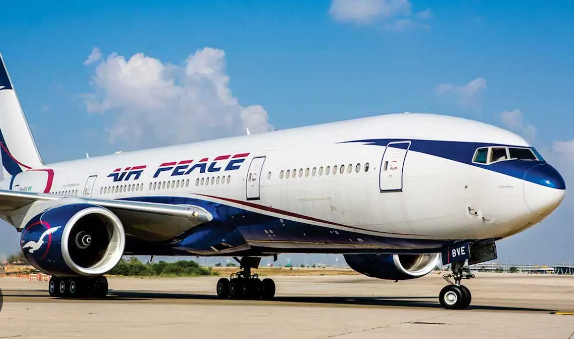
Air travel is built on a delicate balance between safety, precision, and passenger trust. When any one of these pillars is shaken, even briefly, the ripple effect can be immediate and far reaching. This is exactly what unfolded during the recent disruption involving Nigeria’s foremost airline, Air Peace, at London Gatwick Airport. What began as a technical aviation incident quickly escalated into a widely debated public issue, fueled by passenger frustration, social media amplification, and questions about service delivery standards.
At the center of the storm was a delay on the Gatwick to Lagos route, one of the airline’s most strategic international connections. Reports from passengers painted a distressing picture of confusion, discomfort, and lack of timely support. Among those who spoke out was Nollywood actress Funke Akindele, whose account added significant weight to the unfolding narrative and drew nationwide attention.
In response, Air Peace issued a detailed statement, firmly rejecting claims of abandonment while reaffirming its commitment to global safety protocols. The airline attributed the disruption to a bird strike, a recognized aviation hazard that demands immediate and uncompromising action.
This incident has now evolved beyond a single delayed flight. It has become a broader conversation about passenger rights, crisis management, and the growing expectations placed on Nigerian carriers operating on the international stage.
Get TikTok SEO Cheat here
The Incident That Triggered The Disruption
At the heart of the situation lies a bird strike, an aviation occurrence that is both unpredictable and potentially dangerous. A bird strike happens when a bird collides with an aircraft, often during takeoff or landing phases. While it may sound minor, the consequences can be severe, especially if the engine is affected.
Air Peace explained that upon detection of the incident, the aircraft was immediately grounded at London Gatwick. This action was not optional but mandatory under international aviation safety regulations. Engineers were required to carry out detailed inspections, including structural assessments and advanced diagnostic testing, to confirm that the aircraft was safe for continued operation.
From an aviation standpoint, this decision aligns completely with global best practices. Safety is always prioritized above schedule, regardless of inconvenience or cost implications.
However, while the technical response may have been correct, the passenger experience told a more complicated story.
Passengers’ Experience And The Rise Of Public Outcry
Passengers described a long and exhausting wait at the airport, with many claiming they were left without clear communication or immediate assistance. Reports included accounts of families stranded for extended hours, elderly travelers struggling with fatigue, and general uncertainty about what would happen next.
The situation gained significant traction when Funke Akindele publicly shared her experience. Her statements highlighted concerns about welfare, communication gaps, and the emotional toll of the delay.
Social media quickly amplified these claims, turning what might have been a routine operational disruption into a major reputational challenge for the airline.
Public sentiment began to shift rapidly, with many Nigerians questioning whether the airline had done enough to support its passengers during the crisis.
Air Peace’s Official Response And Clarification
In its official statement, Air Peace strongly refuted allegations of abandonment. The airline maintained that all necessary steps were taken to ensure passenger welfare, though it acknowledged that logistical challenges affected the speed of execution.
The airline emphasized the following points
Passengers were provided with accommodation at Hilton London Gatwick Airport
Efforts were made to communicate updates as the situation evolved
Delays in assistance were caused by factors outside the airline’s direct control, particularly congestion and third party handling limitations
Air Peace also reiterated that the disruption was not a result of negligence but a safety driven decision that could not be compromised.
Understanding The Baggage Delay Controversy
One of the most frustrating aspects of the incident for passengers was the inability to retrieve their luggage. Many described this as one of the most distressing parts of the experience.
Air Peace clarified that baggage handling at international airports is not managed directly by airlines. Instead, it is controlled by designated ground handling companies assigned by the airport authority.
Because the flight was canceled after the bird strike, the baggage process had to be reversed. This involves identifying, sorting, and reassigning luggage to passengers, a process that can become significantly delayed during peak airport operations.
While technically accurate, this explanation did little to ease the frustration of passengers who were left without access to essential belongings.
Passenger Welfare Obligations And Regulatory Perspective
Under aviation regulations, airlines are required to provide what is known as Duty of Care during significant delays. This includes
- Provision of meals and refreshments
- Access to communication such as phone calls or internet
- Hotel accommodation when necessary
- Transport between the airport and accommodation
In Nigeria, these rights are overseen by the Nigerian Civil Aviation Authority, while similar protections exist under United Kingdom aviation laws.
Aviation experts have pointed out that while Air Peace may have fulfilled these obligations in principle, the real issue lies in execution speed and coordination efficiency.
Expert Analysis On Operational Challenges
Industry analysts believe this incident highlights the challenges faced by airlines expanding into competitive international markets.
Operating long haul routes requires seamless coordination between multiple stakeholders including airport authorities, ground handlers, hotel partners, and logistics providers.
Any breakdown in this chain, even if temporary, can significantly impact passenger experience.
Experts suggest that airlines must not only meet safety standards but also invest heavily in crisis management systems that prioritize real time communication and rapid response.
Fact Versus Claim Comparison
| Issue | Passenger Claim | Air Peace Position |
|---|---|---|
| Cause of delay | Poor planning or mismanagement | Confirmed bird strike requiring safety grounding |
| Passenger care | Lack of food and support | Hotel accommodation and assistance provided |
| Communication | Little or no updates | Continuous communication maintained |
| Baggage access | Bags withheld or inaccessible | Delayed due to ground handling procedures |
| Safety decision | Delay seen as excessive | Mandatory compliance with aviation safety standards |
The Broader Implication For Nigerian Aviation
This incident has sparked a larger conversation about the evolution of Nigerian airlines on the global stage. As carriers like Air Peace expand internationally, expectations naturally increase.
Passengers are no longer comparing services locally but against global benchmarks. This means airlines must match international standards not only in safety but also in customer experience, crisis handling, and communication clarity.
For many observers, this event represents a learning opportunity rather than a failure. It highlights the need for stronger partnerships, better preparedness, and more responsive service frameworks.
Safety, Service, And The Path Forward
The Gatwick to Lagos disruption serves as a powerful reminder that aviation is as much about people as it is about machines. While safety decisions must always come first, the human experience during such events cannot be overlooked.
Air Peace has defended its actions based on safety and operational constraints, and from a technical standpoint, its decisions align with global aviation practices. However, passenger perception tells a different story, one shaped by delays, discomfort, and unmet expectations.
Bridging this gap between operational reality and customer experience will be critical moving forward. For Nigerian aviation to continue gaining global respect, airlines must not only fly safely but also care effectively.
In the end, incidents like this do more than disrupt travel plans. They shape public trust, influence industry standards, and define the future direction of air travel in Nigeria.
Read More On: