


In any survival situation, whether you are stranded in the wilderness, navigating a disaster zone, or dealing with a sudden breakdown of infrastructure, water is not just important. It is everything. Your body depends on it to regulate temperature, transport nutrients, and maintain organ function. Without it, physical and mental performance begin to decline rapidly, and within a short period, survival itself becomes uncertain.
The dangerous reality is that not all water is safe, even when it looks clean and refreshing. Crystal clear streams, calm lakes, or collected rainwater can still contain microscopic threats such as Giardia, Cryptosporidium, and harmful bacteria like E. coli. These invisible contaminants can cause severe illness, dehydration, and in extreme cases, death.
This is why understanding how to purify water in survival situations is not just a useful skill. It is a life saving discipline.
True water purification is not a single action. It is a process that involves two essential stages:
Get TikTok SEO Cheat here
First is filtration, which removes dirt, sand, debris, and visible particles.
Second is disinfection, which eliminates harmful microorganisms that cannot be seen with the naked eye.
Many people make the mistake of relying on only one of these steps. In reality, combining both methods gives you the safest possible drinking water.
This guide walks you through eight powerful and practical methods you can use to secure clean drinking water anywhere. Each method is explained in a step by step manner, with clear instructions, limitations, and expert tips to help you make the best choice depending on your situation.
1. Boiling
The Most Reliable Method
Boiling remains the most trusted and universally effective way to purify water. It works by using heat to destroy bacteria, viruses, and parasites that cause disease.
Step by Step Process
- Start by collecting water from the cleanest source available. If the water appears cloudy, pass it through a cloth or any clean fabric to remove visible particles.
- Pour the filtered water into a pot or heat resistant container and place it over a fire or heat source.
- Allow the water to reach a rolling boil. This means large, continuous bubbles rising rapidly to the surface.
- Maintain this boil for at least one minute.
- If you are in a high altitude area where boiling temperature is lower, extend the boiling time to three minutes.
- Allow the water to cool naturally before drinking.
Why Boiling Works
High temperatures destroy the cellular structure of microorganisms, making them harmless.
Limitations
- Boiling does not remove chemical pollutants, heavy metals, or salt.
- It also requires fuel and time, which may not always be available.
2. Chemical Treatment
Compact and Effective
Chemical purification is one of the most practical methods when you cannot build a fire.
Types of Chemical Treatments
- Iodine: This is effective against many microorganisms but leaves a noticeable taste. It is not suitable for long term use.
- Chlorine dioxide: This is more advanced and effective, especially against tough parasites. It has less impact on taste.
How to Use
- Add the recommended number of tablets or drops to your water.
- Stir or shake to mix properly.
- Allow the water to sit for at least thirty minutes.
- If the water is very cold, extend the waiting time to ensure full effectiveness.
Important Notes
Always follow the exact dosage instructions.
Do not rush the waiting period, as incomplete treatment can leave harmful organisms alive.
3. Solar Disinfection
Using the Power of Sunlight
This method uses sunlight to kill harmful microorganisms and is especially useful when you have no tools.
How to Do It
- Fill a clear plastic bottle with water.
- Shake the bottle to introduce oxygen into the water.
- Place it on a surface that receives direct sunlight.
- Leave it exposed for at least six hours under strong sunlight.
- If the sky is cloudy, leave it for up to two days.
Key Conditions
- The water must be clear for sunlight to penetrate effectively.
- The bottle must be transparent.
Limitations
- This method does not work well with dirty or muddy water.
- It requires strong sunlight and time.
4. Portable Filters
Instant Drinking Solution
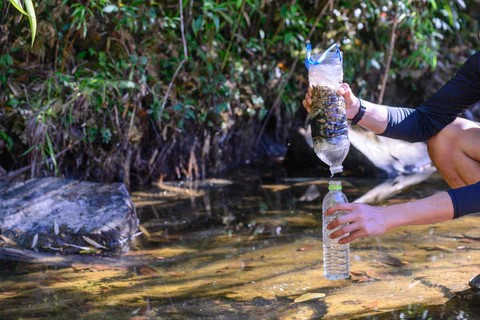
Portable water filters provide immediate access to safer water.
How They Work
These filters contain microscopic pores that trap bacteria and parasites as water passes through.
How to Use
- Place the filter directly into the water source or attach it to a container.
- Drink through the device or allow it to filter into a bottle.
Advantages
- Instant results with no waiting time.
- Lightweight and easy to carry.
Limitations
- Most filters do not remove viruses.
- They do not remove chemicals or toxins.
5. DIY Layered Filter
Survival Engineering
When you have no equipment, you can build your own filtration system using natural materials.
Materials Needed
- A container such as a plastic bottle
- Cloth or fabric
- Gravel
- Coarse sand
- Fine sand
- Charcoal
Construction Steps
- Place cloth at the bottom opening to hold materials in place.
- Add a layer of gravel.
- Add coarse sand.
- Add fine sand.
- Add crushed charcoal at the top.
- Pour water slowly through the layers.
What This Does
Removes dirt, debris, and improves taste.
Critical Warning
This method does not kill microorganisms.
You must boil or chemically treat the filtered water before drinking.
6. Distillation
Pure Water Through Evaporation
Distillation is one of the most powerful purification methods because it removes almost everything.
How It Works
- Water is heated until it turns into steam.
- The steam is captured and cooled back into liquid form.
- Contaminants are left behind.
Simple Solar Still Method
- Dig a hole in the ground.
- Place a container at the center.
- Cover the hole with plastic.
- Place a small stone at the center of the plastic so it dips inward.
As moisture evaporates, it condenses on the plastic and drips into the container.
Best Use Cases
- Saltwater purification
- Removing chemicals and heavy metals
Limitations
- Slow process that requires patience.
- Produces small amounts of water.
7. Ultraviolet Light Purification
Ultraviolet light devices offer a modern and efficient way to disinfect water.
How It Works
UV light damages the DNA of microorganisms, preventing them from reproducing.
Steps to Use
- Fill a container with clear water.
- Insert the UV device.
- Stir or swirl for about ninety seconds.
Advantages
- Quick and effective.
- Lightweight and reusable.
Limitations
- Requires batteries or power.
- Does not work well in cloudy water.
8. Household Bleach
Emergency Urban Solution
In situations where you have access to basic household items, bleach can be used effectively.
How to Use
- Add two drops of unscented bleach to one liter of clear water.
- If the water is cloudy, use four drops.
- Stir thoroughly.
- Let it sit for thirty minutes.
How to Check
- Water should have a faint chlorine smell.
If not, repeat the process and wait again.
Warnings
- Only use plain, unscented bleach.
- Avoid products with added chemicals.
Comparison Table of Water Purification Methods
| Method | Removes Microorganisms | Removes Chemicals | Time Required | Ease of Use |
|---|---|---|---|---|
| Boiling | Yes | No | Moderate | Easy |
| Chemical Treatment | Yes | No | Moderate to Long | Easy |
| Solar Disinfection | Yes | No | Long | Very Easy |
| Portable Filters | Partial | No | Instant | Very Easy |
| DIY Filter | No | Partial | Moderate | Moderate |
| Distillation | Yes | Yes | Long | Difficult |
| UV Light | Yes | No | Very Fast | Easy |
| Bleach | Yes | No | Moderate | Easy |
Always Pre Filter First
Before applying any purification method, pass your water through a cloth or fabric.
This removes visible dirt and improves the effectiveness of any treatment method.
It also enhances taste and prevents clogging in filters.
Mastery Means Survival
Water purification is not just knowledge. It is preparedness in action.
Each method in this guide has its place depending on your environment, available tools, and urgency.
The safest approach is always to combine filtration with disinfection whenever possible.
By mastering these techniques, you transform from being vulnerable to being capable. You gain control over one of the most critical elements of survival.
Clean water is not a luxury. It is a decision you make through skill and awareness.
Read More On: