



Nigeria’s fiscal landscape is facing renewed scrutiny as mounting arrears owed to contractors by the Federal Government begin to ripple through the financial system. What initially appeared as delayed payments has now evolved into a broader economic concern, with analysts warning that rising contractor debts are increasing credit risks, tightening liquidity, and forcing investors to reprice Nigerian assets.
This development comes at a time when the government is already battling revenue constraints, rising debt servicing obligations, and pressure to sustain infrastructure spending.
Understanding the Contractor Arrears Crisis
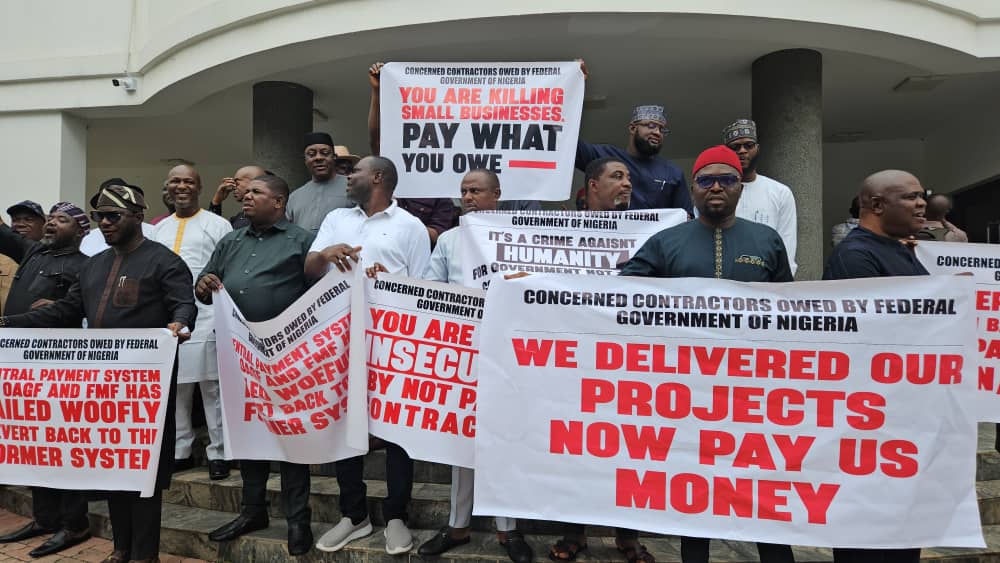
At the center of the issue is the Federal Government’s growing backlog of unpaid obligations to contractors who executed public projects. These debts, accumulated over several fiscal cycles, have reached alarming levels.
Recent budget disclosures show that the government has allocated about N1.7 trillion specifically to settle contractor liabilities from 2024, alongside an additional N100 billion for older obligations, bringing the total planned repayment to about N1.8 trillion.
Get TikTok SEO Cheat here
Despite these provisions, industry estimates suggest that total outstanding arrears may exceed N2 trillion and, in some cases, even approach N4 trillion when broader liabilities are considered.
The root causes of this crisis include delayed capital releases, partial funding of budgeted projects, and persistent revenue shortfalls.
How Contractor Arrears Translate Into Credit Risk
The unpaid obligations are not just a government accounting issue. They directly impact the financial system in several critical ways.
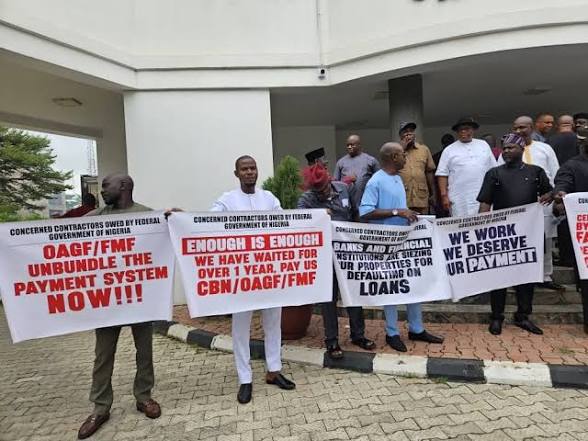
First, many contractors rely heavily on bank loans to execute government projects. When payments are delayed, these contractors struggle to service their debts, leading to increased loan defaults.
Second, banks begin to view lending to government contractors as high risk. This leads to tighter credit conditions, higher interest rates, and stricter lending requirements.
Third, the financial strain spreads beyond contractors to suppliers, workers, and associated industries, creating a chain reaction of economic stress.
Over time, this situation erodes confidence in public sector contracts, discouraging private sector participation in infrastructure development.
Read More On:
- Nigerian Army Confirms Terrorist Attack on Operation Hadin Kai Base in
- Borno Dangote Group Targets $40 Billion Investment to Boost Fertilizer and Oil Output
Investor Reaction and Market Pricing Pressure
Investors closely monitor fiscal discipline and government payment behavior. When arrears accumulate, it sends negative signals about liquidity and fiscal management.
As a result, investors begin to price in higher risk premiums on Nigerian assets. This can manifest in several ways:
Higher yields on government bonds
Reduced appetite for Nigerian debt instruments
Pressure on the naira due to capital outflows
Increased borrowing costs for both government and private sector
Analysts warn that persistent arrears could further weaken investor confidence, especially in an already fragile macroeconomic environment.
Impact on Infrastructure and Economic Growth
The contractor debt crisis is also slowing down infrastructure development across the country.
Many contractors have either abandoned projects or reduced work pace due to lack of payment. Others are unable to bid for new contracts because their capital is tied up in unpaid projects.
This has several consequences:
- Delayed completion of roads, bridges, and public facilities
- Rising cost of infrastructure due to inflation and project delays
- Loss of jobs in construction and related sectors
- Reduced economic productivity
Ultimately, infrastructure bottlenecks can hinder long term economic growth and development.
Government Response and Budgetary Measures
The Federal Government has acknowledged the severity of the issue and taken steps to address it.
Key measures include:
- Allocation of N1.7 trillion in the 2026 budget to settle verified contractor debts
- Additional N100 billion for legacy obligations
- Verification processes to ensure only legitimate claims are paid
- Partial payments already made, including over N152 billion disbursed recently
While these steps signal commitment, concerns remain about implementation, as past budgets have often experienced delays in fund releases.
Read More On:
- FG Launches New Commodity Exchange Board to Tackle Food Security.
- Telecom Sabotage Peaks: 656 Generators and Batteries Stolen Across Nigeria.
Challenges Limiting Effective Resolution
Several structural challenges continue to hinder a full resolution of the crisis.
Revenue constraints remain a major issue, limiting the government’s ability to meet obligations on time.
Debt servicing costs are consuming a large portion of government revenue, leaving less room for capital payments.
Bureaucratic bottlenecks and verification delays slow down disbursement processes.
There is also a credibility gap, as contractors and investors remain skeptical due to previous unmet promises.
Broader Economic Implications
The contractor arrears issue is not isolated. It reflects deeper structural weaknesses in Nigeria’s fiscal management.
If not addressed effectively, it could lead to:
- Higher systemic credit risk in the banking sector
- Reduced private sector investment
- Slower economic recovery
- Increased unemployment
- Weakening of Nigeria’s global investment appeal
In extreme cases, prolonged arrears could trigger a broader liquidity crisis across key sectors of the economy.
What Needs to Be Done
To restore confidence and stabilize the system, experts recommend a combination of short term and long term measures.
Immediate priorities should include:
- Fast tracking payment of verified contractor debts
- Improving transparency in the payment process
- Ensuring timely release of budgeted funds
Long term reforms should focus on:
- Strengthening revenue generation
- Improving budget implementation efficiency
- Adopting stricter project financing frameworks
- Enhancing public financial management systems
These steps are essential to rebuild trust between the government, contractors, and investors.
Conclusion
The rising contractor arrears in Nigeria have evolved into a significant economic risk with far reaching consequences. What began as delayed payments has now become a systemic issue affecting credit markets, investor confidence, and infrastructure development.
While the government’s budgetary response is a step in the right direction, the real test lies in execution. Until payments are made consistently and fiscal discipline is strengthened, investors are likely to continue pricing in risk, keeping pressure on Nigeria’s financial system.
Addressing this challenge effectively will not only stabilize the economy but also restore confidence in Nigeria as a viable destination for investment.