


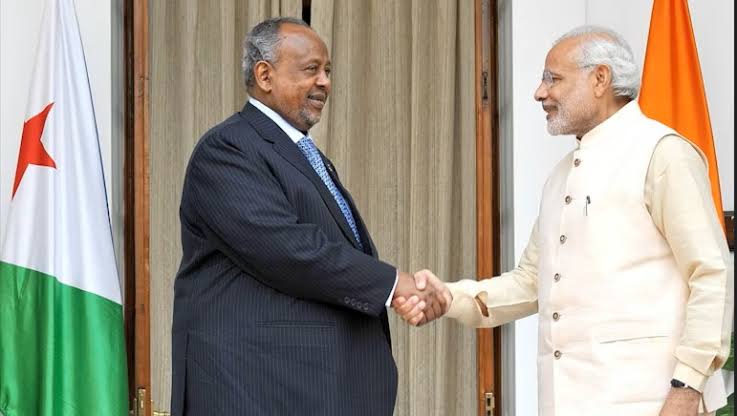
A major diplomatic gathering that was expected to redefine strategic cooperation between India and the African continent has now been abruptly placed on hold as fears surrounding the rapidly expanding Ebola outbreak continue to intensify across parts of Central and East Africa.
In a development that has sent shockwaves through diplomatic, healthcare, and economic circles, the Government of India, working closely with the African Union Commission, officially confirmed the postponement of the Fourth India Africa Forum Summit. The summit, which was expected to attract presidents, prime ministers, foreign ministers, economic advisers, health experts, investors, and policy strategists from across Africa and Asia, had been widely viewed as one of the most significant international engagements involving the Global South.
Instead of delegates boarding flights to New Delhi for strategic discussions on trade, infrastructure, security, digital transformation, healthcare cooperation, and development financing, global attention has now shifted toward emergency disease containment efforts unfolding in parts of the Democratic Republic of the Congo and Uganda.
What was initially anticipated to become a celebration of diplomatic partnership has suddenly transformed into a sobering reminder of how fragile international planning can become when public health emergencies spiral beyond regional borders.
Get TikTok SEO Cheat here
The decision to postpone the summit did not emerge from ordinary scheduling complications. It followed growing international anxiety surrounding the spread of the rare Bundibugyo strain of the Ebola virus, a variant that has alarmed global health institutions because of the absence of an approved vaccine or guaranteed treatment protocol.
Inside diplomatic corridors, the postponement is being interpreted not merely as a temporary administrative adjustment but as a powerful symbol of how health crises can reshape international priorities within days. The summit represented more than a ceremonial gathering. It was expected to deepen political trust, unlock fresh investment channels, strengthen security cooperation, and reinforce India’s expanding influence across Africa.
Now, instead of discussing future economic growth inside conference halls, leaders and health authorities are concentrating on disease surveillance, border monitoring, emergency medical logistics, and outbreak containment.
The announcement has generated widespread reactions from governments, economists, healthcare specialists, humanitarian agencies, and geopolitical analysts around the world. Many experts believe the postponement reflects the growing reality that global diplomacy can no longer be separated from public health preparedness.
For African nations already battling economic pressure, security instability, climate challenges, and healthcare vulnerabilities, the Ebola outbreak represents yet another serious test of resilience. For India, the situation creates a delicate balancing act between maintaining diplomatic momentum and protecting public safety.
Across New Delhi, preparations that had been underway for months are now slowing dramatically. Security planning, hospitality arrangements, transportation coordination, diplomatic receptions, and bilateral negotiation schedules have all been suspended indefinitely pending further consultations.
Yet despite the postponement, both India and the African Union insist that their strategic partnership remains strong.
What now unfolds is a story far bigger than a canceled summit. It is a story about the intersection of diplomacy, global health security, crisis management, and the unpredictable realities of an interconnected world.
India and African Union Confirm Summit Postponement
The official confirmation came through a joint communication released by the Indian Ministry of External Affairs alongside representatives of the African Union Commission.
According to diplomatic officials familiar with the consultations, the decision followed several emergency discussions involving health advisers, regional security analysts, foreign policy strategists, and public health agencies monitoring the outbreak situation.
Sources indicate that both sides reached the conclusion that proceeding with a summit involving dozens of delegations from across Africa could create unnecessary public health risks and major logistical complications.
The summit had originally been expected to host leaders and representatives from more than fifty African countries alongside senior Indian government officials and international observers.
However, as the Ebola outbreak continued to expand across affected regions, concerns intensified regarding travel safety, quarantine implications, airport screenings, medical preparedness, and the possibility of cross border transmission.
Diplomatic insiders described the atmosphere surrounding the final consultations as “extremely cautious and deeply serious.”
The Ebola Crisis Reshaping International Priorities
At the center of the crisis is the Bundibugyo strain of the Ebola virus, one of the less common but highly dangerous variants of the disease.
Unlike previous outbreaks involving the Zaire strain, which eventually saw the development of vaccines and treatment options, the Bundibugyo variant presents a particularly alarming challenge because there is currently no widely licensed vaccine specifically approved for it.
This reality has intensified global concern.
Health authorities monitoring the outbreak have reported rising suspected infections alongside increasing fatalities in affected communities. Medical teams operating within outbreak zones continue to face enormous difficulties linked to infrastructure limitations, remote geography, community resistance, and shortages of specialized medical equipment.
Several border regions are reportedly under heightened surveillance as authorities attempt to slow movement and prevent further spread.
International health agencies fear that without rapid containment, the outbreak could place additional strain on already vulnerable healthcare systems within neighboring countries.
Why the Summit Became Impossible to Hold
Diplomatic gatherings of this magnitude involve extensive movement of officials, advisers, journalists, security personnel, translators, medical teams, business leaders, and support staff.
In ordinary circumstances, such movement represents a symbol of international cooperation. During a health emergency, however, it can become a major risk factor.
Officials involved in the summit planning reportedly identified several immediate concerns:
| Major Concern | Potential Risk |
|---|---|
| International travel movement | Increased exposure possibilities |
| Large diplomatic gatherings | Difficulty enforcing health controls |
| Delegations from affected regions | Quarantine complications |
| Emergency response limitations | Delayed containment if cases emerge |
| Public anxiety within India | Political and social backlash |
Indian authorities were reportedly especially cautious about the possibility of creating panic among citizens if health concerns emerged during the summit itself.
At the same time, African governments battling the outbreak were already redirecting enormous resources toward emergency healthcare operations.
Many leaders who had planned to attend the summit are now required to remain within their countries to supervise crisis response activities directly.
Inside the Growing Health Emergency
The Ebola outbreak has rapidly evolved into one of the continent’s most closely monitored health emergencies.
Medical responders working within affected areas describe a situation marked by growing pressure on hospitals, shortages of isolation facilities, and increasing fear among local populations.
The Bundibugyo strain has complicated response strategies because healthcare systems cannot rely on the same vaccine infrastructure previously deployed against other Ebola variants.
Healthcare experts explain that containment efforts now depend heavily on traditional outbreak control measures such as:
| Containment Measure | Purpose |
|---|---|
| Contact tracing | Identifying exposed individuals |
| Border screening | Limiting cross border spread |
| Community awareness campaigns | Reducing misinformation |
| Isolation centers | Preventing transmission |
| Protective equipment deployment | Safeguarding medical personnel |
The absence of guaranteed pharmaceutical intervention has elevated the urgency surrounding every stage of the response effort.
Economic Consequences of the Postponement
Beyond healthcare implications, the postponement also carries substantial economic consequences for both India and participating African nations.
The summit had been expected to produce major announcements concerning trade expansion, infrastructure financing, technology cooperation, renewable energy projects, agricultural development, pharmaceutical partnerships, and defense collaboration.
Several bilateral agreements were reportedly nearing completion before the postponement decision emerged.
Now, many of those negotiations face uncertainty.
Economic analysts warn that delays in high level diplomatic engagement can temporarily slow investment confidence, particularly for projects requiring direct governmental approval or strategic political commitments.
Sectors expected to feature prominently during the summit included:
| Sector | Expected Focus |
|---|---|
| Digital technology | Artificial intelligence and connectivity |
| Renewable energy | Solar and clean energy projects |
| Healthcare | Pharmaceutical cooperation |
| Agriculture | Food security initiatives |
| Defense | Security partnerships |
| Education | Scholarship and research programs |
Business communities across both regions are now closely monitoring how long the postponement may last.
India’s Expanding Role in African Development
Despite the summit suspension, Indian officials insist that cooperation with Africa remains active and deeply important.
Over recent years, India has significantly expanded its footprint across the continent through infrastructure projects, healthcare partnerships, educational scholarships, technology initiatives, and development financing.
Diplomatic observers note that India’s relationship with Africa differs from many traditional geopolitical partnerships because it often emphasizes shared development experiences, South South cooperation, and technical capacity building.
Following the postponement announcement, Indian authorities reaffirmed their willingness to support African health institutions during the Ebola crisis.
Officials indicated that India may provide:
| Possible Support Area | Potential Assistance |
|---|---|
| Medical logistics | Emergency healthcare supplies |
| Technical expertise | Disease response specialists |
| Laboratory cooperation | Diagnostic support |
| Training initiatives | Public health capacity building |
| Digital coordination | Remote consultation systems |
This shift effectively transforms India’s immediate role from summit host into healthcare support partner.
Global Health Experts Warn Against Complacency
Public health specialists around the world have largely welcomed the postponement decision.
Experts argue that large international gatherings during active outbreak situations can create unpredictable consequences, especially when dealing with highly infectious diseases requiring intense containment strategies.
Several epidemiologists note that the decision reflects lessons learned from previous international health emergencies where delayed restrictions contributed to wider transmission.
At the same time, experts caution that postponing diplomatic events alone will not solve the deeper healthcare challenges confronting affected regions.
They stress that sustained investment in disease surveillance systems, laboratory infrastructure, healthcare staffing, and emergency preparedness remains essential.
Diplomatic Channels Remain Open
Although the physical summit has been postponed, diplomatic engagement between India and African states continues actively behind the scenes.
Officials confirmed that smaller virtual consultations and bilateral discussions are expected to proceed in modified formats.
This approach is intended to prevent total disruption of ongoing projects and strategic planning.
Several diplomatic analysts believe the continued communication demonstrates that the partnership itself remains stable despite temporary operational setbacks.
IAFS Summit Status at a Glance
| Category | Current Situation |
|---|---|
| Summit venue | New Delhi remains host city |
| Physical gathering | Postponed indefinitely |
| Diplomatic consultations | Continuing virtually |
| Health monitoring | Intensified internationally |
| Africa India relations | Remain active |
| Economic negotiations | Delayed but ongoing |
| Healthcare cooperation | Expanding rapidly |
What Happens Next
The future of the summit now depends heavily on how effectively the Ebola outbreak is contained.
International health agencies continue to monitor developments closely while governments assess evolving risk levels.
Diplomatic sources suggest that new summit dates ma⁸y only emerge after health authorities gain confidence that regional transmission risks have significantly reduced.
Until then, uncertainty remains.
Yet many analysts believe the postponement may ultimately strengthen future cooperation between India and Africa by placing healthcare collaboration at the center of their strategic relationship.
The crisis has reinforced an increasingly important global lesson. Economic partnerships, diplomatic ambitions, and political influence all depend heavily on public health stability.
Conclusion
What was expected to become a defining diplomatic moment for India and Africa has instead become a stark illustration of how rapidly global priorities can shift during a public health emergency.
The postponement of the India Africa Forum Summit reflects far more than caution. It reflects the reality that health security now sits at the heart of international diplomacy, economic planning, and geopolitical strategy.
For India, the challenge now lies in balancing leadership ambitions with responsible crisis management.
For African nations confronting the outbreak directly, the focus remains survival, containment, and protecting vulnerable populations from further devastation.
And for the wider international community, the unfolding situation serves as another reminder that in an interconnected world, a health emergency in one region can quickly influence diplomacy, economics, and international relations across continents.
Read More On: