

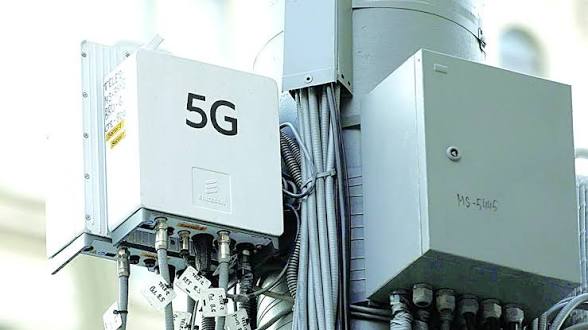
The Nigerian telecommunications landscape is currently witnessing its most significant transformation since the initial launch of GSM services over two decades ago. As the Nigerian Communications Commission (NCC) concludes its most recent spectrum auctions, the conversation has shifted from “if” 5G will arrive to exactly “when” it will hit your local neighborhood.
For the average Nigerian professional or student, this isn’t just about faster social media scrolling. It is about the economic ripple effects: better remote work capabilities, stable digital banking, and the infrastructure needed for the next wave of indigenous tech startups. However, the rollout is not a blanket event. It is a strategic, city-by-city expansion that follows strict regulatory obligations and massive infrastructure investments from the major telcos.
In this guide, we break down the latest updates on the 5G spectrum auction, the timeline for city-specific coverage, and the practical steps you need to take to ensure your hardware is ready for the high-speed future.
A Catalyst For Change
The Nigerian Communications Commission (NCC) recently finalized the latest round of 3.5 GHz spectrum auctions, a move designed to deepen the penetration of ultra-high-speed internet across the federation. Unlike previous auctions which were criticized for high entry barriers, the recent regulatory framework has emphasized “rollout obligations” rather than just revenue generation for the government.
The winners of these spectrum slots—primarily MTN Nigeria, Airtel Nigeria, and the emerging player Mafab Communications—are now under a legal mandate to expand their services beyond the initial metropolitan hubs. This auction is the engine driving the current race to install thousands of new base stations across the six geopolitical zones. From an economic perspective, this spectrum release is expected to contribute significantly to the national GDP by enabling sectors like telemedicine, smart agriculture, and advanced e-commerce.
Which cities have 5G coverage now?
At the current stage of the rollout, 5G signal is concentrated in the high-density urban areas. If you reside in one of these “Tier 1” cities, you are likely already seeing the 5G icon on compatible devices, provided you are within range of a localized base station.
Get TikTok SEO Cheat here
| City | Current Coverage Status | Primary Providers |
|---|---|---|
| Lagos | Extensive (Ikeja, Island, Lekki, Ikorodu) | MTN, Airtel, Mafab |
| Abuja | High (Wuse, Maitama, Garki, Airport Road) | MTN, Airtel, Mafab |
| Port Harcourt | Growing (Old GRA, Trans Amadi) | Airtel, MTN |
| Kano | Moderate (City Center, Nassarawa) | MTN, Mafab |
| Ibadan | Expanding (Bodija, Ring Road) | MTN |
| Benin City | Selective (GRA, Ugbowo) | MTN |
| Maiduguri | Initial Pilot (Selected Zones) | MTN |
While coverage in these cities is officially “active,” it remains patchy. Users often report dropping back to 4G LTE when moving indoors or into high-density residential areas where signal penetration is still being optimized.
Full rollout timeline
The NCC’s rollout plan is structured into phases to ensure that even “Tier 2” and “Tier 3” cities are not left behind. According to the deployment obligations, the major networks must cover at least one state in each geopolitical zone within the first two years of their license award, with a mandate to reach all 36 states within a ten-year window.
- Phase 1 (Immediate): Concentration on state capitals and commercial hubs (Lagos, Kano, Port Harcourt, Enugu, Ibadan).
- Phase 2 (Ongoing): Expansion into industrial zones and major educational centers. This includes cities like Owerri, Kaduna, Jos, and Abeokuta.
- Phase 3 (Long-term): Deep rural penetration and full interstate highway coverage. This is where the real economic impact will be felt by the “unbanked” and underserved populations.
Do you actually need a 5G phone?
This is the question every Nigerian is asking. The short answer is: If you want to experience 5G speeds, yes. Your current 4G LTE device lacks the physical hardware (antennas and modems) to connect to the 3.5 GHz spectrum.
However, you do not need to rush into a ₦2,000,000 purchase. The market has shifted significantly, and 5G-enabled chips are now appearing in mid-range and even budget-friendly devices. If your 4G phone is still serving you well, you can wait. But if you are currently due for an upgrade, it is highly recommended to choose a device that is “5G ready” to future-proof your investment for the next three to five years.
Cheapest 5G phones in Nigeria
For students and young professionals at a place like Ikorodu or similar hubs, budget is everything. Here are the most accessible 5G devices currently trending in the Nigerian market:
- Samsung Galaxy A06 5G: Retailing around ₦196,000, this is one of the most stable entry points into the 5G world with reliable Samsung software support.
- Tecno Spark 40 series: Tecno has been aggressive in bringing 5G to the masses. The Spark series offers 5G connectivity for under ₦200,000 in most retail outlets.
- Infinix Hot 60i: A favorite for content creators, this device provides 5G speeds alongside a large battery, making it a “value king” for heavy data users.
- itel P65: For those on the absolute tightest budget, itel has introduced 5G options hovering around the ₦150,000 mark, though with some compromises in camera and screen quality.
4G vs. 5G Speed Comparison
The performance gap between the two generations is staggering when measured in real-world urban scenarios.
- 4G LTE: In a crowded area like Yaba or Ikeja, you might see speeds between 10 Mbps and 40 Mbps. This is enough for YouTube and WhatsApp but can struggle with 4K streaming or large file uploads.
- 5G Performance: Recent tests in Lagos and Abuja show 5G speeds reaching as high as 430 Mbps. This is nearly 10 times faster than the average 4G connection. For a digital marketer or a software developer, this means a 2GB file that used to take 15 minutes to download can now be finished in less than 60 seconds.
Frequently Asked Questions (FAQ)
Do I need a new SIM card for 5G?
Most modern 4G SIM cards from MTN and Airtel are already 5G-ready. You do not necessarily need a new SIM, but you must ensure your “Network Settings” on your 5G-capable phone are set to “5G/4G/3G Auto.”
Will 5G consume my data faster?
Technically, no. A 100MB file is still 100MB. However, because 5G is so fast, you might find yourself consuming more content (like higher-resolution video) in a shorter time, which gives the impression that your data is finishing faster.
Is 5G available in rural areas?
Currently, no. The infrastructure costs for rural 5G are high, and telcos are prioritizing cities with high subscriber density first. Rural areas will likely remain on 4G for the foreseeable future while 5G stabilizes in the cities.
The Bottom Line
The Nigeria 5G spectrum auction is the starting gun for a new era of connectivity. While the rollout is currently urban-centric, the momentum is undeniable. Whether you are an entrepreneur looking to leverage high-speed data for your business or a student wanting to stay ahead of the curve, staying informed on the coverage map of your specific city is the first step toward the digital future. Keep an eye on the green lights in your city; the 5G era is officially here.
Read More On: