

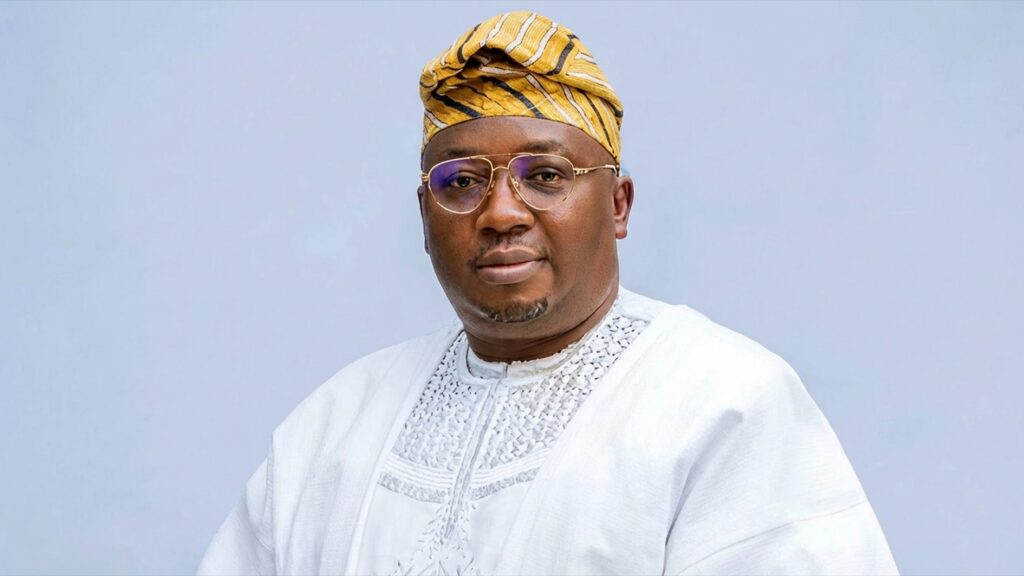
The political atmosphere in both Abuja and Ibadan has taken on a heightened sense of urgency and anticipation following a major development at the highest level of government. Chief Adebayo Adelabu, who currently serves as Nigeria’s Minister of Power, has formally initiated steps to resign from his cabinet position in order to pursue his long-standing ambition of becoming the governor of Oyo State.
This move is not merely a personal political decision. It represents a significant shift in the structure of President Bola Ahmed Tinubu’s cabinet and signals the early activation of political machinery ahead of the 2027 gubernatorial elections in one of Nigeria’s most politically strategic states.
What is unfolding is both a transition of power at the federal level and the ignition of a high-stakes political contest at the state level.
A Strategic Exit, Not an Abrupt Departure
At the heart of this development was a crucial meeting held at the Presidential Villa. According to sources within the Presidency, the engagement between Adelabu and President Tinubu was far more than a routine briefing. It was, in effect, a structured and deliberate exit process.
Get TikTok SEO Cheat here
During this meeting, Adelabu presented what insiders described as a comprehensive stewardship report. This document reportedly detailed the policies, reforms, and interventions he spearheaded during his time as Minister of Power.
Key highlights of his presentation included:
- The development and rollout of the National Integrated Electricity Policy
- Progress made toward stabilizing Nigeria’s fragile national grid
- Efforts to address long-standing structural inefficiencies in power generation and distribution
- Strategic frameworks aimed at long-term sustainability in the energy sector
Sources indicate that President Tinubu acknowledged the efforts made under Adelabu’s leadership, particularly given the historical instability of Nigeria’s power sector.
More importantly, the President is said to have given his consent for Adelabu to step down and pursue his political ambition. In Nigeria’s political culture, such approval is not merely symbolic. It often determines the viability of a candidate within the ruling party.
This endorsement effectively positions Adelabu as a serious contender in the upcoming Oyo governorship race.
Reform, Pressure, and Persistent Challenges
Adelabu’s tenure as Minister of Power has been defined by a mix of ambitious reforms and deeply entrenched structural challenges.
Nigeria’s electricity sector has long been plagued by:
- Inconsistent power supply
- Aging infrastructure
- Liquidity crises within the value chain
- Heavy dependence on gas supply
- Policy inconsistencies over decades
Against this backdrop, Adelabu’s administration focused on several key areas:
1. Grid Stabilization Efforts
One of the most immediate challenges he faced was the frequent collapse of the national grid. His ministry introduced coordinated interventions aimed at improving grid resilience.
This included:
- Strengthening collaboration with Generation Companies
- Addressing bottlenecks in gas supply
- Enhancing transmission capacity
While complete stability remained elusive, there were measurable improvements in response time and recovery processes after disruptions.
2. Financial Reforms in the Power Sector
A major issue in Nigeria’s electricity ecosystem is the accumulation of debt across the value chain.
Adelabu’s administration worked to:
- Engage stakeholders on debt restructuring
- Improve payment discipline among distribution companies
- Explore financing models for infrastructure upgrades
These efforts were aimed at restoring investor confidence in the sector.
3. Policy and Planning Frameworks
Perhaps the most enduring part of his legacy lies in policy development.
The introduction of long-term planning instruments was designed to:
- Guide electricity expansion over the next decade
- Align Nigeria’s energy goals with global sustainability trends
- Create a roadmap for renewable energy integration
These frameworks are expected to outlive his tenure and influence future administrations.
4. Linking Power Stability to Economic Growth
In his final briefings, Adelabu emphasized a critical point: stable electricity is central to economic transformation.
He argued that:
- Reliable power is essential for industrial growth
- Digital businesses depend on uninterrupted energy supply
- Job creation in the tech sector requires infrastructure stability
He also connected the issue of power to youth migration, often referred to as “Japa,” suggesting that improved domestic opportunities could reduce the trend.
A Political Battlefield Begins to Form
With his exit from the federal cabinet now imminent, Adelabu’s attention shifts fully to Oyo State politics.
This is not his first attempt at the governorship.
He previously contested:
- Under the ruling All Progressives Congress in 2019
- Under the Accord Party in 2023
His return to the APC fold and his current position within the federal government give him renewed political strength.
The Political Landscape in Oyo State
Oyo State remains one of the most politically competitive states in southwestern Nigeria.
Key factors shaping the race include:
- Strong party structures across major political parties
- Influential political blocs within Ibadan and other regions
- A history of closely contested elections
Adelabu enters a field that already includes notable figures such as Sharafadeen Alli.
Early Entry Advantage
By stepping down ahead of the primaries, Adelabu gains:
- Time to reconnect with grassroots supporters
- Opportunity to rebuild alliances within the APC
- Space to counter internal opposition
This early move also allows him to avoid last-minute disqualification risks tied to party timelines.
Internal Party Dynamics
Recent speculation around a so-called “Unity List” had raised concerns about potential exclusion of certain aspirants.
Adelabu’s decision to step forward at this stage appears to neutralize those concerns and reassert his relevance within the party.
It also signals that he remains firmly in contention with backing from influential quarters.

Implications for the Federal Government
Adelabu’s resignation creates a vacancy in one of the most sensitive ministries in Nigeria.
The Ministry of Power plays a central role in:
- Economic planning
- Industrial development
- Infrastructure policy
The expectation is that President Tinubu will act swiftly to appoint a replacement in order to maintain continuity.
A prolonged vacuum could disrupt ongoing reforms and delay key projects.
The Road Ahead
The coming weeks will be critical on multiple fronts.
At the Federal Level
- Formal resignation and handover process
- Appointment of a new Minister of Power
- Continuation of ongoing electricity sector reforms
At the State Level
- Intensification of political campaigns in Oyo
- Mobilization of party structures ahead of primaries
- Strategic alliances and endorsements
Key Timeline
- Appointment as Minister of Power in 2023
- Renewed governorship ambition publicly declared in 2025
- Presidential briefing and approval secured in 2026
- Expected resignation and transition period shortly after
- Party primaries scheduled for May 2026
The Bigger Picture
Adelabu’s decision represents more than a career move. It highlights the fluid nature of Nigerian politics, where federal appointments often serve as stepping stones to state leadership ambitions.
It also underscores the strategic importance of Oyo State within the national political equation.
As the situation continues to develop, one thing is clear: the race for Oyo’s top seat has begun in earnest, and Adelabu has positioned himself at the center of it.
Read More On: