

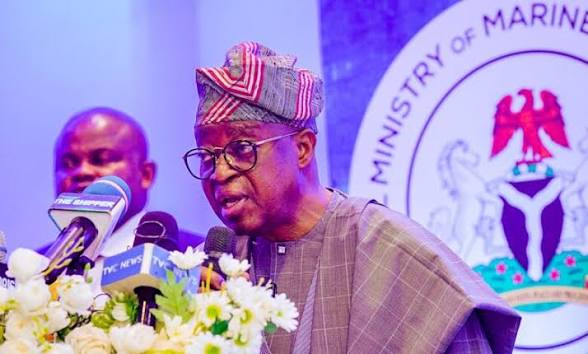
Nigeria’s maritime sector is entering a new era of financial strength. During a detailed performance review held in Lagos, the Minister of Marine and Blue Economy, Adegboyega Oyetola, revealed that agencies under the ministry generated an impressive ₦1.83 trillion in revenue for the 2025 fiscal year.
This figure marks a dramatic rise from the ₦700.79 billion recorded in 2023. The increase clearly shows that Nigeria’s Blue Economy strategy is no longer just an idea. It is now a major pillar supporting the country’s non oil revenue drive.
A Turning Point for Nigeria’s Blue Economy
When the Ministry of Marine and Blue Economy was created as a separate entity, its mission was clear. The government wanted to diversify income sources while also fixing long standing inefficiencies within the maritime system.
Two years later, the results are becoming visible. The sharp rise in revenue reflects a coordinated effort to improve operations across ports, waterways, and other marine related sectors.
Get TikTok SEO Cheat here
This transformation is not accidental. It is the outcome of targeted reforms, improved oversight, and better use of technology.
Breaking Down the ₦1.83 Trillion Revenue
The total revenue generated in 2025 came from several agencies, with the Nigerian Ports Authority playing a leading role.
Key Figures
• 2023 revenue stood at ₦700.79 billion
• 2025 revenue climbed to ₦1.83 trillion
• This represents growth of about 160 percent
• Government is now targeting ₦2 trillion annually by 2027
The Nigerian Ports Authority exceeded expectations by generating nearly ₦1.97 trillion when port related earnings are fully considered.
This surge highlights how important efficient port operations are to national revenue.
Read More On:
- Understanding AI Privacy and How to Stay Safe.
- Wabi Sabi Living: How to Create Beautifully Imperfect Clay Pieces for Your Kitchen.
- Tinubu Appoints Dalhatu Abubakar as NCX Chairman in Major Economic Reform Move
The Driving Forces Behind the Growth
According to Minister Oyetola, the success recorded in 2025 is the result of deliberate reforms rather than temporary market conditions.
1. Digital Transformation
One of the most important changes is the adoption of digital systems across port operations.
• Introduction of a Port Community System has reduced manual processes
• Automation has improved documentation accuracy
• Digital payments have reduced opportunities for revenue leakages
By removing unnecessary human interference, the system has become faster, more transparent, and more reliable.
2. Stronger Regulation
The ministry has taken steps to improve oversight within the sector.
• Progress on the Nigerian Port Economic Regulatory Agency Bill
• Strengthening of the Nigerian Shippers’ Council
• Creation of a fair environment for port users
These changes have increased confidence among investors and shipping companies, leading to higher activity levels at Nigerian ports.
3. Improved Revenue Tracking
New systems have been introduced to ensure accurate billing across all operations.
• Every vessel entering Nigerian waters is properly recorded
• Cargo handling is monitored more closely
• Revenue collection is now more efficient
This has significantly reduced losses that previously went unnoticed.
Modernising Nigeria’s Ports
Another major focus of the ministry is infrastructure development. Many of Nigeria’s key ports have been in operation for decades and are no longer suited to modern shipping demands.
Current Challenges
• Apapa Port is over a century old
• Tin Can Island Port has operated for more than fifty years
• Existing facilities struggle to handle modern vessel sizes
Ongoing Solutions
• Partnerships with global operators such as Abu Dhabi Ports Group
• Plans to upgrade port infrastructure
• Expansion of cargo handling capacity
Expected Benefits
• Faster vessel turnaround time with a target of four days
• Ability to accommodate larger ships
• Increased revenue from higher cargo volumes
Read More On:
- Africa Technology Expo Targets Massive Deal Growth in Lagos.
- Nigeria Releases Oil and Gas Reserves Data with Fresh Insights
- Nigeria Faces Inflation Uncertainty Despite Recent Economic Gains.
Expanding Beyond Ports
The Blue Economy covers more than shipping activities. The ministry is also focusing on other marine based industries.
Fisheries Growth
Nigeria has recorded progress in fish production.
• Output increased from 1.1 million metric tonnes to 1.4 million metric tonnes
• There is still a gap compared to national demand of 3.6 million tonnes
This growth shows improved management of marine resources, though more work is needed to achieve self sufficiency.
Supporting Local Shipowners
To strengthen indigenous participation, the ministry launched initiatives aimed at empowering local businesses.
• Introduction of the Cabotage Vessel Financing Fund
• Support for Nigerian owned shipping companies
• Encouragement of local ownership within the maritime sector
This approach ensures that more revenue remains within the country instead of flowing to foreign operators.
Nigeria’s Rising Global Influence
Nigeria is also gaining recognition on the international stage. Its election into the council of the International Maritime Organization reflects growing influence in global maritime affairs.
This position allows Nigeria to contribute to policy decisions that shape international shipping practices. It also gives the country a stronger voice in protecting its interests.
Looking Ahead: Future Plans
The ministry is not slowing down. Several major initiatives are already in progress.
Key Focus Areas
• Creation of a national shipping carrier to increase participation in global trade
• Expansion of inland waterways to reduce pressure on road transport
• Dredging of over 2,000 kilometers of waterways
One notable project is the Jos Inland Dry Port, which is expected to become fully operational soon. This facility will improve cargo movement within the country and open up new economic opportunities.
What This Means for Nigeria
The ₦1.83 trillion revenue milestone is a clear signal that the maritime sector is becoming a key driver of economic growth.
Key Benefits
• Reduced reliance on oil revenue
• Increased job opportunities within marine industries
• Improved infrastructure across ports and waterways
• Stronger position in global trade
Nigeria’s Blue Economy is no longer just a concept with future promise. It is now delivering real financial results.
Through a combination of modern infrastructure, improved regulation, and efficient systems, the country is unlocking the full potential of its maritime resources.
The progress made so far shows that with the right policies and consistent implementation, Nigeria can build a strong and sustainable economy that goes beyond oil.
Read More On: