



In many parts of Nigeria, the true impact of governance is often measured not by speeches delivered in legislative chambers, but by the visible transformation experienced in the daily lives of ordinary citizens. Across communities where unemployment continues to challenge young people, where farmers struggle to move produce to urban markets, and where transportation costs continue to place pressure on household income, strategic empowerment programs have become more important than ever.
Within this reality, a remarkable intervention has emerged from the political landscape of Cross River State, where a prominent lawmaker has taken an ambitious step toward reshaping grassroots economic participation through transportation based empowerment.
In what many residents have described as one of the most practical constituency interventions in recent memory, the lawmaker officially commissioned and distributed a substantial fleet of transport vehicles to carefully selected beneficiaries across several communities. The initiative, which attracted widespread attention from political observers, traditional rulers, youth organizations, market leaders, and transport unions, is being celebrated as a deliberate move toward sustainable wealth creation rather than temporary relief packages.
For decades, transportation has remained one of the major obstacles affecting economic growth in many local communities across the state. Farmers frequently battle poor access to markets. Small business owners spend heavily on logistics. Students endure long and difficult journeys between towns. Rural dwellers often face isolation during harsh weather conditions because of limited transport availability.
Get TikTok SEO Cheat here
This latest empowerment program appears designed to confront those realities directly.
Rather than distributing consumable items that offer only short lived relief, the lawmaker has chosen to invest in productive assets capable of generating continuous income for beneficiaries while simultaneously strengthening local mobility and commercial activities.
The atmosphere surrounding the commissioning ceremony reflected more than political celebration. It symbolized hope, opportunity, and the possibility of economic independence for many struggling families.
Community leaders who attended the event praised the initiative as a model of people centered representation. Youth groups described the intervention as timely and transformational. Transport operators viewed the development as a major boost for local logistics. Political analysts also noted that the empowerment project demonstrates a growing expectation among citizens that elected representatives must deliver practical and measurable developmental outcomes.
As beneficiaries received keys to buses, minivans, mini buses, and motorcycles, the moment represented more than a vehicle distribution exercise. It represented access to livelihood, mobility, dignity, and financial possibility.
This feature examines the structure of the initiative, the types of vehicles distributed, the selection process, the projected economic impact, the accountability framework guiding the program, and the broader implications for grassroots development within Cross River communities.
A Bold Transportation Revolution at the Grassroots
The empowerment initiative stands out because of its strategic focus on transportation as a tool for economic advancement.
Transportation remains one of the most critical sectors influencing trade, education, healthcare access, agriculture, and commercial expansion. In several communities across Cross River State, inadequate transport systems have continued to limit growth opportunities for residents.
By introducing a diversified transport fleet into the hands of constituents, the lawmaker appears to have adopted a long term developmental approach rather than a symbolic political gesture.
Observers at the ceremony noted that the vehicles were not randomly selected. Each category of vehicle was carefully matched to the transportation realities of the constituency.
The project combines commercial viability with social impact, ensuring that beneficiaries can generate sustainable income while simultaneously serving the mobility needs of their communities.
Detailed Breakdown of the Transport Fleet
The transport empowerment package contains several categories of vehicles, each designed for specific operational purposes.
Comprehensive Fleet Distribution Table
| Vehicle Category | Estimated Quantity | Intended Beneficiaries | Economic Purpose |
|---|---|---|---|
| High Capacity Buses | 5 | Inter town transport operators | Affordable long distance movement |
| Sienna Minivans | 10 | Interstate commercial drivers | Higher income transportation business |
| Mini Buses | 20 | Urban and local shuttle operators | Daily passenger movement |
| Motorcycles | 50 | Rural transport workers | Last mile transportation access |
High Capacity Buses for Inter Community Movement
One of the major highlights of the initiative was the distribution of large commercial buses designed to improve movement between towns and local government areas.
For many rural residents, transportation costs consume a significant portion of daily earnings. Traders transporting goods to urban markets often spend heavily on logistics, reducing profitability. Students and workers also face challenges securing affordable transport options.
The introduction of high capacity buses is expected to significantly reduce transport pressure while increasing passenger availability along critical routes.
Community stakeholders believe the buses will improve market integration between rural farmers and urban buyers, ultimately stimulating local commerce.
Transport union representatives present at the event described the buses as an economic lifeline capable of opening new business corridors for operators.
Sienna Minivans as Wealth Creation Assets
The inclusion of Sienna minivans demonstrates the program’s focus on sustainable entrepreneurship.
These vehicles are widely regarded as profitable assets within the interstate and charter transportation sector because of their passenger comfort, fuel efficiency, and versatility.
Beneficiaries receiving these vehicles are expected to operate profitable transport businesses capable of generating steady monthly income.
Analysts note that ownership of commercial transport vehicles often creates ripple effects within communities. Beyond the vehicle owner, several additional individuals benefit directly through driving opportunities, vehicle maintenance jobs, fuel supply operations, and roadside commerce.
For many young beneficiaries, the Sienna minivans represent a transition from unemployment into self reliance.
Mini Buses Expanding Urban Accessibility
Mini buses distributed under the initiative are expected to strengthen short distance transportation networks within densely populated communities.
These vehicles are particularly useful for daily shuttle operations connecting markets, schools, healthcare facilities, and residential areas.
Residents in some communities explained that transportation shortages have frequently led to long waiting periods and inflated transport fares.
The deployment of additional mini buses is expected to improve passenger convenience while creating competitive pricing within the transport sector.
Local transport associations welcomed the intervention, noting that expanding transportation availability would improve overall economic activity within the constituency.
Motorcycles Supporting Rural Connectivity
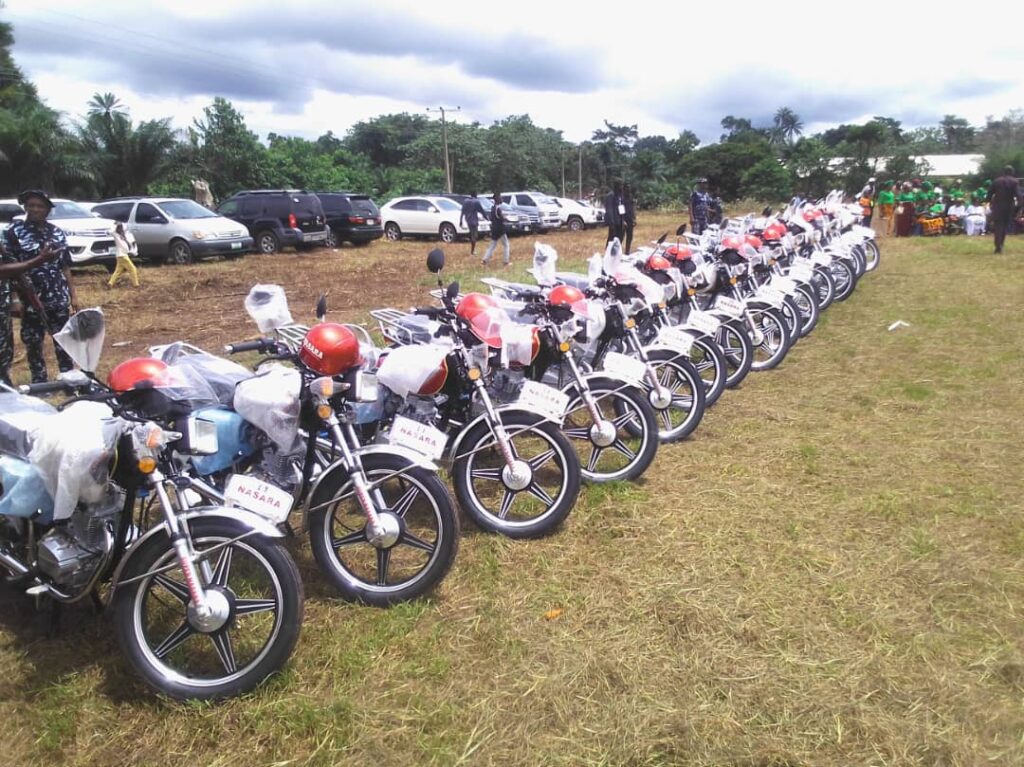
Perhaps one of the most socially impactful aspects of the program is the distribution of motorcycles for rural transportation operators.
Several remote communities in Cross River experience difficult road access conditions, making motorcycles one of the few reliable transportation options available.
Farmers transporting produce from remote settlements often depend heavily on motorcycles to access larger commercial centers.
Youth leaders at the ceremony noted that motorcycle empowerment would directly support young transport operators who previously lacked startup capital.
The motorcycles are expected to improve mobility in areas where larger vehicles cannot easily operate, especially during challenging weather conditions.
Transparent Beneficiary Selection Process
One of the recurring criticisms surrounding political empowerment programs in Nigeria is the issue of favoritism and unequal distribution.
To address these concerns, the lawmaker reportedly established a structured and transparent vetting process for selecting beneficiaries.
According to organizers, a non partisan committee comprising respected community stakeholders was tasked with identifying qualified recipients.
The committee reportedly prioritized individuals who demonstrated responsibility, entrepreneurial potential, and genuine financial need.
Beneficiaries were screened based on factors such as:
| Selection Criteria | Purpose |
|---|---|
| Financial Need | Ensuring support reaches vulnerable individuals |
| Community Reputation | Selecting trusted beneficiaries |
| Entrepreneurial Readiness | Ensuring operational capability |
| Geographic Representation | Fair distribution across wards |
The emphasis on equity distribution reportedly helped ensure that multiple communities benefited from the initiative rather than concentrating resources within a single area.
Observers noted that this approach significantly improved public confidence in the fairness of the program.
Economic Implications Beyond Immediate Empowerment
The transport fleet initiative is widely viewed as more than a vehicle donation exercise.
Economists and community development experts believe the project could trigger broader economic benefits across the constituency.
Direct Employment Generation
Each commercial vehicle distributed has the potential to support multiple individuals financially.
A single transport vehicle typically creates employment opportunities for:
- Drivers
- Conductors
- Mechanics
- Car wash operators
- Spare parts dealers
- Fuel station attendants
This means the initiative may indirectly support hundreds of livelihoods across the local economy.
Boost for Agricultural Commerce
Agriculture remains a major economic activity in many parts of Cross River State.
However, poor transportation access has historically contributed to post harvest losses and limited market reach for farmers.
With improved transportation availability, farmers may now gain faster access to urban markets where produce can be sold more efficiently.
Agricultural stakeholders believe this could help stabilize food supply chains while increasing farmer profitability.
Reduction in Youth Unemployment
Youth unemployment continues to pose social and economic challenges across many Nigerian communities.
By placing income generating assets directly into the hands of young constituents, the lawmaker’s initiative attempts to tackle unemployment through entrepreneurship rather than dependency.
Youth organizations praised the intervention for restoring hope among many struggling young people.
Several attendees at the event described the vehicles as tools for dignity and independence rather than mere political gifts.
Maintenance Structure and Accountability Measures
One major reason many empowerment programs fail is the absence of proper monitoring and maintenance systems.
Learning from past experiences, organizers reportedly integrated accountability mechanisms into the transport initiative.
Vehicle Insurance Coverage
All distributed vehicles were reportedly enrolled under comprehensive insurance protection.
This safeguard protects beneficiaries from catastrophic financial losses resulting from accidents, theft, or unforeseen damage.
Insurance experts at the event emphasized that commercial vehicle insurance improves operational stability and business continuity.
GPS Monitoring Systems
To discourage beneficiaries from selling the vehicles for immediate cash, tracking systems were reportedly installed across the fleet.
The monitoring framework is expected to provide operational oversight while ensuring that the vehicles continue serving their intended economic purpose.
Community leaders praised this accountability structure as evidence that the initiative was designed for sustainability rather than political publicity.
Community Reactions and Public Sentiment
The commissioning ceremony generated strong emotional reactions from various stakeholders.
Traditional rulers described the initiative as a practical demonstration of responsive leadership.
Youth leaders praised the lawmaker for prioritizing empowerment over rhetoric.
Women groups noted that improved transportation would positively affect market access, healthcare mobility, and educational opportunities for families.
Several transport operators expressed optimism that the initiative would improve transport efficiency across multiple communities.
Political observers also noted that the project reinforces growing public expectations for visible constituency development.
Voices From the Grassroots
Many attendees shared testimonies reflecting the significance of the intervention.
A youth representative described the initiative as “an opportunity for young people to rebuild their future through legitimate work.”
A market trader noted that improved transportation would reduce delays and spoilage affecting agricultural produce.
A community elder praised the lawmaker for “bringing governance closer to the people through practical development.”
The emotional atmosphere during the distribution ceremony revealed the deep economic pressures many residents currently face and why empowerment initiatives of this nature resonate strongly with ordinary citizens.
Broader Political Significance
Beyond the immediate economic benefits, analysts believe the transport empowerment initiative may influence how constituency representation is evaluated moving forward.
Citizens increasingly expect lawmakers to deliver practical interventions capable of improving living conditions directly.
Projects focused on employment generation, transportation, entrepreneurship, and economic sustainability are now viewed as more impactful than ceremonial political gestures.
The initiative also demonstrates how transportation infrastructure can serve as a powerful catalyst for grassroots development.
Summary Table of Projected Community Benefits
| Sector | Expected Impact |
|---|---|
| Transportation | Improved mobility and reduced transport shortages |
| Employment | Increased job opportunities for youth |
| Agriculture | Faster market access for farmers |
| Commerce | Improved movement of goods and services |
| Community Welfare | Better access to education and healthcare |
Conclusion
The transport fleet empowerment initiative introduced by the Cross River lawmaker represents far more than a political event.
It symbolizes an evolving model of grassroots representation centered on sustainability, mobility, entrepreneurship, and economic empowerment.
By investing in transportation infrastructure at the community level, the initiative directly addresses some of the most pressing challenges facing ordinary citizens, including unemployment, poor logistics, limited market access, and financial hardship.
For beneficiaries, the vehicles represent opportunity.
For communities, they represent connectivity.
For observers, they represent a possible blueprint for how constituency projects can produce lasting economic impact.
As the vehicles begin operations across towns and rural communities, many residents remain hopeful that the initiative will not only transform individual lives but also stimulate broader economic growth throughout the constituency.
The success of the program may ultimately be measured not simply by the number of vehicles distributed, but by the number of families lifted into sustainable prosperity through the power of mobility and enterprise.
Read More On: