




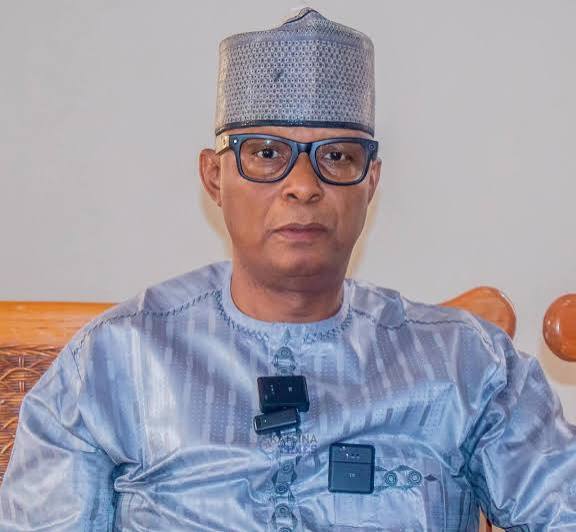
In a decisive move aimed at confronting Nigeria’s deepening housing crisis, President Bola Ahmed Tinubu has formally sworn in Muttaqha Rabe Darma as the new Minister of Housing and Urban Development. The oath of office, administered at the State House in Abuja, signals a renewed push by the Federal Government to reposition the housing sector as a cornerstone of national development and economic expansion.
The ceremony, though brief in duration, carried immense policy weight. It represents a recalibration of priorities within the Federal Executive Council, particularly in sectors tied directly to social welfare, infrastructure delivery, and urban planning. Observers within government and industry circles view this appointment as more than a routine cabinet change. It is being interpreted as a strategic intervention in one of the country’s most persistent structural challenges.
Muttaqha Rabe Darma Assumes Office Amid National Housing Pressure
With urban centers expanding at an unprecedented pace, the demand for affordable housing has surged far beyond supply. The arrival of Muttaqha Rabe Darma into the ministry comes at a time when millions of Nigerians are grappling with limited access to decent and affordable shelter.
During the swearing in, President Bola Ahmed Tinubu described the new minister as a precise fit for the role, emphasizing his blend of academic excellence, technical competence, and administrative experience. The President’s remarks underscored the administration’s expectation that the ministry will transition from policy rhetoric to measurable delivery.
Get TikTok SEO Cheat here
Government insiders suggest that this appointment is part of a broader internal strategy to inject urgency, discipline, and technical rigor into ministries that have historically struggled with execution gaps.
Academic Depth Meets Practical Governance
The profile of Muttaqha Rabe Darma stands out within the current cabinet due to its strong academic and engineering orientation. His educational journey reflects a rare combination of technical specialization and business leadership.
He holds advanced doctoral qualifications in both Industrial Engineering and Business Administration, disciplines that intersect at the point of efficiency, systems optimization, and large scale project management. This dual expertise places him in a unique position to approach housing not merely as a social obligation but as a complex production system requiring precision and innovation.
His earlier training in Mechanical Engineering from Bayero University Kano laid the foundation for a career grounded in structural thinking and problem solving. As a member of the Nigerian Society of Engineers, he is aligned with a professional community that prioritizes standards, safety, and sustainable development.
Beyond academia, his administrative experience includes leadership roles within the Petroleum Technology Development Fund, where he oversaw capacity building initiatives and institutional reforms. His tenure in various commissioner positions at the state level, particularly in works and housing related portfolios, exposed him to the operational realities of infrastructure delivery.
This blend of theory and practice is expected to influence how policies are designed and implemented within the housing ministry.
Confronting the 20 Million Housing Deficit
At the center of the national conversation is a housing deficit estimated in the tens of millions of units. This shortfall represents not just a numerical gap but a reflection of systemic inefficiencies across land administration, financing structures, and construction processes.
In his initial remarks, Muttaqha Rabe Darma acknowledged the scale of the challenge with a tone that combined realism and determination. He emphasized that addressing the deficit requires more than ambitious declarations. It demands a restructuring of how housing projects are conceived, funded, and executed.
A major concern identified by the new minister is the historical underperformance of public housing initiatives when compared to private sector developments. While private developers have demonstrated profitability and speed, government led projects have often been hindered by bureaucratic delays, funding inconsistencies, and weak oversight.
To bridge this gap, the minister is expected to introduce reforms that focus on process efficiency, cost reduction, and accountability. His approach suggests a shift toward viewing housing delivery as an integrated system where every stage, from land acquisition to final construction, must function seamlessly.
Mortgage Reform and Financial Accessibility
One of the most critical barriers to home ownership in Nigeria remains limited access to affordable mortgage financing. A significant portion of the population operates outside formal credit systems, making long term housing loans difficult to obtain.
Muttaqha Rabe Darma has indicated that reforming mortgage structures will be central to his agenda. This includes improving collaboration with financial institutions, strengthening housing finance agencies, and exploring innovative funding models that can reduce interest rates and extend repayment periods.
By making mortgages more accessible, the government aims to stimulate demand within the housing market while simultaneously encouraging developers to scale up supply. The ripple effect of such reforms could transform the sector into a major driver of economic inclusion.
Cabinet Reshuffle Signals Policy Urgency
The appointment of Muttaqha Rabe Darma follows the exit of Ahmed Musa Dangiwa from the cabinet. This transition is widely interpreted as part of a broader effort by President Bola Ahmed Tinubu to reenergize key ministries.
Political analysts note that housing occupies a unique position within national development strategy. It intersects with employment, urban planning, public health, and social stability. As such, any shift in leadership within this ministry carries implications that extend far beyond construction alone.
The reshuffle reflects a growing recognition within government that achieving meaningful progress in housing requires not just policy continuity but also fresh perspectives and renewed commitment to execution.
Housing as a Catalyst for Growth
The housing sector holds significant potential as an engine for economic expansion. From raw material production to on site construction activities, the industry supports a wide network of businesses and skilled labor.
With Muttaqha Rabe Darma now at the helm, stakeholders anticipate increased activity across the value chain. This includes manufacturers of building materials, contractors, engineers, architects, and digital service providers involved in real estate platforms.
A revitalized housing strategy could lead to job creation on a massive scale, particularly for artisans and technical workers. It could also stimulate local industries involved in cement production, steel fabrication, and interior finishing.
The minister has emphasized the importance of collaboration between the public and private sectors. By positioning the government as a strategic partner rather than a direct competitor, the ministry aims to leverage private sector efficiency while maintaining regulatory oversight.
Urban Planning and the Fight Against Abandoned Projects
Another critical area of focus for the new minister is the issue of abandoned housing projects scattered across the country. These incomplete developments represent wasted resources and lost opportunities for addressing the housing deficit.
Muttaqha Rabe Darma has signaled his intention to conduct a comprehensive audit of such projects, with the goal of determining which can be revived and completed. This approach aligns with a broader commitment to maximizing existing assets before initiating new ones.
In addition, stricter enforcement of urban planning regulations is expected to play a key role in shaping future developments. By ensuring compliance with building standards and zoning laws, the ministry aims to create more organized, sustainable, and livable urban environments.
Expectations and National Significance
As Muttaqha Rabe Darma settles into his new role, expectations remain high across both public and private sectors. The challenges before him are complex and deeply rooted, requiring a blend of innovation, discipline, and collaboration.
For millions of Nigerians, the success of the housing ministry will be measured not by policy announcements but by tangible improvements in access to affordable homes. For investors and industry players, it will be reflected in the ease of doing business and the predictability of government policies.
Ultimately, this appointment represents a pivotal moment in Nigeria’s housing narrative. It is an opportunity to redefine how the nation approaches urban development and to transform a long standing crisis into a platform for sustainable growth and national progress.
Reqd More On:
BUA Cement Posts N193 Billion Q1 Profit Driven by Robust Sales and Interest
NNPC Warns of Scams as it Refutes Claims of Refinery Scrap Sales
Reactions Stirs Up As Tinubu Requests $516m Loan for Sokoto-Badagry Road