

If you’ve been trying to find a reliable virtual dollar card in Nigeria, you’re not alone. With continuous FX fluctuations and the limitations on Nigerian bank cards, paying for international services has become challenging. As a result, virtual dollar cards have become an essential tool for Nigerians who need to shop, subscribe, or make online payments in USD.
These virtual cards allow you to pay for services like Netflix, Apple, Google, Amazon Prime, Canva, and to shop on platforms like AliExpress and Shein without depending on bank-issued USD cards.

Below is an updated and comprehensive guide to the best virtual dollar cards Nigerians can use this year.
Online shopping has become increasingly difficult due to Nigerian banks struggling with the dollar to naira fluctuations, but we are here to help you.
Get TikTok SEO Cheat here
What Is a Virtual Dollar Card?
A virtual dollar card is a digital USD-denominated card that allows you to make online payments in dollars.
The card exists only inside the provider’s mobile or web app and is funded by depositing naira, which is then converted into USD.
Key features of virtual dollar cards
- Fully digital, no physical card required
- Easy activation and instant funding
- Secure for online payments (card details can be locked or changed anytime)
- Works for subscriptions, international shopping, and general online payments
Unlike physical USD debit cards that require a domiciliary account and documentation, virtual cards can typically be created within minutes from your phone.
Why Nigerians Need Virtual Dollar Cards in 2025
Because local banks still have:
❌ $20/month international spending limits
❌ Random declines
❌ FX restrictions
❌ Unpredictable exchange rates
❌ Inability to pay for international subscriptions
Virtual USD cards solve these problems with:
✔ Higher limits
✔ Faster approvals
✔ Consistent performance
✔ Dollar stability
✔ Multi-currency options
✔ Built-in fraud protection
How to Get a Virtual Dollar Card in Nigeria
Getting a dollar virtual card is straightforward:
- Download the app from a provider
- Complete KYC verification
- Fund your wallet with naira
- Convert to USD
- Generate your virtual dollar card
The companies below offer some of the most reliable options in Nigeria today.
Editor’s Ranking: Best Virtual Dollar Cards for Nigerians
| Rank | Provider | Best For | FX Rate | Card Fee | Monthly Limit |
|---|---|---|---|---|---|
| 1 | Chipper Cash | General use + subscriptions | Mid-market | Free | Up to $5,000 |
| 2 | Payday | High spenders + USD accounts | Competitive | Free | Up to $25,000 |
| 3 | Geegpay | Freelancers | Low | $2 | Up to $10,000 |
| 4 | Barter (Flutterwave) | Ads, subscriptions | Mid | $1/mo | $2,500 |
| 5 | Payoneer | Freelancers receiving abroad | Bank rate | $29/yr | $100,000+ |
| 6 | Changera | Multi-currency | Paid plans | $50+/yr | High |
| 7 | ALAT | Stability | Bank rate | Free | Varies |
| 8 | Eversend | Multicurrency wallets | Low | $1 | Medium |
| 9 | Fundall | Budgeting + spending | Low | Free | Low-Med |
| 10 | Bitsika | Crypto users | High | 8% fees | Medium |
| 11 | Wallets Africa | Travelers | High | $1/mo | Medium |
| 12 | Eyowo | Simple payments | Low | $1 | Medium |
| 13 | Carbon | Everyday online shopping | Mid | Free | Medium |
Top 13 Virtual Dollar Cards for Nigerians
Below is a detailed breakdown of each provider, fees, and what you can use them for.
1. Chippercash
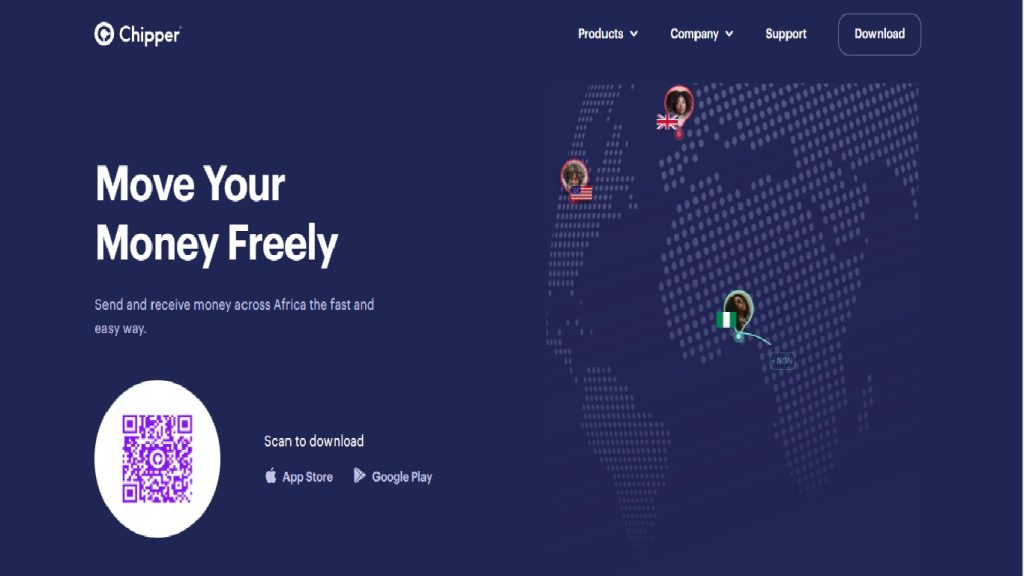
Chipper Cash Best for Everyday online payments and subscriptions
Why It’s Ranked #1
Chipper offers one of the most stable and widely accepted USD virtual cards in Nigeria. It works flawlessly for Netflix, Apple, Meta ads, Aliexpress, and more.
Pros
- Free to create
- Strong fraud protection
- Clean FX conversion
- Works for 90% of global platforms
Cons
- Occasional FX downtime
- SOP verification required
Pricing
| Fee Type | Cost |
|---|---|
| Card creation | Free |
| Funding | FX-based |
| Monthly fees | None |
Limits
- Up to $5,000 monthly
How to Get It
- Fund and start spending
- Download Chipper Cash (Android / iOS)
- Register & verify your identity
- Deposit Naira → Convert to USD
- Go to Card → “Create Virtual USD Card”
2. Barter card by Flutterwave
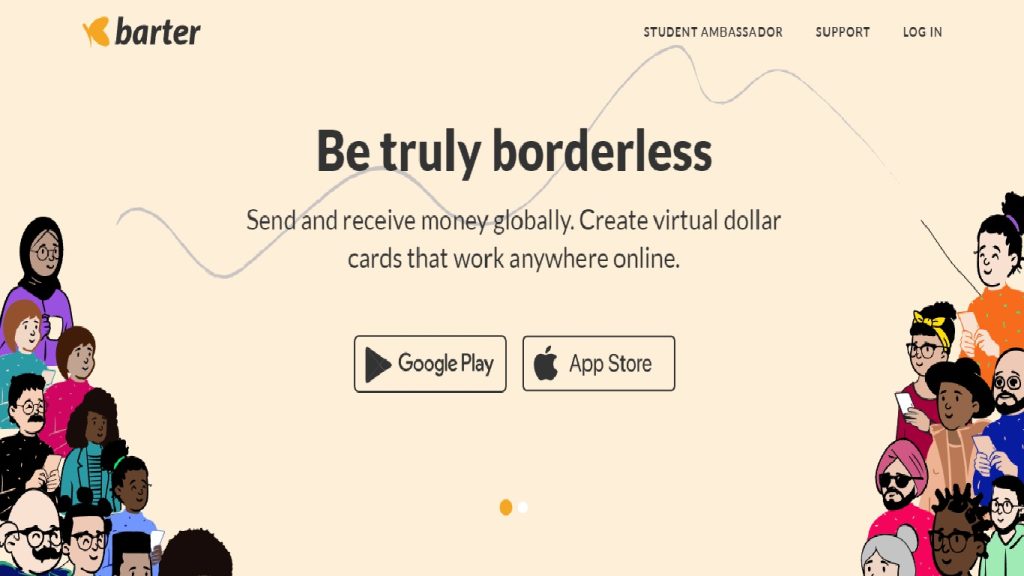
Barter provides a dollar virtual card powered by Flutterwave, built specifically for Nigerians who need to make international payments.
Best for: Ads, Netflix, Spotify, Apple
… and users who want low conversion fees.
Pros
- Backed by Flutterwave
- Works globally
- Low rates
Cons
- No crypto, betting, or forex trading
- $1 monthly fee
Pricing
| Type | Cost |
|---|---|
| Monthly fee | $1 |
| Min funding | $5 |
Limit
- $2,500/mo
How to Get It
- Download Barter
- Create account
- Fund via Nigerian bank card
- Generate USD card
3. Payoneer Virtual Dollar Card
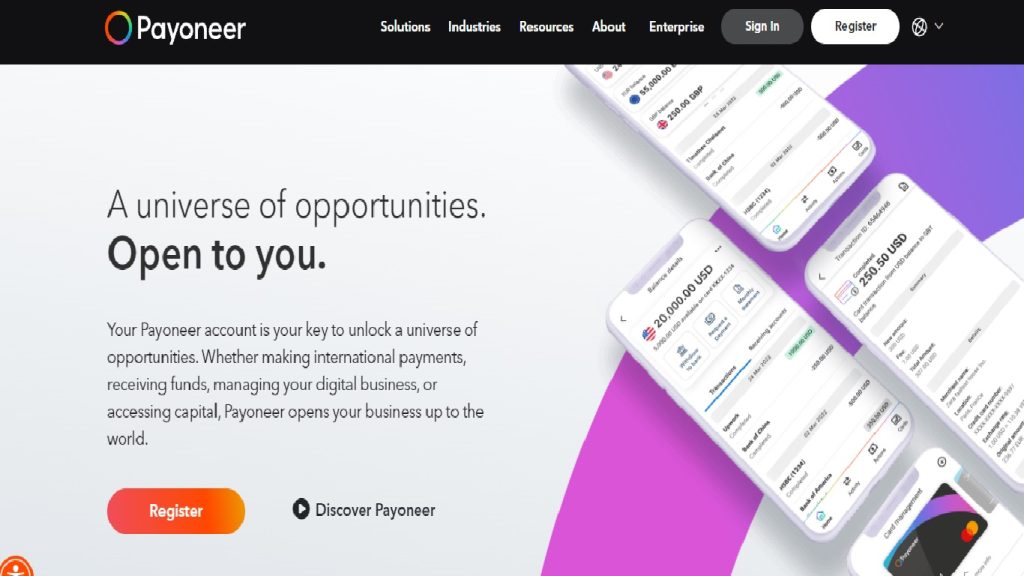
Payoneer is one of the most trusted international payment platforms used by freelancers and global businesses.
Best for: Serious freelancers receiving $100+ monthly
Pros
- Works worldwide
- Physical & virtual cards
- Huge limits
Cons
- $29.95 annual fee
- Requires $100 incoming payment
4. Payday Virtual Dollar Card
Best for High-spend users needing up to $25,000 monthly
Pros
- USA virtual bank accounts included
- Free USD card
- Works for high-limit transactions
Cons
- Strict KYC
- Customer support delays
Pricing
| Type | Cost |
|---|---|
| Card creation | Free |
| Monthly fee | None |
| Exchange | Market-linked |
Limits
- $25,000/mo (highest on this list)
How to Get Payday
- Install Payday
- Complete full KYC
- Generate a USD card
- Fund & use immediately
5. Changera (By Bitmama)
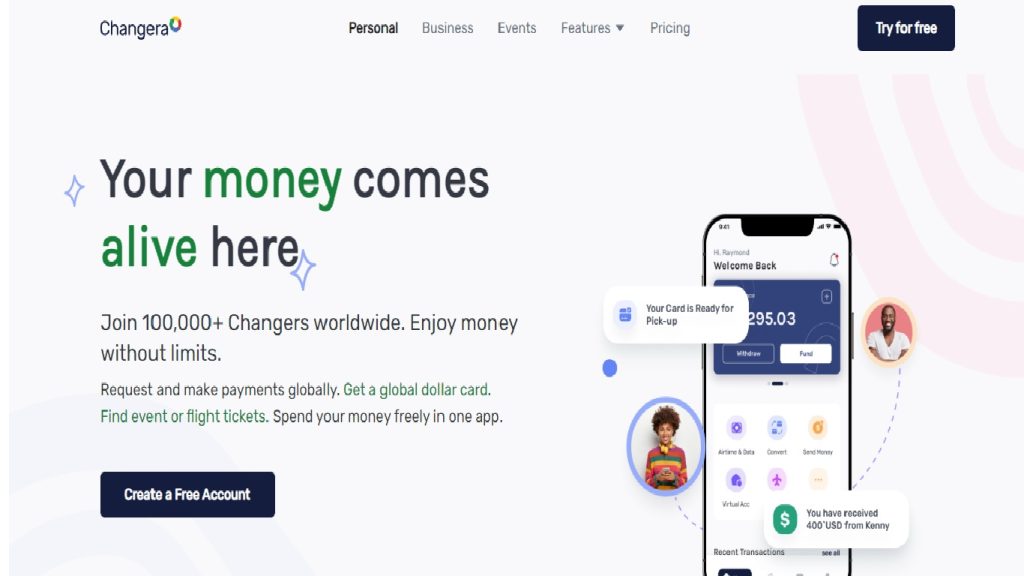
Why pick Changera: Changera (from Bitmama) is built for people who want multiple currency wallets and inexpensive, reloadable virtual cards that work on Mastercard/Visa merchant checkouts globally. It’s a practical choice if you want several virtual cards and decent monthly limits.
Pros
- Multiple multicurrency wallets in one app (USD, GBP, EUR, etc.). changera.co
- Virtual & physical cards are supported and accepted globally. Google Play
- Competitive fees for card creation and funding vs. traditional banks.
Cons
- Some advanced features (higher limits, virtual bank accounts) may require additional verification.
- Occasional app onboarding delays during high demand.
Pricing snapshot
- Card issuance fee: commonly low or free for base plan; third-party sources indicate small one-time card fees (~$1).
- FX/funding: market-linked; small percentage funding fees may apply.
Typical limits
- Users report monthly virtual card limits around $10,000+ depending on verification level. changera.co
Step-by-step: How to get a Changera virtual card
- Download Changera from the Play Store / App Store. App Store
- Register with email/phone and complete KYC (ID + selfie).
- Open the Wallets tab → create or fund a USD wallet.
- Choose Cards → Create virtual card → confirm issuance and fund it.
- Use the generated card details for online checkout (CVV, expiry, PAN).
Pro tip: Start with a low funding amount to confirm acceptance on the merchant you intend to use, then scale funding after successful transactions.
6. Geegpay Virtual Dollar Card
Raenest created Geegpay Built for African freelancers, Geegpay allows you to create virtual accounts and virtual dollar cards.
Best for Freelancers receiving foreign payments
Pros
- One of the lowest FX fees
- Easy withdrawals
- $2 active card fee
Cons
- Not ideal for extremely high spenders
Pricing
| Type | Cost |
|---|---|
| Card fee | $2 |
| FX | Low |
| Subscription | None |
Limits
- Up to $10,000 monthly
How to Get It
- Download Geegpay
- Create “Virtual USD Card”
- Fund with USD or Naira
- Start transacting
7. Alat Virtual Dollar Card
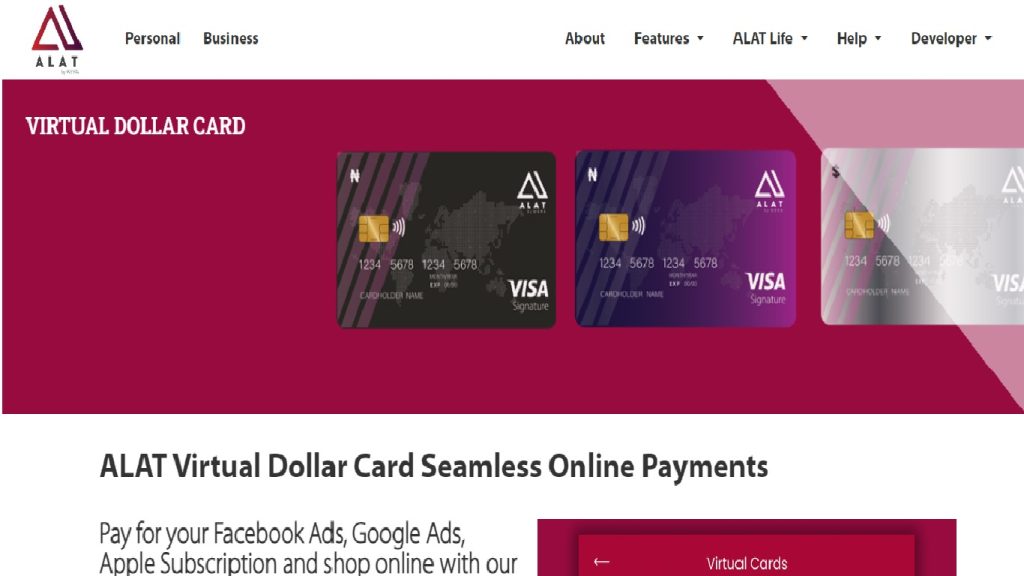
Why pick Alat : ALAT is Wema Bank’s digital arm. If you prefer a bank-issued virtual dollar card backed by a licensed Nigerian commercial bank (more regulatory confidence), ALAT is a top choice. ALAT’s dollar card is widely accepted and has clear bank-set limits.
Pros
- Bank-backed (Wema Bank) — trusted for compliance and dispute resolution.
- Easy mobile onboarding through the ALAT app.
- Good merchant acceptance for streaming, SaaS, and shopping.
Cons
- Fewer multi-currency features than some fintechs.
- Transfer/withdrawal restrictions — card is primarily for online spend (not always for transfers).
Pricing snapshot
- Card creation: often free or small one-time fee (reports vary; some sources list ~$1.50).
- Funding: bank conversion charges may apply (NGN → USD conversion fees).
Typical limits
- ALAT documentation and support channels indicate a maximum balance policy (commonly cited up to $20,000 on dollar accounts, subject to change).
Step-by-step: How to get an ALAT virtual dollar card
- Download ALAT by Wema (iOS/Android).
- Create an account and complete identity verification.
- Open Dollar Account / Card section → request virtual dollar Mastercard/Visa.
- Fund via NGN transfer (in-app) → convert to USD and load the card.
- Use virtual card details for online payments.
Pro tip: Use ALAT if you want stronger dispute/complaint channels (bank regulatory protection) compared to pure fintech startups.
8. EverSend
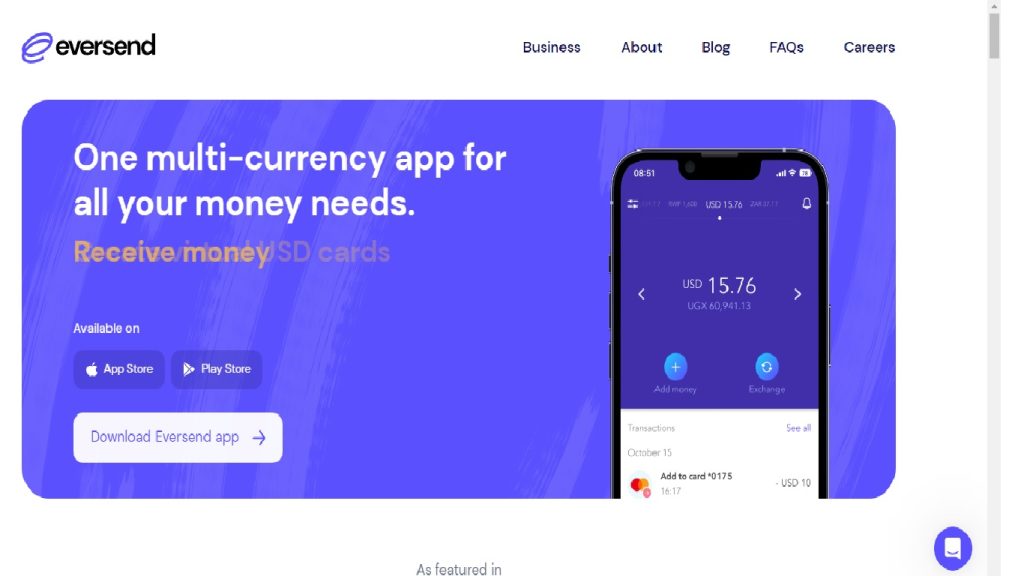
Why pick Eversend : Eversend is focused on multi-currency wallets and gives users dedicated USD/EUR wallets and virtual bank account capabilities alongside virtual cards. It’s especially useful if you want an app that combines international wallets, virtual accounts, and card payments.
Pros
- Free virtual card issuance in many cases; transparent fee schedule.
- Ability to request USD/EUR virtual bank account details inside the app.
- Clear published fees and FX structure.
Cons
- Small monthly maintenance or plan fees may apply (e.g., $1 monthly card maintenance on some plans).
- Cross-border/FX fees apply for non-USD payments (~3.5% per published help docs).
Pricing snapshot
- Virtual card creation: often free.
- Monthly maintenance: commonly $0–$1 depending on plan.
- Cross-border FX: ~3.5% for certain non-USD scenarios.
Typical limits
- Funding minimums low (often $1), monthly spending depends on KYC level and plan.
Step-by-step: How to get Eversend virtual card
- Install Eversend → register and complete verification.
- Create or open your USD wallet.
- Request a virtual card (or virtual bank account) from the USD wallet options.
- Fund the wallet (bank transfer, debit card, mobile money) → use the virtual card details.
Pro tip: If you plan to make frequent non-USD purchases, factor the cross-border FX fee (~3.5%) into your cost calculations.
9. Fundall
Why pick Fundall: Fundall is a Nigerian digital bank that combines budgeting, savings, and virtual dollar cards. It’s a practical option for users who want to save in dollars and spend with virtual cards from the same app.
Pros
- Integrated saving and spending features (dollar savings locked to hedge against naira inflation).
- Virtual card creation often free for first card; multiple one-off cards possible.
Cons
- Some fees for subsequent cards or specific funding channels.
- Limits and policies can change — check the app for up-to-date limits.
Pricing snapshot
- First virtual card: commonly free; subsequent cards small issuance fee (reports of ~$2).
- Funding fee: ~1% has been reported in community guides.
Typical limits
- Minimum load often from $5; spending limits vary by verification.
Step-by-step: How to get Fundall virtual card
- Download Fundall → create & verify account.
- Open Dollar savings/wallet → Fund it.
- Generate a virtual dollar card from the card section (free first card).
- Use the card details for merchant checkout.
Pro tip: Use Fundall if you want to combine dollar savings and instant virtual card issuance for one-off purchases (good for occasional shoppers).
10. Bitsika (Best for travel + UBA-powered card acceptance)
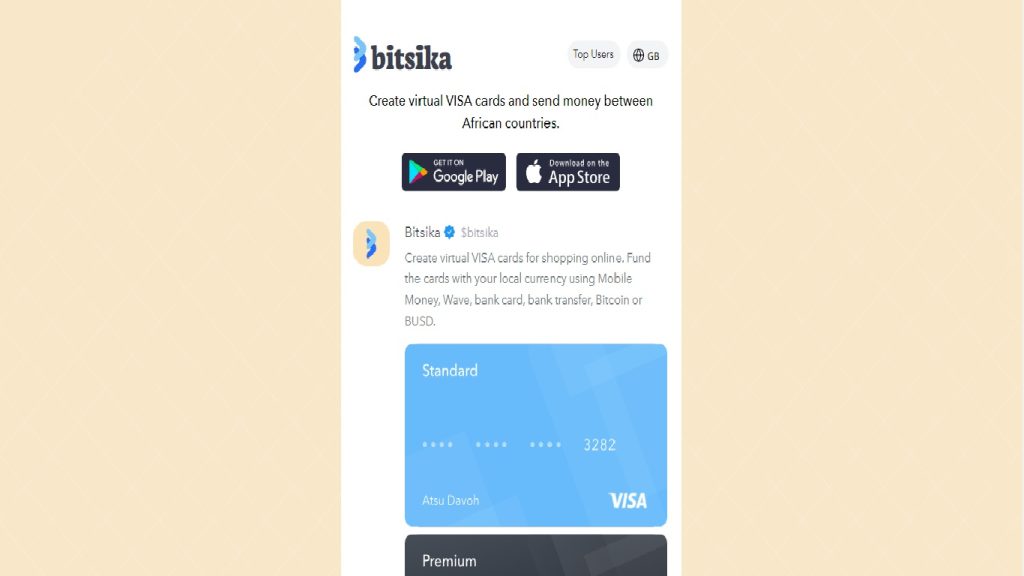
Why pick Bitsika: Bitsika offers multi-currency support and crypto rails. It’s used across African countries and can issue virtual Visa cards. However, card funding fees are relatively high compared to other providers.
Pros
- Crypto + fiat rails (convert and spend from crypto).
- Multi-country footprint (English & Francophone Africa).
Cons
- Reported high fees for card usage (~8% in some user reports) expensive for frequent transactions.
- Not ideal for recurring subscription-heavy users due to high cost.
Pricing snapshot
- Card funding fees: high (user reports ~8%).
- Issuance/maintenance: varies by region and plan.
Typical limits
- Medium by default; higher with KYC upgrades.
Step-by-step: How to get Bitsika virtual card
- Install Bitsika and complete account verification.
- Fund your Bitsika wallet (crypto or fiat).
- Request a virtual Visa card → fund it → use details at checkout.
Pro tip: Only use Bitsika cards for occasional purchases or when you need crypto-to-card convenience — otherwise the fees quickly add up.
11. WalletsAfrica
Why pick WalletsAfrica: WalletsAfrica issues virtual dollar cards powered by UBA (a bank partner) and is a solid choice for travelers who need card acceptance backed by a recognizable banking partner. It offers both virtual and physical card options.
Pros
- Cards backed by established Nigerian bank rails (better merchant acceptance).
- Virtual + physical card options.
Cons
- Several per-transaction fees (monthly fees, international transaction fees, and loading fees).
Pricing snapshot
- Monthly fee: small (e.g., $1).
- Per international transaction: ~$0.75 (reported).
- External account loading: ~2% (reported).
Typical limits
- Medium; higher limits require KYC.
Step-by-step: How to get WalletsAfrica card
- Download WalletsAfrica app and sign up.
- Verify identity and link bank (if required).
- Apply for virtual USD card (powered by UBA) → fund and use.
Pro tip: Good option when you want a bank-partnered virtual card and are comfortable with small per-transaction fees.
12. Eyowo
Why pick Eyowo: Eyowo is a lightweight digital payments app aimed at easy phone-number based payments. It also offers virtual dollar cards with low entry cost — friendly for users who want cheap one-off access to USD cards.
Pros
- Low issuance cost (reports of $1).
- No practical funding cap for many users, useful for ad hoc purchases.
Cons
- Feature set leaner than multi-currency fintechs.
- May lack advanced merchant support for business users.
Pricing snapshot
- Card creation: reported ~$1.
- Funding and transaction fees: generally low but check the app for exact structure.
Typical limits
- Medium; dependent on KYC and funding method.
Step-by-step: How to get Eyowo virtual card
- Install Eyowo, register with phone number.
- Complete any required KYC.
- Go to card issuance → create virtual dollar card and fund it.
Pro tip: Perfect for quick, low-value international payments (small subscriptions, one-off purchases).
13. Carbon
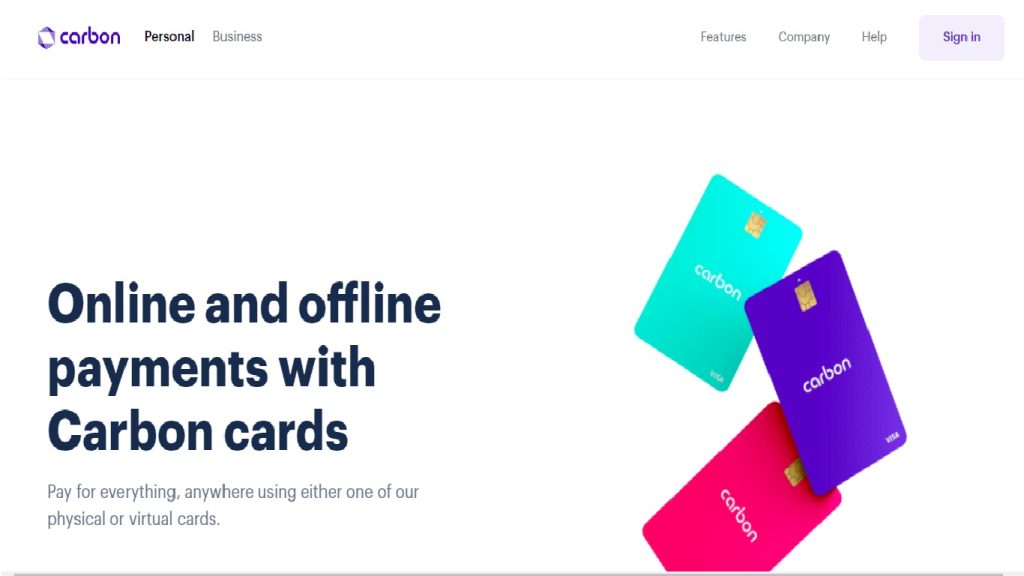
Why pick Carbon: Carbon is a mature Nigerian digital bank offering a suite of services (loans, payments, bills, virtual cards). Its virtual dollar cards are convenient for everyday international shopping and SaaS payments. Carbon emphasizes convenience and an established user base.
Pros
- Established brand with broad product suite (loans, payments, savings).
- Virtual cards that integrate with Carbon wallets — good acceptance on major merchants.
Cons
- Fees and limits change with policy; check Carbon app for exact current charges.
- Some advanced features require full KYC and account history.
Pricing snapshot
- Card creation: typically free for base users; fees vary for premium options.
- Funding & FX: market-based conversion rates; small percentage or fixed charges may apply.
Typical limits
- Medium; higher with KYC and activity.
Step-by-step: How to get Carbon virtual card
- Download Carbon (Play Store / App Store).
- Register, verify identity and set up wallet.
- Create a dollar wallet or virtual dollar card in the app.
- Fund and use the card details online.
Pro tip: Use Carbon if you want one app for loans, payments, and virtual dollars — great for frequent local + international activities.
Conclusion
Virtual dollar cards are excellent substitutes for cash when buying things online. This is so that you can make unrestricted payments for your favorite things like Apple Music, Netflix, Amazon Prime, Aliexpress, and Shien using this virtual card.
Chipper Cash, Payooner, Payday, Carbon, and Eyowo are some of the best virtual dollar card providers in Nigeria. Enjoy your seamless and secure online purchases. If you have any questions, kindly shoot us an email at digiconceptng@gmail.com or comment right below.