


The modern online marketplace is no longer driven by products alone. It is driven by presentation, emotional appeal, and visual storytelling. Before a customer reads your product description, checks your pricing, or compares specifications, they first react to what they see. In e commerce, your images are your storefront, your salesperson, and your brand ambassador all at once.
Consumers today make purchasing decisions in seconds. A blurry image, poor lighting, cluttered background, or inconsistent branding can instantly destroy trust. On the other hand, clean and luxurious visuals create the impression of professionalism, quality, and credibility. This is why top online stores invest heavily in product photography.
For many small businesses, startups, and independent sellers, traditional photography has always been expensive. Renting a studio, hiring photographers, purchasing lighting equipment, paying models, and editing images can consume a massive portion of a business budget. This challenge prevented many sellers from competing with larger brands that could afford premium visuals.
Artificial Intelligence has completely transformed this reality.
Get TikTok SEO Cheat here
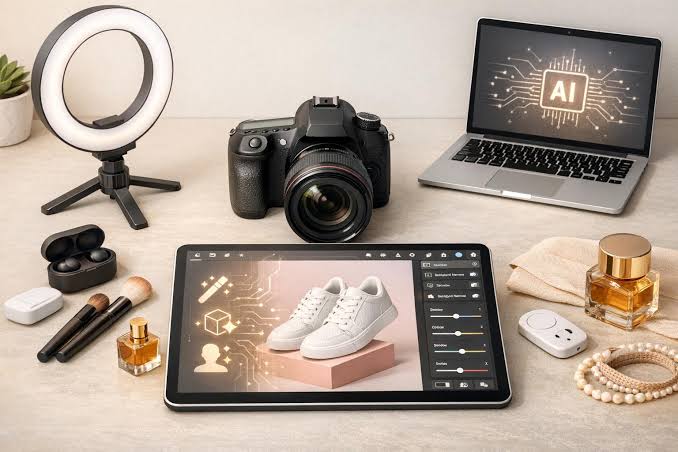
Today, AI powered product photography tools allow entrepreneurs to create studio quality visuals directly from smartphone photos. A seller can now remove backgrounds, generate luxury lifestyle scenes, create realistic shadows, enhance lighting, and even place products on AI generated human models within minutes.
This shift is not simply about convenience. It is about competitiveness.
A skincare seller in Lagos can create spa themed visuals that look like they came from an international beauty campaign. A fashion entrepreneur in Abuja can generate catalog quality model shots without organizing a physical photoshoot. A dropshipping business owner can create premium branded visuals without touching Photoshop.
The result is a level playing field where creativity and strategy matter more than budget.
This detailed guide will teach you exactly how to use the best AI tools for e commerce product photography effectively. Rather than merely reviewing software, this masterclass focuses on practical workflows, professional techniques, prompting strategies, optimization methods, and branding principles that help convert viewers into paying customers.
Whether you sell fashion, electronics, beauty products, home decor, gadgets, or accessories, this guide will help you produce visuals that increase trust, improve click through rates, and boost conversions.
Why AI Product Photography Matters for E Commerce
AI powered photography tools are changing online selling because they solve the biggest visual marketing problems quickly and affordably.
| Challenge | Traditional Method | AI Powered Solution |
| Background Removal | Manual Photoshop editing | One click automation |
| Lifestyle Scenes | Expensive studio setup | AI generated environments |
| Product Models | Hiring professional models | AI generated model try ons |
| Lighting Correction | Complex editing process | Instant enhancement |
| Catalog Consistency | Difficult to maintain | Automated branding alignment |
| Bulk Editing | Time consuming | Batch processing |
The true power of AI photography lies in scalability. Instead of spending days preparing product shoots, sellers can now create dozens of premium visuals in a single afternoon.
How To Prepare Products Before Using AI Photography Tools
Many beginners make the mistake of believing AI can fix everything. While these tools are powerful, they still require a clean foundation image.
Use Proper Lighting
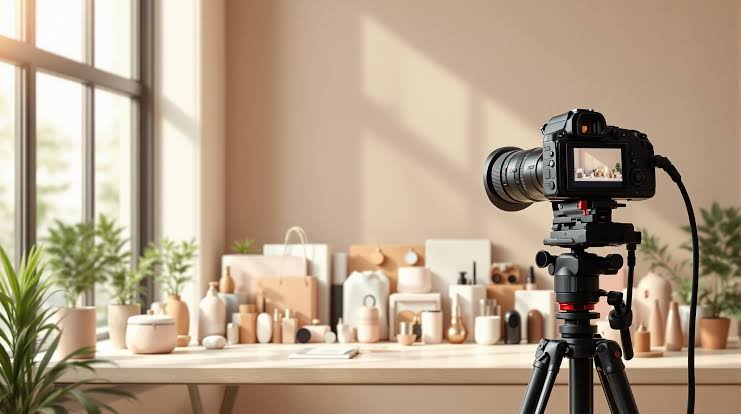
Natural lighting remains one of the best lighting sources for beginners. Position your product close to a large window where soft light enters the room. Avoid direct sunlight because harsh shadows reduce image quality.
Soft lighting helps AI systems understand product edges, textures, and colors more accurately.
Keep the Background Simple
Use a clean surface such as white cardboard, plain fabric, or a neutral wall. The simpler the background, the easier it becomes for AI tools to isolate the product perfectly.
Capture Multiple Angles
Take front, side, top, and close up shots. Customers want to understand the product completely before purchasing.
More angles also give you flexibility when generating lifestyle scenes later.
Leave Space Around the Product
Do not crop too tightly. AI tools require surrounding space to intelligently build backgrounds and compositions.
Best AI Tools for E Commerce Product Photography
Photoroom
Photoroom is one of the easiest tools for beginners and mobile sellers.

It specializes in fast editing workflows directly from smartphones. Its background removal system is extremely accurate and works especially well for fashion items, accessories, gadgets, and beauty products.
Best Features
| Feature | Benefit |
| AI Background Removal | Removes clutter instantly |
| Shadow Generator | Creates realistic depth |
| Ghost Mannequin | Ideal for fashion stores |
| Batch Editing | Speeds up catalog creation |
How To Use It Effectively
- Upload your raw product image.
- Remove the background automatically.
- Select a luxury themed template.
- Adjust lighting and shadows.
- Export high resolution images.
The biggest advantage of Photoroom is speed. It allows businesses to create polished visuals within minutes.
Pebblely
Pebblely focuses heavily on lifestyle aesthetics and emotional branding.

This tool is ideal for businesses selling beauty products, perfumes, candles, home items, wellness products, and skincare.
Instead of simple plain backgrounds, Pebblely generates immersive scenes that feel professionally styled.
How Pebblely Enhances Branding
A perfume bottle can appear on a marble vanity beside flowers and luxury accessories.
A skincare product can be displayed inside a calming spa inspired environment.
A coffee mug can appear in a cozy breakfast setting with warm sunlight.
These scenes trigger emotional responses that encourage purchasing.
Best Use Cases
| Product Type | Recommended Scene |
| Skincare | Spa environment |
| Jewelry | Luxury marble setup |
| Candles | Cozy home aesthetic |
| Fashion Accessories | Elegant minimalist scene |
Flair.ai
Flair.ai works more like a digital branding studio.

It allows businesses to maintain consistent visual identity across all product images.
Consistency is extremely important because customers trust brands that look organized and professional.
Major Advantages
Flair.ai helps maintain:
- Consistent color palettes
- Matching lighting styles
- Uniform visual themes
- Branded compositions
This makes it perfect for growing businesses building long term recognition.
Claid.ai
Claid.ai is designed for businesses handling large product catalogs.

Instead of editing one image at a time, this platform automates enhancement for hundreds or thousands of images.
Key Strengths
| Function | Business Benefit |
| Batch Enhancement | Saves massive editing time |
| Marketplace Optimization | Meets platform standards |
| Automatic Alignment | Creates cleaner catalogs |
| Resolution Improvement | Enhances image clarity |
Large stores selling on marketplaces benefit greatly from automation.
How To Write Powerful AI Prompts for Product Images
Prompting is the secret weapon behind high quality AI visuals.
Weak prompts create weak results.
Strong prompts create premium commercial photography.
Example of a Weak Prompt
“Bag on table”
This gives the AI very little information.
Example of a Strong Prompt
“Luxury leather handbag placed on a polished walnut table near a large window, warm morning light, soft shadows, elegant apartment background, premium fashion magazine style, shallow depth of field, ultra realistic texture”
The second prompt works better because it describes:
- Lighting
- Mood
- Texture
- Environment
- Style
- Camera effect
How To Create High Converting Lifestyle Product Images
Lifestyle imagery helps customers emotionally connect with products.
Instead of merely showing what a product looks like, lifestyle scenes show how the product fits into a customer’s desired lifestyle.
Focus on Emotional Storytelling
Ask yourself:
- Where would the customer use this product?
- What feeling should the image create?
- What atmosphere matches the brand identity?
Examples
| Product | Emotional Direction |
| Fitness Bottle | Energy and motivation |
| Perfume | Elegance and romance |
| Headphones | Productivity and focus |
| Sneakers | Adventure and movement |
How To Make AI Images Look Realistic
One major mistake beginners make is creating images that look artificial.
Use Realistic Lighting
The light source must match the environment.
If the background shows sunlight coming from the right side, the product highlights and shadows should align correctly.
Avoid Over Editing
Do not oversaturate colors or apply unrealistic effects.
Professional visuals often look natural and balanced.
Add Depth and Texture
Shadows, reflections, and textured surfaces make products appear grounded instead of floating unnaturally.
Best Export Settings for E Commerce Platforms
Your final image quality affects customer experience significantly.
| Platform Type | Recommended Format | Suggested Size |
| Website Store | JPEG | 2000 x 2000 px |
| Transparent Mockups | PNG | 2000 x 2000 px |
| Social Media Ads | JPEG | 1080 x 1350 px |
| Marketplace Listings | JPEG | 1600 x 1600 px |
High resolution images improve zoom functionality and product clarity.
Final Thoughts
AI powered product photography is no longer a futuristic trend. It has become one of the most valuable competitive tools in modern e commerce.
Businesses that master visual presentation gain a significant advantage because shoppers naturally trust products that appear polished, premium, and professionally branded.
The greatest strength of AI photography is accessibility. You no longer need an expensive studio, advanced editing skills, or a massive marketing budget to compete visually with larger brands.
With the right workflow, strong prompting techniques, realistic lighting practices, and consistent branding, even a small online store can produce world class product visuals that attract attention and increase conversions.
The brands that succeed are not necessarily those with the biggest budgets. They are the brands that understand how to present their products beautifully, consistently, and strategically.
Master these techniques, experiment continuously, and treat every product image as an opportunity to build trust, emotion, and desire.
Read More On: