


Coffee is no longer just a quick morning beverage. For many people, it has evolved into a personal ritual, a lifestyle experience, and even a form of craftsmanship. Yet despite the growing popularity of premium coffee, countless coffee lovers still struggle with one common problem. Traditional hot brewed coffee often tastes bitter, acidic, harsh on the stomach, and watered down when poured over ice.
This is exactly why cold brew coffee has become one of the most loved brewing methods among home coffee enthusiasts.
Unlike conventional brewing methods that rely on heat to extract flavor from coffee beans, cold brew uses time instead of temperature. Coffee grounds are slowly steeped in cold or room temperature water for several hours, allowing the natural sweetness, chocolate notes, caramel undertones, and smooth body of the coffee to emerge without the aggressive bitterness caused by hot water extraction.
The result is a drink that feels richer, smoother, naturally sweeter, and significantly less acidic.
Get TikTok SEO Cheat here
For people with sensitive stomachs, acid reflux, or those who simply dislike sharp tasting coffee, cold brew can completely transform the coffee drinking experience.
Another reason cold brew continues to dominate home brewing culture is convenience. A single batch can remain fresh inside the refrigerator for up to two weeks. That means less time brewing every morning and more time enjoying café quality coffee at home.
However, achieving exceptional cold brew is not only about buying expensive beans. The equipment you use plays a major role in determining flavor clarity, extraction quality, sediment level, brewing convenience, and even storage efficiency.
Some brewers produce thick concentrates perfect for mixing with milk. Others create ready to drink coffee immediately. Some prioritize ultra clean filtration, while others focus on speed and convenience.
Choosing the right cold brew coffee maker therefore depends on understanding your lifestyle, your brewing habits, and your taste preferences.
This detailed guide will walk you through:
| What You Will Learn | Why It Matters |
|---|---|
| How cold brew actually works | Helps you brew smoother coffee consistently |
| The difference between concentrate and ready to drink cold brew | Prevents buying the wrong system |
| The importance of filtration systems | Determines whether your coffee tastes clean or muddy |
| How grind size affects extraction | Prevents bitterness and over extraction |
| The best cold brew coffee makers for home | Helps you choose the ideal brewer |
| Common cold brew mistakes | Saves money, time, and wasted coffee beans |
| How to improve flavor quality at home | Gives café level results from your kitchen |
By the end of this guide, you will understand not only which cold brew maker is best for your home, but also how to consistently brew smooth, flavorful, low acid coffee like a professional barista.
Understanding How Cold Brew Actually Works
Before choosing a cold brew maker, it is important to understand the science behind cold brew extraction.
Traditional coffee uses hot water to rapidly dissolve oils, acids, and flavor compounds from coffee beans. While this creates strong aroma and bold flavor quickly, it also extracts bitter compounds and acidic elements that can irritate the stomach or overpower delicate tasting notes.
Cold brew works differently.
Instead of using heat, cold brew relies on prolonged immersion. Coffee grounds remain submerged in cold water for many hours, allowing flavor compounds to dissolve gradually and gently.
This slower extraction process produces several major advantages:
| Cold Brew Characteristics | Result |
|---|---|
| Lower acidity | Easier on the stomach |
| Reduced bitterness | Smoother flavor |
| Higher sweetness perception | Natural chocolate and caramel notes become more noticeable |
| Fuller body | Richer mouthfeel |
| Longer shelf life | Stays fresh in the refrigerator for days |
The brewing method may sound simple, but the final quality depends heavily on three critical factors:
1. Grind Size
Cold brew requires coarse coffee grounds.
Using fine grounds creates multiple problems:
- Over extraction
- Muddy texture
- Filter clogging
- Bitter flavora
- Excess sediment
The ideal grind should resemble sea salt or rough breadcrumbs.
2. Water Saturation
Even saturation ensures every coffee particle extracts evenly.
Poorly designed brewers often leave dry pockets inside the grounds, causing uneven extraction and weak flavor. This is why advanced systems like the OXO Good Grips use special water distribution mechanisms.
3. Filtration Quality
Filtration determines clarity.
Some brewers use mesh filters that allow more natural oils into the final drink, creating fuller body and heavier texture. Others use felt or paper filters that produce cleaner, brighter coffee with minimal sediment.
Understanding these fundamentals will help you choose the right brewing system based on your personal preference.
Types of Cold Brew Coffee Makers
Not all cold brew systems operate the same way. Each brewing style serves a different purpose.
Comparison of Cold Brew Brewing Styles
| Brewing Style | How It Works | Best For |
|---|---|---|
| Immersion Brewer | Grounds steep fully in water | Rich concentrates |
| Gravity Fed Brewer | Coffee drains slowly through filters | Clean and smooth extraction |
| Pitcher Style Brewer | Basket sits inside a pitcher | Simple ready to drink coffee |
| Rapid Extraction Brewer | Uses pressure or vacuum technology | Fast brewing |
| Dispenser Style Brewer | Built for fridge storage and serving | Convenience |
Understanding these categories makes it easier to choose the right machine for your kitchen.
How to Choose the Best Cold Brew Coffee Maker for Home
Choosing a cold brew system should never be based on appearance alone.
A beautiful brewer may still produce weak coffee, messy cleanup, or frustrating filtration problems.
Here are the most important things to evaluate before buying.
1. Decide Between Concentrate and Ready to Drink Coffee
This is one of the biggest differences between cold brew systems.
Concentrate Brewers
These create extremely strong coffee designed to be diluted with water, milk, cream, or ice.
Advantages include:
- Longer shelf life
- Stronger flavor
- More servings per batch
- Better versatility
Best examples include:
- OXO Good Grips
- Toddy System
Ready to Drink Brewers
These produce coffee that can be consumed immediately without dilution.
Advantages include:
- Faster convenience
- Simpler brewing
- Easier for beginners
Best example:
- Hario Mizudashi
2. Understand Filter Materials
Filter quality affects taste more than many people realize.
| Filter Type | Flavor Result | Drawback |
|---|---|---|
| Stainless Steel Mesh | Rich body and oils | Slight sediment |
| Paper Filter | Extremely clean taste | Removes some oils |
| Felt Filter | Very low acidity | Requires maintenance |
| Dual Filtration | Balanced clarity and body | Higher cost |
If you dislike gritty coffee, dual filtration systems are usually the best option.
3. Evaluate Capacity
Think realistically about your coffee consumption.
| User Type | Recommended Capacity |
|---|---|
| Single user | 20 to 32 oz |
| Couples | 32 to 40 oz |
| Families | 40 oz and above |
| Heavy coffee drinkers | Large concentrate systems |
4. Consider Refrigerator Space
Some brewers are designed for compact storage while others occupy significant shelf space.
Tall cylindrical brewers may struggle to fit inside smaller refrigerators.
Square footprint brewers like the KitchenAid model are optimized for efficient storage.
OXO Good Grips Cold Brew Coffee Maker
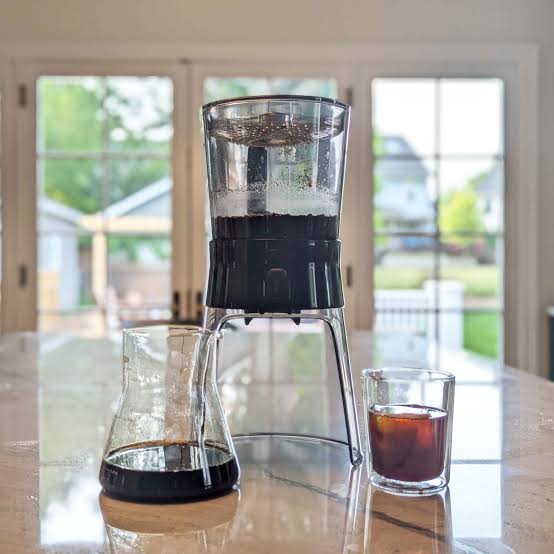
The OXO Good Grips cold brew system remains one of the most respected options because it balances simplicity, engineering precision, and consistent flavor extraction.
What makes this system exceptional is its beginner friendly design.
Many cold brew makers force users to manually stir coffee grounds during brewing. Unfortunately, uneven stirring often leads to over extracted areas and dry pockets inside the coffee bed.
The OXO system solves this problem with its famous Rainmaker feature.
How the Rainmaker System Improves Extraction
The Rainmaker distributes water evenly across the grounds, ensuring complete saturation from the beginning.
This produces:
- Better flavor balance
- Improved sweetness
- Reduced bitterness
- Consistent extraction
The dual filtration system also plays a major role in flavor clarity.
The stainless steel mesh removes larger particles while optional paper filters eliminate fine sediment. The final coffee tastes incredibly smooth and clean.
Why Beginners Love It
| Feature | Benefit |
|---|---|
| Simple draining mechanism | Easy brewing |
| Compact design | Fits smaller kitchens |
| Dual filtration | Cleaner coffee |
| Durable construction | Long lifespan |
| Consistent extraction | Reliable flavor |
This system is ideal for people who want café quality results without complicated brewing techniques.
Toddy Cold Brew System
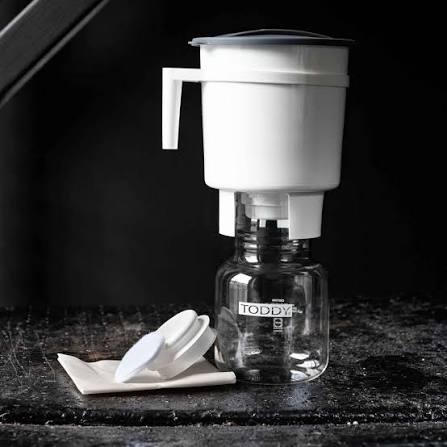
The Toddy Cold Brew System is widely respected for one major reason.
It produces extremely smooth coffee in very large quantities.
Unlike sleek modern brewers that prioritize appearance, the Toddy focuses almost entirely on extraction performance.
The system uses thick felt filters combined with gravity based draining. This creates exceptionally low acid coffee with remarkable clarity.
Why Toddy Coffee Tastes So Smooth
The felt filtration removes many of the bitter compounds and fine particles that create harshness.
This results in:
- Smooth mouthfeel
- Tea like clarity
- Minimal acidity
- Strong concentrate
- Long refrigerator life
Because the system creates large batches, it is particularly useful for:
- Families
- Heavy coffee drinkers
- Office environments
- Weekly meal prep style brewing
One batch can easily produce enough concentrate for over fifteen drinks.
Potential Drawbacks
The felt filters require proper cleaning and occasional replacement. Neglecting maintenance can affect flavor quality over time.
Still, for people prioritizing smoothness and batch size, few systems compete with the Toddy.
KitchenAid Cold Brew Coffee Maker
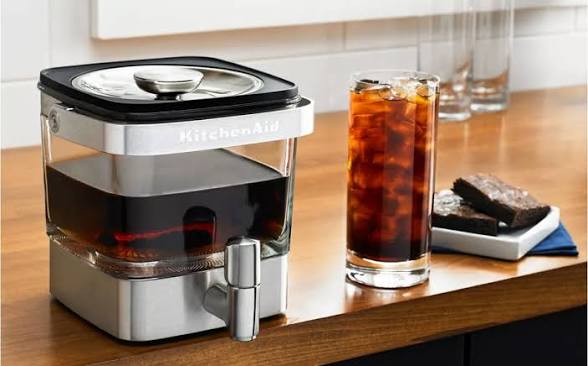
The KitchenAid Cold Brew Coffee Maker focuses heavily on user convenience.
Instead of transferring concentrate into separate containers after brewing, the system doubles as a serving dispenser.
After steeping, users simply remove the filter basket and store the entire carafe inside the refrigerator.
The built in tap allows instant pouring without lifting heavy containers.
Why the Design Matters
Many people underestimate how inconvenient large cold brew jars can become during daily use.
The KitchenAid system solves this problem elegantly.
Key Advantages
| Feature | Benefit |
|---|---|
| Built in dispenser | Easy serving |
| Stainless steel filter | Reusable and eco friendly |
| Premium glass body | Attractive appearance |
| Compact square shape | Efficient fridge storage |
| Ready to serve design | Minimal cleanup |
This brewer is especially suitable for people who value aesthetics, convenience, and organized kitchen storage.
Hario Mizudashi
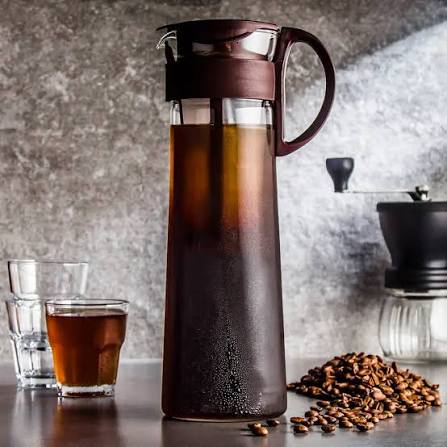
The Hario Mizudashi proves that excellent cold brew does not require expensive equipment.
This Japanese designed brewer follows a minimalist philosophy.
The process is incredibly straightforward:
- Add coarse grounds into the mesh basket
- Fill the carafe with water
- Refrigerate
- Remove the basket after steeping
That is all.
Unlike concentrate brewers, the Hario creates ready to drink cold brew immediately.
This makes it ideal for:
- Students
- Apartment dwellers
- Casual coffee drinkers
- Beginners
Why Simplicity Can Be Better
Complex brewing systems sometimes discourage consistency.
The Hario removes nearly all learning barriers.
Its slim profile also fits comfortably inside refrigerator doors, making it one of the most space efficient brewers available.
Dash Rapid Cold Brew Maker
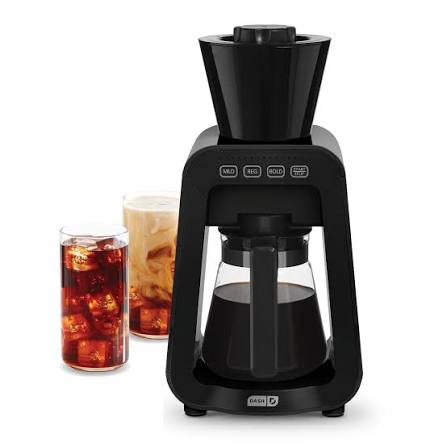
One of the biggest frustrations with traditional cold brew is waiting overnight.
The Dash Rapid Cold Brew Maker addresses this problem using vacuum powered extraction technology.
Instead of relying on slow immersion alone, the machine circulates water rapidly through the grounds.
The result is cold brew in minutes rather than hours.
How Rapid Extraction Works
The machine creates pressure differentials that accelerate extraction efficiency.
This produces coffee much faster while still avoiding hot water bitterness.
Advantages
| Feature | Benefit |
|---|---|
| Extremely fast brewing | Saves time |
| Easy operation | Beginner friendly |
| Consistent extraction | Reliable flavor |
| Large capacity | Multiple servings |
Trade Offs
Rapid extraction coffee may lack some of the deeper flavor complexity associated with long steep immersion brewing.
However, for busy professionals and people with unpredictable schedules, convenience often outweighs this difference.
Complete Comparison Table
| Model | Brewing Style | Capacity | Brew Time | Best For |
|---|---|---|---|---|
| OXO Good Grips | Immersion | 32 oz | 12 to 24 hours | Balanced performance |
| Toddy System | Gravity Fed | 38 oz | 12 to 24 hours | Large batches |
| KitchenAid | Dispenser Style | 28 oz | 12 to 24 hours | Convenience |
| Hario Mizudashi | Pitcher Style | 33 oz | 8 to 12 hours | Simplicity |
| Dash Rapid | Rapid Extraction | 40 oz | Minutes | Speed |
Step By Step Guide to Making Perfect Cold Brew at Home
Step 1: Choose Quality Beans
Medium and dark roasts often perform best for cold brew because they emphasize chocolate, nutty, and caramel flavors.
Step 2: Use Coarse Grounds
Never use espresso fine coffee for cold brew.
Coarse grounds ensure proper extraction and cleaner filtration.
Step 3: Use Filtered Water
Water quality dramatically affects flavor.
Filtered water creates cleaner tasting coffee and better sweetness.
Step 4: Maintain the Correct Ratio
A common concentrate ratio is:
| Coffee | Water |
|---|---|
| 1 cup | 4 cups |
For ready to drink coffee, use more water.
Step 5: Be Patient
Longer steeping generally creates stronger flavor.
Most brewers perform best between 12 and 24 hours.
Common Cold Brew Mistakes to Avoid
| Mistake | Result |
|---|---|
| Using fine grounds | Bitter muddy coffee |
| Brewing too long | Over extraction |
| Weak coffee ratios | Watery flavor |
| Poor filtration | Excess sediment |
| Cheap beans | Flat taste |
Avoiding these mistakes instantly improves flavor quality.
Final Thoughts
Cold brew is far more than a coffee trend. It is one of the most effective ways to create smooth, low acid, café quality coffee at home with minimal daily effort.
The right cold brew coffee maker can completely transform your brewing experience.
If you want the best balance of convenience and consistency, the OXO Good Grips remains an outstanding choice.
If your priority is large batch brewing with ultra smooth flavor, the Toddy System excels.
For elegance and convenience, KitchenAid stands out beautifully.
Minimalists will appreciate the simplicity of the Hario Mizudashi, while busy professionals may find the Dash Rapid impossible to resist.
Ultimately, the best cold brew coffee makers for home are the ones that fit naturally into your lifestyle, your taste preferences, and your brewing habits.
With the right technique, quality beans, proper grind size, and an effective brewing system, your kitchen can easily produce cold brew that rivals even the most expensive cafés.
Read More On: