


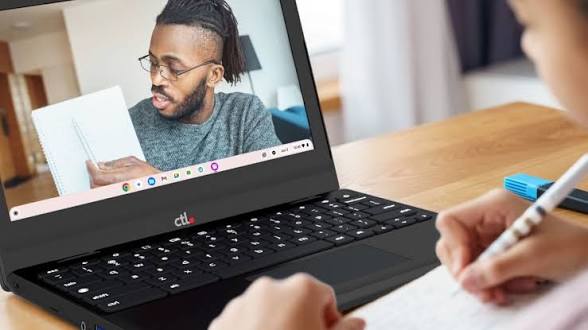
The modern world of education, field work, and enterprise mobility is no longer defined by how powerful a laptop is in isolation. Instead, it is defined by how reliably that device can stay connected, how well it can survive daily abuse, and how seamlessly it can integrate into cloud based ecosystems where productivity actually happens. In this environment, traditional laptops often struggle because they depend heavily on external Wi Fi networks or unstable hotspot connections that break workflow and reduce efficiency.
This is exactly where the CTL Chromebook PX112C positions itself in a very interesting and highly practical way. Rather than trying to compete with ultra premium multimedia laptops or gaming focused machines, it focuses on solving one core problem that affects schools, remote teams, and enterprise deployments more than anything else, which is consistent internet access anywhere the user goes.
What makes this device stand out immediately is its philosophy. It is not built for luxury. It is built for survival, consistency, and uninterrupted productivity. It is designed for environments where devices are handled roughly, where internet infrastructure is unreliable, and where administrators need full control over deployment and security without physically touching the device.
In this detailed review, we will take a deep and expressive look at the CTL Chromebook PX112C, examining not just what it offers on paper but how each feature translates into real world usability. From its rugged physical construction to its advanced cellular connectivity system and its education focused performance design, every section will be broken down in a way that helps you understand whether this device truly deserves a place in schools, businesses, or mobile workforce setups.
Get TikTok SEO Cheat here
We will also explore its hardware configuration, connectivity architecture, display experience, input design, and long term usability considerations in a way that goes beyond surface level specification listing. This is not a brief overview. It is a full scale evaluation of how this machine behaves as a daily work companion.
Design And Build Quality That Prioritizes Resilience Over Aesthetics
At first glance, the CTL Chromebook PX112C does not try to impress with flashy curves or premium metallic finishes. Instead, it immediately communicates durability. The outer shell is constructed using reinforced textured plastic that feels firm and purpose driven rather than decorative. This choice is intentional because it reduces fragility while making repairs and replacements easier in large scale deployments.
The entire chassis is engineered to handle demanding environments such as classrooms, training centers, and field operations. It is built under strict durability standards that ensure it can withstand accidental drops, pressure from backpacks, and frequent movement between locations.
One of the most important aspects of its build is the reinforced hinge system. The hinge is designed to open fully up to a flat position, allowing users to share screens easily in group environments. More importantly, it resists loosening over time, which is a common failure point in educational laptops.
The keyboard area is also designed with protection in mind. It includes spill resistant engineering that helps redirect small liquid spills away from sensitive internal components. This adds a layer of protection that is extremely valuable in real world usage scenarios where accidents are unavoidable.
Overall, the design philosophy is simple. Every part of the device exists to extend lifespan and reduce maintenance cost rather than to impress visually.
Durability Engineered For Real World Environments
The CTL Chromebook PX112C is clearly built for environments where devices are not treated gently. It follows rigorous durability expectations that allow it to withstand repeated drops from desk height onto hard surfaces without immediate structural damage.
The internal components are mounted in a way that absorbs shock and reduces the impact force transferred during accidental falls. This is particularly important for schools where devices are constantly moved between classrooms or carried in backpacks.
Another important element is resistance to moisture. While it is not a fully waterproof device, it is designed to handle accidental spills and light exposure to moisture without immediate failure. This makes it suitable for cafeterias, libraries, and shared learning environments.
Even the surface texture plays a role in durability. The matte finish reduces fingerprint buildup and improves grip, which helps prevent accidental slips during handling.
In essence, this is a device that prioritizes survival in uncontrolled environments rather than controlled office conditions.
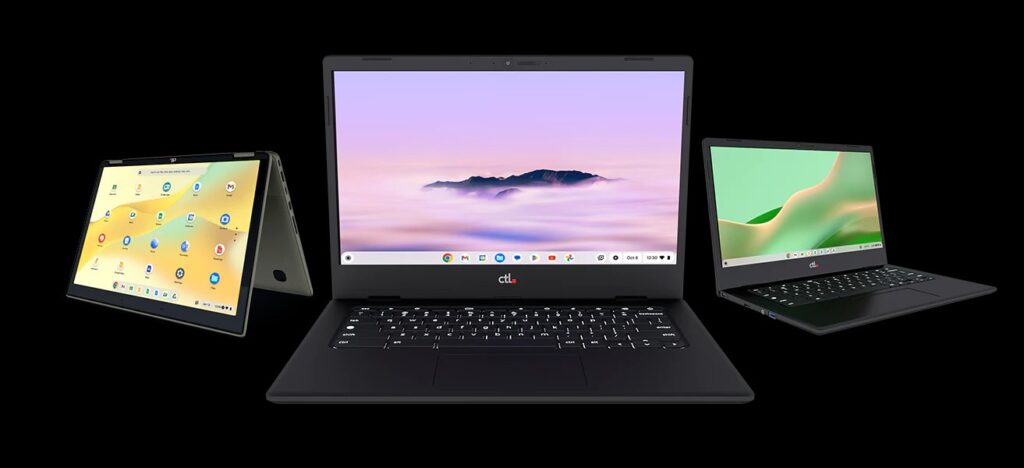
Connectivity System That Defines The Entire Device Identity
The most powerful and defining feature of the CTL Chromebook PX112C is its integrated connectivity system. While most laptops depend entirely on external Wi Fi networks or mobile hotspot sharing, this device integrates direct cellular connectivity at its core.
It supports both traditional SIM based mobile networks and embedded electronic SIM functionality. This means users can connect directly to mobile networks without needing another device to share internet access.
The inclusion of high speed mobile connectivity transforms how the device can be used in real time. Students in remote areas can access learning platforms without depending on school Wi Fi. Field workers can upload reports instantly. Business users can maintain constant communication without interruption.
Another advanced feature is support for private cellular network environments used by organizations. This allows institutions to create their own secure wireless zones that function independently from public internet infrastructure. In such setups, the device automatically connects without manual login processes, making deployment seamless at scale.
From a management perspective, administrators can control connectivity settings remotely through centralized management tools. This ensures that network policies, access controls, and security restrictions are applied consistently across all devices without physical configuration.
This connectivity system is not just a feature. It is the core identity of the device.
Display Experience Focused On Practicality And Efficiency
The display on the CTL Chromebook PX112C is designed with functionality in mind rather than cinematic visuals. It features an 11.6 inch screen that delivers clear visibility for educational content, documents, and web based applications.
The resolution is optimized for battery efficiency and consistent performance rather than ultra high definition output. While it may not appeal to users seeking high end visual clarity, it performs well for reading, typing, video conferencing, and general productivity tasks.
The anti glare surface plays a significant role in usability. It reduces reflections in bright environments such as classrooms with strong lighting or outdoor shaded areas. This ensures that content remains readable under various lighting conditions.
A built in camera is positioned at the top of the display for video communication. It is paired with a physical privacy shutter, allowing users to physically block the camera when not in use. This provides an additional layer of privacy control that is important in shared environments.
Performance Built For Cloud Based Workflows
The processing capability of the CTL Chromebook PX112C is centered around efficiency rather than raw power. It uses a quad core processor designed specifically for lightweight computing tasks, web applications, and cloud based productivity tools.
This architecture allows it to handle multiple browser tabs, online learning platforms, document editing, and streaming services simultaneously without noticeable slowdown.
The memory configuration supports smooth multitasking, allowing users to switch between applications without delays. This is especially important in educational environments where multiple tools are used at once, such as video conferencing, note taking, and research browsing.
Storage is based on flash memory, which is optimized for fast boot times and quick access to essential files. However, the device is clearly designed with cloud storage in mind, meaning most user data is expected to be stored online rather than locally.
Overall performance is not about pushing heavy software. It is about ensuring stable and predictable operation in cloud dependent environments.

Full Specifications Overview
| Feature | Specification |
|---|---|
| Display size | 11.6 inch anti glare panel |
| Display resolution | 1366 by 768 |
| Processor | Quad core Intel N series mobile processor |
| Memory | 8 gigabyte LPDDR5 |
| Storage | 64 gigabyte eMMC flash storage |
| Wireless connectivity | Wi Fi 6 and Bluetooth 5.3 |
| Cellular connectivity | Integrated 5G, 4G LTE, eSIM and SIM support |
| Private network support | CBRS Band 48 compatibility |
| Camera | 720p high definition webcam |
| Audio | Built in microphone and stereo speakers |
| Ports | USB Type C ports, USB Type A port, microSD slot, audio jack |
| Security | Kensington lock support and administrative control features |
| Durability | Reinforced chassis with spill resistant design |
Keyboard, Ports, And Everyday Usability
The keyboard is designed for extended typing sessions. Key travel is balanced to provide comfort during long writing tasks such as assignments, reports, or documentation work. It avoids being too shallow while still maintaining quiet operation suitable for classrooms and meetings.
The port selection is practical and versatile. USB Type C ports handle charging and external display output while USB Type A ensures compatibility with older flash drives and peripherals. The inclusion of a microSD slot adds flexible storage expansion options, which is useful for users working with media files or offline resources.
Audio output is handled through a standard headphone interface that supports everyday listening needs without requiring adapters.
Each of these components is chosen with long term usability in mind rather than trend based design choices.
Final Verdict
The CTL Chromebook PX112C is not designed to impress with luxury or entertainment features. Instead, it is engineered to solve real problems that affect large scale learning environments and mobile workforces.
Its strongest advantage is its integrated connectivity system, which eliminates dependence on unstable Wi Fi networks and provides consistent internet access almost anywhere. Combined with its rugged construction and cloud centered performance model, it becomes a highly specialized tool for institutions and organizations that prioritize reliability over aesthetics.
If the goal is entertainment, multimedia consumption, or high end creative work, this device is not the right fit. However, if the goal is dependable access, centralized management, durability, and uninterrupted productivity in challenging environments, it stands as a very strong and purpose built option.
It is not just a laptop. It is a connectivity driven productivity tool designed for environments where failure is not an option.
Read More On: