

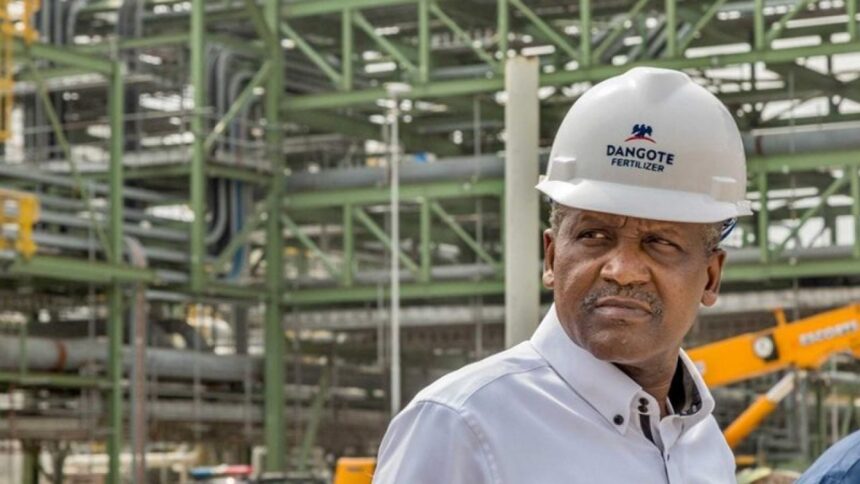

Nigeria’s energy industry has entered a new era following a dramatic development involving the world’s largest single train refinery and the nation’s state owned oil company. In what many analysts are describing as one of the boldest corporate decisions in modern African business history, billionaire industrialist Aliko Dangote has firmly rejected efforts by NNPC Limited to increase its ownership stake in the massive Dangote Petroleum Refinery.
The decision has instantly triggered intense debate across financial markets, political circles, and the wider business community. For decades, Nigeria’s oil and gas sector has largely revolved around government influence and state participation. However, this latest move signals a major shift toward private sector dominance and market driven control within one of Africa’s most strategic industries.
At the heart of the development lies a deeper battle about influence, ownership, economic independence, and the future direction of Nigeria’s petroleum economy. While the NNPC already retains a minority position in the refinery, recent attempts to increase that stake were decisively turned down by Dangote, who appears determined to prevent any single institution from exercising overwhelming influence over the refinery’s future.
The refinery itself has rapidly transformed into one of the most economically important assets on the African continent. Since commencing large scale production, the facility has dramatically reduced Nigeria’s dependence on imported petroleum products, strengthened local supply chains, eased pressure on foreign exchange demand, and positioned Nigeria as an emerging exporter of refined petroleum products.
Get TikTok SEO Cheat here
For investors, economists, and ordinary Nigerians alike, this is far more than a corporate disagreement. It represents a historic power shift capable of reshaping fuel pricing, capital markets, government influence, and national industrial policy for years to come.
Why Dangote Rejected the NNPC Expansion Move
According to industry insiders and statements linked to the refinery’s leadership, the primary reason behind the rejection revolves around ownership philosophy and long term corporate strategy.
Dangote is reportedly prioritizing a broader and more diversified shareholder structure ahead of the refinery’s planned public listing. Rather than allowing one institution to accumulate stronger control, the billionaire businessman wants wider participation from retail investors, institutional funds, and ordinary Nigerians.
This approach aligns with global corporate governance practices where excessive concentration of ownership is often viewed as a threat to operational independence and transparency.
The move also sends a strong message that the refinery has matured into a financially self sustaining industrial giant capable of operating independently without additional state backed intervention.
Many analysts believe Dangote’s position reflects growing confidence in the refinery’s profitability and strategic value.
The Story Behind the 7.25 Percent Stake
The current ownership structure traces back to earlier agreements between the refinery and the national oil company.
Initially, the NNPC had intended to acquire a significantly larger stake in the refinery project. However, incomplete financial commitments eventually reduced that ambition substantially.
As payment obligations remained unsettled, the originally proposed ownership percentage was diluted until the NNPC retained only 7.25 percent equity in the project.
Now that the refinery has become operational and commercially successful, efforts to expand that ownership position appear to have been firmly blocked.
Ownership Structure Snapshot
| Ownership Category | Current Position |
|---|---|
| Dangote Group Control | Majority Ownership |
| NNPC Equity Stake | 7.25 Percent |
| Proposed Public IPO Allocation | Estimated 5 Percent to 10 Percent |
| Institutional Investor Interest | Increasing Rapidly |
This ownership battle has become symbolic of a larger struggle between public sector influence and private sector industrial control within Nigeria’s economy.
How the Refinery Changed Nigeria’s Petrol Market
The refinery’s operational performance has significantly altered Nigeria’s fuel supply landscape within an incredibly short period.
Before the refinery commenced large scale supply operations, Nigeria relied heavily on imported refined petroleum products despite being one of Africa’s largest crude oil producers.
That dependency placed enormous strain on foreign exchange reserves while exposing the country to global fuel price volatility and supply chain disruptions.
Now, the situation has changed dramatically.
The refinery reportedly supplied billions of litres of petrol into the domestic market within a single quarter, creating one of the largest fuel distribution shifts in Nigerian history.
Refinery Performance Overview
| Metric | Estimated Output |
|---|---|
| Petrol Supplied to Domestic Market | 3.18 Billion Litres |
| Estimated Domestic Fuel Value | ₦3.2 Trillion |
| Refinery Processing Capacity | Over 650,000 Barrels Per Day |
| Petrol Import Reduction | Sharp Nationwide Decline |
The economic implications are enormous.
Fuel import dependence has fallen sharply, pressure on the naira has eased in some sectors, and domestic fuel availability has improved significantly compared to previous years of recurring shortages.
Industry observers believe this development may permanently transform Nigeria from a fuel import dependent economy into a major refining and export hub.

The Push Toward a Massive Public Listing
Perhaps the most important element behind Dangote’s rejection of the NNPC expansion attempt is the refinery’s anticipated Initial Public Offering.
The planned IPO is already generating extraordinary anticipation across Africa’s financial sector.
Market analysts estimate that the refinery could eventually command a valuation approaching tens of billions of dollars, potentially making it one of the most valuable industrial listings in African history.
By limiting institutional concentration before the listing, Dangote appears to be positioning the refinery for stronger investor confidence and broader public participation.
Financial experts believe the eventual public offering could attract:
- Nigerian retail investors
- Pension fund managers
- International energy funds
- Sovereign wealth institutions
- African infrastructure investors
The refinery’s strategic importance, combined with its enormous revenue generating potential, makes it one of the most closely watched industrial assets in the global energy market.
Global Oil Politics Strengthening Refinery Profits
International geopolitical instability has also contributed significantly to the refinery’s growing importance.
Disruptions affecting global oil supply routes have increased demand for alternative refining and export hubs across emerging markets.
As global buyers search for stable suppliers of refined petroleum products, the Dangote Refinery has increasingly positioned itself as a major player capable of serving both domestic and international demand.
This expansion into export markets has strengthened foreign exchange inflows while increasing the refinery’s international relevance.
Energy economists believe Nigeria now possesses an opportunity to become one of the dominant refining powers across Africa and parts of the global south.
What This Means for Nigeria’s Economic Future
The implications of this development extend far beyond one refinery or one corporate dispute.
Dangote’s decision represents a wider transformation within Nigeria’s industrial economy where privately funded mega projects are beginning to rival traditional state controlled sectors in both scale and influence.
For investors, the message is clear.
The refinery is no longer viewed as a risky infrastructure experiment. It is increasingly being seen as a strategic economic powerhouse capable of shaping fuel markets, investment flows, and industrial development across the continent.
For the Nigerian government, the development presents both opportunity and pressure. While the refinery strengthens national energy security, it also reduces the traditional dominance once exercised by state institutions within the downstream petroleum sector.
For ordinary Nigerians, the greatest hope remains that increased domestic refining capacity will eventually lead to improved fuel stability, stronger industrial growth, and reduced economic volatility.
The Bigger Picture
The rejection of the NNPC’s attempt to increase its refinery stake marks more than just a business disagreement.
It symbolizes the emergence of a new economic order where industrial scale private enterprise is beginning to redefine the balance of power within Nigeria’s most important sector.
With the refinery expanding aggressively, fuel imports declining sharply, and anticipation building around a future public listing, one reality is becoming increasingly obvious.
Nigeria’s energy future is no longer being shaped solely by government institutions.
Private capital is now firmly at the center of the nation’s petroleum revolution.
Read More On: