


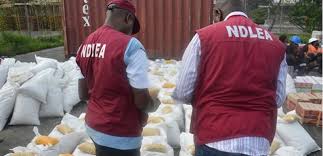
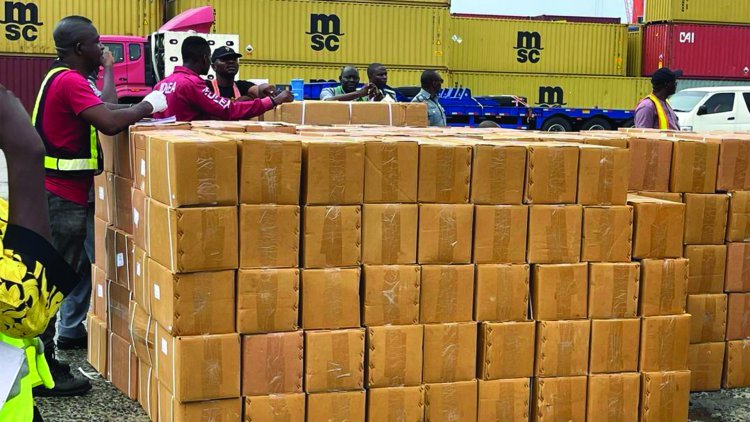
In what authorities are describing as one of the most consequential anti narcotics operations ever carried out within the nation’s commercial capital, the National Drug Law Enforcement Agency has dealt a crushing blow to deeply entrenched drug trafficking networks. Acting on refined intelligence and sustained surveillance, operatives stormed multiple covert storage facilities embedded within residential districts of Lagos, uncovering an enormous cache of illicit pharmaceutical opioids valued at an astonishing ₦16.9 billion.
This operation goes far beyond a routine seizure. It exposes the scale, sophistication, and audacity of criminal syndicates that have quietly weaponized everyday neighborhoods as distribution hubs for substances that continue to devastate families and destabilize communities.
The Anatomy of the Raid
A Carefully Orchestrated Intelligence Breakthrough
The operation did not happen overnight. According to internal briefings, this was the result of layered intelligence gathering, discreet monitoring of suspicious logistics movements, and the tracking of unusual supply chain patterns that pointed toward a coordinated underground network.
Get TikTok SEO Cheat here
The focal points of the raid were the Ago Palace and Okota axis, areas widely known for their dense residential layout and mix of middle class and high income housing. Within these locations, operatives uncovered three separate warehouse facilities that had been deliberately concealed within seemingly ordinary buildings.
What makes this discovery particularly alarming is the deliberate choice of location. These warehouses were not hidden in remote industrial zones or abandoned outskirts. Instead, they were embedded within structured estates, where routine daily life unfolds without suspicion. This calculated positioning allowed traffickers to operate under a veil of normalcy, exploiting the assumption that criminal activity is less likely in organized residential environments.
Addresses linked to the operation include properties within Park View Estate, notably along Olukayode Awofisayo Street and Charles Ndumetu Street. These sites functioned as interconnected storage and distribution points, forming a silent but highly efficient supply chain.
Inside the Warehouses
A Chilling Inventory of Addiction
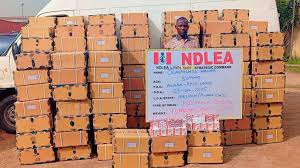
Upon entry, operatives were met with a staggering sight. Cartons upon cartons of tightly packed pharmaceutical products filled entire rooms, stacked from floor to ceiling in what investigators described as a highly organized inventory system.
The scale of the seizure reflects not only the financial ambition of the syndicate but also the potential human cost had these substances reached the streets in full circulation.
Breakdown of Seized Opioids
| Item Category | Quantity Recovered | Packaging |
|---|---|---|
| Tramadol 225mg | 2,360,000 Pills | 34 Cartons |
| Codeine Syrup | 1,909,400 Bottles | 19,094 Cartons |
| Total Units | ~4,269,400 | N/A |
| Market Value | ₦16,927,200,000 | Street Estimate |
The tramadol discovered was of exceptionally high potency. At 225 milligrams per pill, this far exceeds medically approved dosages. Such concentrations are widely associated with dependency, erratic behavior, and in many cases, violent tendencies when abused.
Equally troubling is the massive volume of codeine based syrup. Often disguised as a harmless cough suppressant, codeine has become one of the most abused substances among young people. Its accessibility and deceptive medical labeling make it particularly dangerous, as users frequently underestimate its addictive nature.
A Strategic Blow to Organized Drug Networks
Reacting to the operation, the Chairman of the NDLEA, Mohamed Buba Marwa, described the seizure as a defining moment in the ongoing campaign against drug abuse and trafficking.
According to him, this was not just a seizure but a disruption of an entire distribution ecosystem. The warehouses functioned as central nodes in a larger network that likely stretched beyond state and even national boundaries.
By dismantling this hub, authorities believe they have significantly weakened the flow of illicit opioids across multiple regions. The financial loss alone represents a severe setback for the syndicate, but the operational disruption may prove even more damaging in the long term.
There is also a broader implication. Large scale seizures of this nature send a strong signal to other criminal groups that surveillance capabilities have evolved and that no environment can be assumed safe for illegal operations.
The Human Cost Behind the Numbers
Beyond the statistics lies a more sobering reality. Each pill and each bottle recovered represents a potential story of addiction, broken families, lost productivity, and in extreme cases, fatal overdoses.
Communities across the country have continued to grapple with the consequences of opioid abuse. Young people, in particular, remain vulnerable due to peer influence, unemployment pressures, and easy access to these substances through underground channels.
The sheer quantity intercepted in this operation suggests that thousands, if not millions, of lives could have been affected. In that sense, this seizure is not just a law enforcement success but a public health intervention on a massive scale.
The Illusion of Safety in Residential Spaces
One of the most disturbing revelations from this operation is the strategic use of residential estates as operational bases.
This tactic reflects a shift in how drug networks operate. Instead of hiding in isolation, they now integrate into everyday environments, leveraging the perceived safety and orderliness of such areas to avoid suspicion.
Residents living near these warehouses were reportedly unaware of the scale of illegal activity taking place within their vicinity. This underscores the need for increased community awareness and vigilance.
Authorities have emphasized the importance of citizen cooperation, urging individuals to report unusual movements, unexplained deliveries, or suspicious storage activities within their neighborhoods.
Ongoing Investigations and the Hunt for Key Figures
While the seizure itself marks a major milestone, the operation is far from over. Investigators are actively pursuing leads to identify and apprehend the individuals behind the network.
The complexity of the setup suggests the involvement of multiple actors, including financiers, importers, distributors, and local coordinators. Efforts are currently focused on tracing the supply chain backward to its origin and forward to its intended distribution channels.
Law enforcement officials have assured that those responsible will face the full weight of legal consequences once apprehended.
A Clear Message to Drug Traffickers
This operation sends an unmistakable message. There is no safe haven for illicit drug operations. Whether hidden in remote warehouses or embedded within upscale estates, such activities remain within the reach of determined enforcement agencies.
The NDLEA has reiterated its commitment to intensifying surveillance, strengthening intelligence networks, and expanding community engagement initiatives as part of its broader strategy.
Implications for Society and Media Engagement
For journalists, digital publishers, and content creators, this development highlights a critical area of national concern that demands sustained attention.
There is a growing need for informative content that educates the public about the dangers of opioid abuse, the signs of substance dependency, and the resources available for rehabilitation.
Moments like this also present an opportunity to amplify awareness campaigns and foster conversations around prevention, treatment, and community responsibility.
A Defining Moment in the Fight Against Drug Abuse
The interception of a ₦16.9 billion opioid stockpile is more than a headline. It is a stark reminder of the scale of the challenge and the level of commitment required to confront it.
While this operation represents a significant victory, it also reinforces the need for continuous vigilance, collaboration, and public awareness.
The battle against drug abuse is not fought by enforcement agencies alone. It is a collective responsibility that involves communities, institutions, and individuals working together to safeguard the future.
Read More On: