


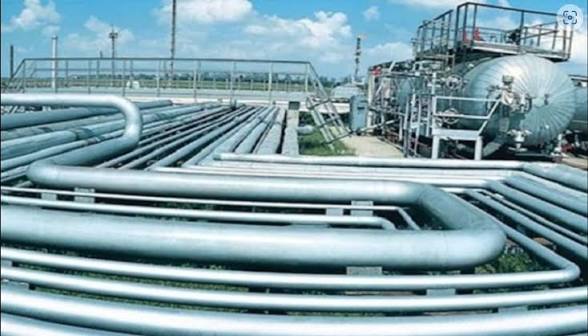
Nigeria’s long anticipated gas infrastructure expansion is entering a decisive phase as the Federal Government confirms that the massive 2.8 billion dollar Ajaokuta Kaduna Kano pipeline will begin supplying gas to Abuja by July. This development signals a major breakthrough in the country’s energy strategy and marks a turning point for industrial growth across northern Nigeria.
The project, widely regarded as one of the most ambitious energy investments in the nation’s history, is expected to reshape power supply, manufacturing capacity, and economic productivity once gas begins to flow.
A Landmark Energy Project Nears Activation
The Ajaokuta Kaduna Kano pipeline, commonly known as the AKK pipeline, stretches approximately 614 kilometres across key regions of Nigeria, linking gas rich southern areas to underserved northern industrial hubs.
Authorities have confirmed that the Ajaokuta to Gwagwalada segment will be the first to go live, with gas expected to reach Abuja through this corridor by July.
Get TikTok SEO Cheat here
This milestone is particularly significant because it represents the first phase of actual gas delivery, moving the project from construction to real economic impact.
Key highlights of the project include
- Total project cost estimated at 2.8 billion dollars
- Pipeline length of over 600 kilometres connecting multiple states
- Strategic route covering Ajaokuta, Abuja, Kaduna, and Kano
- Designed to transport natural gas for power generation and industries
The Federal Government has described the upcoming gas flow as more than just an energy event, but a trigger for economic transformation across multiple sectors.
Abuja Set to Become a Major Gas Hub
The choice of Abuja as the first major beneficiary is strategic. The city is not only the political capital but also an emerging industrial and commercial centre.
With gas supply reaching Gwagwalada in Abuja, several developments are expected
- Expansion of gas fired power plants such as the Abuja thermal project
- Growth of mini LNG and compressed natural gas facilities
- Increased energy availability for industries and small businesses
- Reduction in dependence on diesel and petrol powered generators
Officials have emphasized that when the first valve opens in Abuja, it will unlock productivity and accelerate economic activities in the region.
From Construction Milestones to Reality
The progress achieved so far has been substantial, especially considering the project’s long history of delays.
Major milestones already completed include
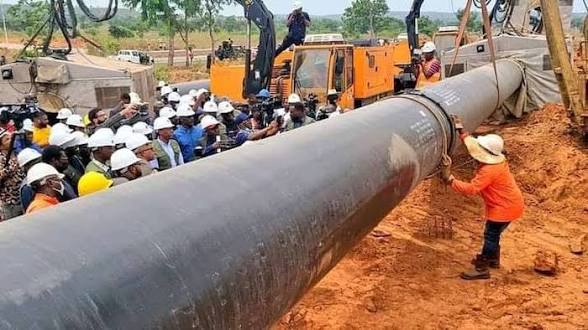
- Full welding of the pipeline main line
- Successful crossing of the River Niger, a major engineering challenge
- Advancement of mechanical completion and connection phases
- Ongoing installation of supporting infrastructure such as valve stations
These achievements have cleared the path for final commissioning and gas delivery.
The completion of welding alone marked a critical breakthrough, enabling the pipeline to move into its final operational stage.
Read More On: Expert Labels World Bank Fuel Import Strategy a Violation of PIA.
Driving Industrial Growth Across Northern Nigeria
The AKK pipeline is not just about transporting gas. It is designed as a backbone for industrial development across northern Nigeria.
Expected economic benefits include
- Power generation boost for cities like Abuja, Kaduna, and Kano
- Development of fertiliser plants and agro processing industries
- Emergence of industrial parks along the pipeline corridor
- Support for manufacturing and heavy industries
- Job creation across construction, energy, and logistics sectors
Experts believe the pipeline will help address long standing energy shortages that have limited industrialization in the northern region for decades.
Boost for Nigeria’s Gas Based Economy
Nigeria has one of the largest natural gas reserves in Africa, yet domestic utilization has historically been low. The AKK pipeline is central to the government’s plan to change that.
The project aligns with broader national goals such as
- Expanding domestic gas consumption
- Supporting cleaner energy alternatives like compressed natural gas
- Reducing reliance on imported fuels
- Enhancing energy security
- Driving the transition toward a gas powered economy
With gas now set to reach Abuja, the country is taking a major step toward unlocking the value of its vast gas resources.
Investment Opportunities and Private Sector Participation
The pipeline is already attracting attention from investors and private sector players.
Opportunities emerging along the AKK corridor include
- Mini LNG plants and gas processing facilities
- Power generation projects
- Industrial manufacturing hubs
- Transportation systems powered by compressed natural gas
- Infrastructure development around industrial clusters
The Federal Government and the Nigerian National Petroleum Company have both emphasized that the pipeline will create a fertile ground for investment and innovation.
Read More On: Crude Oil Surges as Global Markets React to Rising Tensions in the Strait of Hormuz
Challenges and Expectations Ahead
While the progress is encouraging, experts caution that successful implementation will depend on several factors
- Timely completion of remaining segments beyond Abuja
- Efficient distribution networks to end users
- Stable regulatory environment to attract investors
- Maintenance and security of pipeline infrastructure
There is also the expectation that gas pricing and accessibility must be structured in a way that benefits both businesses and consumers.
A Turning Point for Nigeria’s Energy Future
The commencement of gas supply to Abuja represents more than the completion of a project phase. It signals the beginning of a new chapter in Nigeria’s energy and economic journey.
With the AKK pipeline coming to life, Nigeria is positioning itself to
- Strengthen its industrial base
- Improve electricity generation
- Attract large scale investments
- Reduce energy costs for businesses
- Accelerate economic growth across regions
The success of this project could serve as a model for future infrastructure development across the country.
Final Outlook
As July approaches, attention is firmly fixed on Abuja and the first flow of gas through the AKK pipeline. If executed successfully, this project could redefine Nigeria’s energy landscape and unlock long awaited economic potential.
For many stakeholders, the message is clear. The era of gas powered industrial expansion in Nigeria is no longer a vision. It is becoming reality.
Read More On: SUNU Assurances Launches N2.08bn Rights Issue Following SEC Nod