
The telecommunications industry is no longer playing the same game it dominated for decades. What used to be a race for subscriber acquisition has quietly transformed into something far more complex, far more expensive, and far more strategic. The rules have changed. The scoreboard has changed. Even the definition of success has changed.
Across global markets and especially within Nigeria’s fast evolving digital economy, telecom operators are confronting a reality that cannot be ignored. The era of rapid user expansion has reached its natural ceiling. SIM card penetration is no longer a meaningful growth metric. In urban centers, individuals do not just own one line. They actively juggle multiple networks, switching between them based on pricing, speed, and reliability. The once clear path to growth has become a crowded intersection of competing priorities.
This shift has triggered a profound recalibration across the industry. Telecommunications companies are no longer just service providers facilitating voice calls and SMS. They are now positioning themselves as digital infrastructure giants, financial service enablers, and data economy gatekeepers. At the center of this transformation lies one critical asset. Data.
Data has become the lifeblood of the modern digital experience. It powers entertainment, communication, commerce, education, and enterprise operations. Every scroll, every stream, every upload, and every transaction feeds into a growing ecosystem that depends entirely on fast, reliable, and scalable connectivity. In this new reality, the company that controls the strongest data pipelines controls the market narrative.
Get TikTok SEO Cheat here
This is where the so called telecom battle for data supremacy begins to take shape. It is not simply about offering cheaper bundles or faster speeds. It is about owning the infrastructure, optimizing the experience, and monetizing user behavior at scale. Telecom operators are now engaged in a high stakes competition where success depends on how effectively they can convert network capacity into sustained digital engagement.
Major players such as MTN Nigeria, Airtel Nigeria, and Globacom are no longer competing for attention alone. They are competing for dominance over the digital habits of millions. Their strategies reflect a deeper understanding that revenue growth will no longer come from simply adding users. It will come from extracting more value from each connected individual.
This report explores that transformation in detail. It breaks down the forces driving the shift, the strategies being deployed, and the implications for businesses, consumers, and the broader digital economy.
Why user growth is stalling
The slowdown in subscriber growth is not accidental. It is the result of a market reaching maturity. In densely populated cities, mobile penetration has reached a level where nearly every economically active individual is already connected. The remaining unconnected population often resides in geographically challenging or economically constrained regions where network expansion delivers limited immediate returns.
This creates a structural ceiling. Telecom operators can no longer rely on new user acquisition as their primary growth engine. Instead, they are forced into a competitive loop where gaining a subscriber often means losing one elsewhere.
Key forces driving saturation
| Factor | Explanation | Impact on Telcos |
|---|---|---|
| Multi SIM culture | Users maintain multiple lines for flexibility | Reduced brand loyalty |
| Urban market maturity | Most users already connected | Limited acquisition growth |
| Rural expansion costs | High infrastructure cost with low returns | Slower network expansion |
| Digital alternatives | Messaging apps replacing voice calls | Decline in voice revenue |
Voice services, once the cornerstone of telecom profitability, have steadily declined in importance. Platforms like WhatsApp, Telegram, and Discord have redefined how people communicate. Calls and messages now travel over data networks, bypassing traditional billing models.
This evolution has created what can best be described as a revenue wall. Operators are witnessing diminishing returns from legacy services while facing rising costs to maintain and upgrade infrastructure.
Customer acquisition has also become significantly more expensive. Marketing campaigns, promotional bonuses, and pricing incentives are no longer optional. They are essential tools in a zero sum competition where differentiation is increasingly difficult.
Data as the new oxygen of revenue
If voice was the past, data is the present and the future. The shift toward data driven revenue is not merely strategic. It is existential.
Every aspect of modern digital life depends on data consumption. Streaming platforms such as TikTok, Showmax, and Amazon Prime Video have transformed user behavior. Content is no longer consumed occasionally. It is consumed continuously.
This behavioral shift has created an explosion in per user data usage. Telecom operators are now focused on increasing what is known as average revenue per user through higher data consumption rather than higher user numbers.
Data monetization strategies
| Strategy | Description | Outcome |
|---|---|---|
| Bundle optimization | Offering tailored data plans | Increased user retention |
| Content partnerships | Collaborations with streaming platforms | Higher data usage |
| Tiered pricing | Premium plans for heavy users | Revenue segmentation |
| Unlimited packages | Encouraging prolonged usage | Network load balancing |
Globacom has leaned heavily into a volume driven strategy. By offering large data bundles at relatively low cost, it positions itself as the preferred network for entertainment and heavy streaming.
Meanwhile, MTN Nigeria focuses on premium service quality, targeting users willing to pay more for reliability and speed. Airtel Nigeria balances both approaches, combining affordability with performance to capture a broad market segment.
The 5G and fiber infrastructure arms race
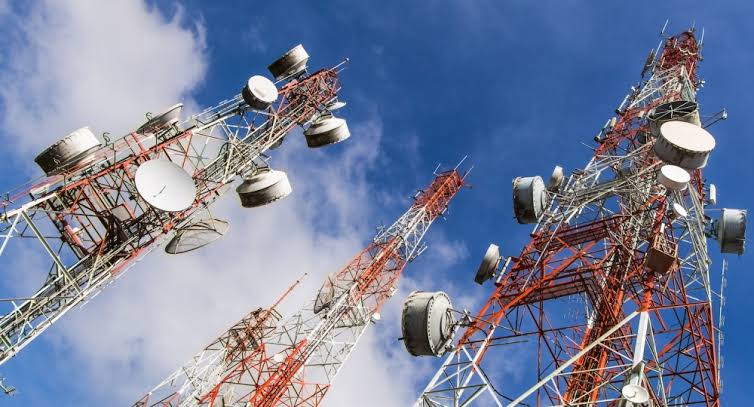
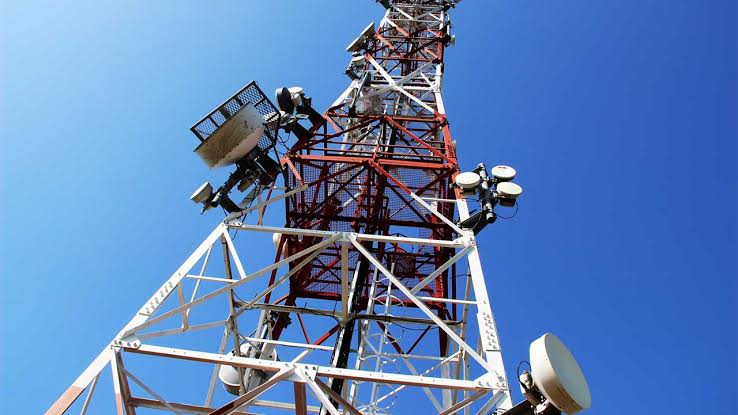
The pursuit of data supremacy cannot be achieved without robust infrastructure. This is where the competition becomes capital intensive.
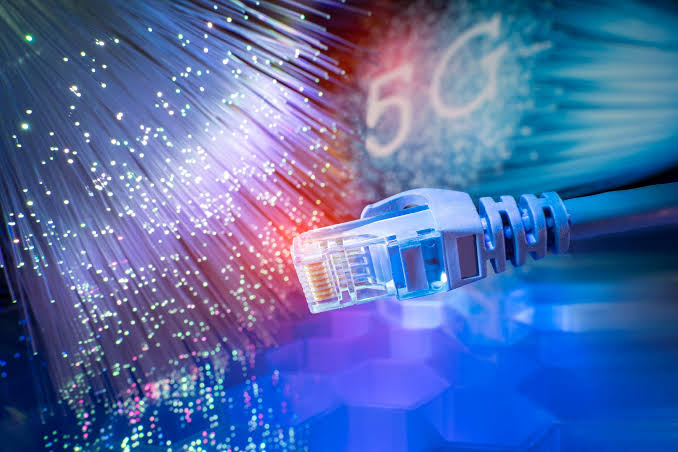
Telecom operators are investing heavily in next generation technologies to support growing data demand. The rollout of 5G technology represents a major leap in speed, latency, and capacity. However, 5G alone is not enough.
Fiber optic networks form the backbone of modern connectivity. Without extensive fiber deployment, even the most advanced wireless networks cannot deliver consistent performance.
Infrastructure comparison
| Operator | Infrastructure Focus | Strategic Objective |
|---|---|---|
| MTN Nigeria | Fiber expansion and network capacity | Control data pipelines |
| Airtel Nigeria | Urban 5G deployment | Capture high value users |
| Globacom | Cost efficient data delivery | Maximize volume consumption |
The challenge lies in balancing investment with returns. Building and maintaining infrastructure requires massive capital expenditure. At the same time, pricing pressures limit how much operators can charge consumers.
Network congestion has also become a critical issue. As more users consume more data, existing infrastructure is pushed to its limits. Service reliability is no longer just a technical concern. It is a competitive differentiator.
Telcoms as tech driven ecosystems
To remain competitive, telecom companies are expanding beyond traditional services. They are evolving into integrated digital ecosystems.
Financial technology has emerged as a major growth area. Services like MoMo and SmartCash allow telecom operators to tap into financial transactions, creating new revenue streams independent of connectivity.
This diversification is strategic. By embedding themselves into everyday digital activities, telecom operators increase user dependency on their platforms.
Ecosystem expansion areas
| Sector | Telco Role | Value Created |
|---|---|---|
| Fintech | Digital payments and wallets | Transaction revenue |
| Entertainment | Content delivery platforms | Increased data usage |
| Identity services | SIM linked identification | Data driven services |
| Enterprise solutions | Cloud and connectivity services | Business partnerships |
The integration of identity systems further strengthens this ecosystem. By linking SIM registration to national identification frameworks, telecom operators gain access to valuable user data that can be leveraged for personalized services.
Who wins the data war
The outcome of this battle will not be determined by subscriber numbers. It will be determined by infrastructure strength, service quality, and strategic execution.
Competitive positioning overview
| Operator | Strength | Risk |
|---|---|---|
| MTN Nigeria | Strong infrastructure and investment capacity | High operational costs |
| Airtel Nigeria | Balanced strategy and urban focus | Competitive pressure in pricing |
| Globacom | Affordable data leadership | Perception of network reliability |
Scale remains a significant advantage. Operators with deeper financial resources can invest more aggressively in infrastructure, giving them a long term edge.
However, agility is equally important. The ability to adapt quickly to changing consumer behavior can determine short term success.
Volume driven strategies ensure continued relevance, especially among cost conscious users. At the same time, premium offerings attract high value customers who prioritize performance.
Final perspective
The telecommunications industry is undergoing a quiet but profound transformation. The shift from subscriber growth to data dominance marks a new chapter defined by complexity, competition, and continuous innovation.
For digital marketers, this evolution presents both opportunities and challenges. Faster networks enable richer content experiences, while increased competition among telcos leads to better pricing and service offerings for consumers.
For businesses, reliable data connectivity is no longer optional. It is foundational.
For telecom operators, the message is clear. The future belongs to those who can build, scale, and monetize the digital highways of the modern world.
The battle for data supremacy is not a phase. It is the new reality.
Read More On: