


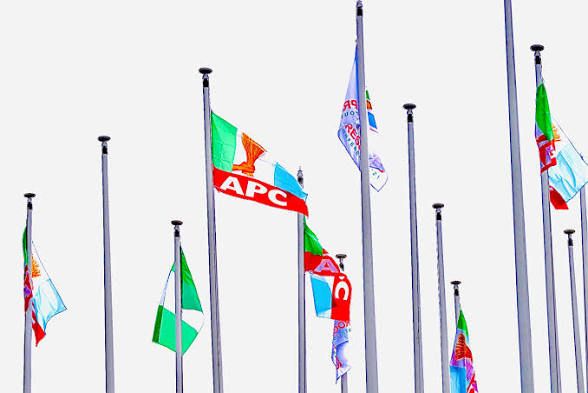
The political atmosphere across Imo State has intensified dramatically as the ruling All Progressives Congress launches one of its most coordinated internal electoral operations in recent memory. In what party insiders describe as a decisive move to reinforce discipline, transparency, and organizational control, the party’s National Working Committee has deployed more than 1,000 officials, supervisors, and monitoring personnel across the state to oversee its highly anticipated primary election process.
The extraordinary deployment reflects growing concern within the party hierarchy over the recurring crises that often trail internal primaries in politically sensitive states. From allegations of manipulated delegate lists to parallel congresses and legal disputes, internal elections within major political parties have frequently generated tensions capable of weakening party unity before general elections even begin.
In Imo State, however, the stakes appear significantly higher. The state remains one of the party’s most strategically important strongholds in the Southeast, making the credibility of the primary process a matter of national concern for the party leadership. The overwhelming presence of national officials across all voting structures sends a strong message that the leadership is determined to prevent confusion, suppress factional interference, and ensure that only one universally recognized outcome emerges from the exercise.
Political observers within Owerri and surrounding local government areas say the atmosphere ahead of the primaries resembles a full scale institutional operation rather than a routine party activity. Hotels, party liaison offices, and administrative centers have reportedly become coordination hubs for officials arriving from different parts of the country to participate in the supervision exercise.
Get TikTok SEO Cheat here
Massive Operational Structure Across the State
Unlike previous exercises where monitoring activities were concentrated mainly at the state capital, the current strategy involves a broad and deeply decentralized operational framework.
The National Working Committee reportedly divided the officials into smaller tactical units assigned to every segment of the electoral chain. Teams have been stationed across the 27 local government areas, while additional supervisors have been attached directly to ward structures to observe delegate accreditation, voting procedures, and result collation.
This arrangement is intended to eliminate loopholes commonly exploited during internal party contests. By maintaining a direct monitoring presence at the grassroots level, the party leadership hopes to prevent incidents involving unauthorized result declarations or manipulation of delegate figures.
Party insiders disclosed that most of the deployed officials were deliberately selected from outside the Southeast geopolitical zone. The move is seen as an attempt to guarantee neutrality and reduce the influence of entrenched local political interests that could compromise the process.
Many aspirants within the party reportedly welcomed the development, arguing that the heavy presence of national supervisors would strengthen confidence among delegates who have previously expressed fears over intimidation and interference.
Determination to Eliminate Parallel Primaries
One of the most significant objectives behind the large scale deployment is the prevention of parallel primary elections.
For years, internal contests within political parties across Nigeria have often ended with rival factions conducting separate exercises and presenting conflicting candidates to the national leadership. Such disputes frequently escalate into prolonged litigation capable of weakening party structures ahead of major elections.
In Imo State, the National Working Committee appears determined to avoid a repeat of such scenarios.
By positioning verified party officials directly at voting centers and collation points, the APC leadership intends to ensure that only authorized processes receive official recognition. Any attempt by rival blocs to conduct unauthorized parallel exercises would face immediate institutional rejection.
Political analysts believe this approach demonstrates a growing realization within the party that internal stability is just as important as external electoral competition.
The presence of federal level supervisors also increases the legitimacy of the process in the eyes of grassroots delegates who have often complained about excessive influence from local power brokers.
Consensus Arrangements and Emerging Tensions
Despite the elaborate preparations, tensions continue to simmer beneath the surface.
Several influential stakeholders within the party have reportedly advocated consensus arrangements in selected constituencies as a means of preserving unity and reducing confrontational contests. However, many aspirants insist that only open voting can guarantee fairness and political credibility.
This disagreement has created a delicate balancing act for party leaders.
While consensus arrangements are traditionally viewed as tools for maintaining cohesion, critics argue that they can also suppress internal democracy if imposed without broad consultation. Some aspirants fear that predetermined outcomes could alienate loyal supporters and trigger post primary resentment.
The deployment of over 1,000 officials therefore serves another strategic purpose. Beyond monitoring security and logistics, the officials are expected to ensure that where consensus fails, transparent voting mechanisms are implemented without compromise.
Reports indicate that both secret ballot procedures and the option A4 system remain under consideration depending on the peculiar dynamics within different constituencies.
Leadership Influence and National Attention
The developments in Imo State have also highlighted the growing influence of national leadership structures within the party.
The exercise reportedly follows extensive consultations involving top party figures and influential stakeholders aligned with the administration of Hope Uzodinma. Political observers believe the state government remains a central force in shaping the direction of the APC within the region.
At the same time, the National Working Committee appears eager to demonstrate that institutional procedures will take precedence over personal political influence.
Analysts say the Imo primary is being viewed internally as a model operation capable of setting new standards for how politically sensitive primaries should be conducted nationwide.
The emphasis on discipline, centralized monitoring, and rapid communication systems suggests that the party leadership intends to reduce the culture of chaotic internal contests that has damaged several political organizations in the past.
Security Coordination and Digital Monitoring
The logistical demands of supervising more than a thousand officials across an entire state require extensive coordination.
Security agencies have reportedly intensified their operational presence around strategic political locations, including collation centers and delegate gathering points. Personnel from the Nigeria Police Force and the Nigeria Security and Civil Defence Corps are expected to work alongside party monitors to maintain order and discourage intimidation.
Sources familiar with the operation also revealed that the party has introduced real time digital reporting systems aimed at accelerating collation procedures.
Field officials are expected to upload verified reports directly to a centralized coordination center in Owerri. This process is designed to minimize delays, reduce the risk of tampering during physical transportation of result sheets, and provide immediate oversight from the national secretariat.
Political observers say the integration of digital monitoring tools into the process reflects the party’s growing recognition that technology driven oversight may become essential for future internal elections.
Strategic Objectives Behind the Deployment
| Core Objective | Implementation Strategy | Expected Outcome |
|---|---|---|
| Prevent Electoral Manipulation | Neutral supervisors positioned at ward and local government levels | Credible and widely accepted results |
| Suppress Political Violence | Collaboration with security agencies across voting areas | Safer environment for delegates and officials |
| Enforce Official Guidelines | Strict monitoring of delegate accreditation and voting procedures | Elimination of unauthorized parallel exercises |
| Accelerate Result Management | Real time digital transmission from field officers | Faster declaration and reduced disputes |
| Strengthen Internal Democracy | Oversight from national officials across all senatorial districts | Increased confidence among aspirants and party members |
A Defining Moment for the APC in Imo
The scale of the operation unfolding in Imo State represents more than a routine internal exercise. It has evolved into a major institutional test for the APC’s ability to manage political competition within its own ranks while preserving unity and credibility.
Success would provide the party with a powerful template for future primaries across the federation. Failure, however, could deepen internal fractures and reinforce long standing criticisms surrounding internal party democracy in Nigeria.
For now, all attention remains fixed on Owerri and the surrounding political corridors where thousands of party delegates, aspirants, supervisors, and security personnel are preparing for what could become one of the most closely monitored internal elections in the state’s political history.
As tensions rise and expectations continue to build, the APC leadership appears determined to prove that order, transparency, and institutional control can prevail over factional rivalry and political uncertainty.
Read More On: