



The battle against economic sabotage in Nigeria has taken a dramatic and defining turn, as the Nigeria Police Force records one of its most significant operational victories in recent times. In a carefully coordinated intelligence driven mission, operatives successfully intercepted and recovered vandalized railway materials valued at an estimated four hundred million naira.
This operation goes far beyond a routine arrest. It represents a powerful statement about the evolving strength, discipline, and moral resolve within the police force. At the heart of this story lies not just the recovery of stolen national assets, but an extraordinary act of integrity that has captured national attention. Officers involved in the mission reportedly turned down a staggering bribe offer of one hundred million naira, choosing instead to uphold justice and national interest.
The Interception Operation
How the Syndicate Was Stopped
The operation unfolded after weeks of quiet surveillance, intelligence gathering, and strategic tracking of suspicious logistics movements across state lines. Security operatives had been monitoring patterns linked to the illegal transportation of railway components, gradually piecing together a network believed to be deeply embedded in organized crime.
Get TikTok SEO Cheat here
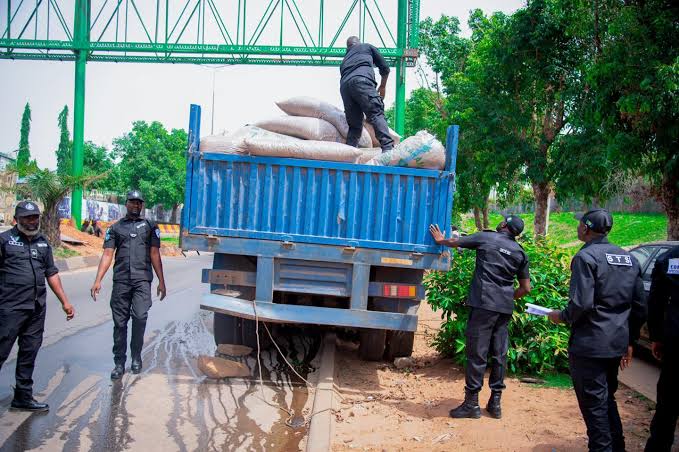
The breakthrough came when a heavy duty trailer was flagged and intercepted. The vehicle, moving under the cover of night, attempted to pass through a key transit corridor without drawing attention. What initially appeared to be an ordinary haulage operation quickly revealed itself to be a sophisticated smuggling attempt.
A Carefully Orchestrated Concealment Strategy
Upon inspection, officers uncovered an elaborate concealment method designed to deceive even experienced checkpoints. Beneath layers of agricultural waste materials, specifically sacks filled with groundnut shells, lay a massive cache of dismantled railway tracks and sleepers.
The concealment was not random. It reflected a calculated attempt to exploit the common movement of agricultural goods across regions, blending illegal cargo with legitimate trade patterns. This level of planning suggests the involvement of experienced operators familiar with logistics and enforcement loopholes.
Scale of the Seizure
The recovered materials weighed approximately sixty tonnes, an amount that underscores the scale of the operation. This was not a small time theft but a large scale extraction of critical infrastructure components. The value of the recovered items alone highlights the financial motivation driving such criminal networks.
Two primary suspects were immediately taken into custody. Initial questioning revealed that they were operating under instructions, pointing to a broader network that extends far beyond the individuals apprehended at the scene.
The Bribery Attempt
A Defining Moment of Integrity
As news of the interception spread within the criminal network, attempts were made to compromise the investigation. According to official accounts, intermediaries connected to the syndicate reached out to the officers handling the case with an offer that could easily tempt even the most disciplined individuals.
A sum of one hundred million naira in cash was reportedly presented as an inducement to release the suspects and allow the seized materials to disappear back into illegal circulation.
The Officers’ Response
In a moment that has since become the defining highlight of the operation, the officers firmly rejected the offer. There was no negotiation, no hesitation, and no compromise. The decision to refuse such an enormous bribe reflects a growing shift within the institution toward accountability and professionalism.
This act has been widely interpreted as a symbol of a renewed commitment to ethical policing. It sends a clear message that the force is increasingly resistant to the influence of corruption, especially in cases involving national assets.

The Impact of Railway Vandalism
Railway vandalism is not merely theft. It is a direct attack on national development, public safety, and economic stability. The recovered materials represent more than just metal. They are components of a system designed to move millions of people and goods efficiently across the country.
Economic Consequences
The financial implications of such vandalism are severe. While the recovered materials are valued at hundreds of millions, the true cost to the government is significantly higher. Replacing railway infrastructure involves specialized manufacturing, transportation logistics, and complex installation processes.
Every missing track or sleeper translates into increased maintenance costs, project delays, and diverted public funds that could have been used for development in other sectors.
Threat to Public Safety
Railway systems rely on precision and structural integrity. Removing even a small section of track can create dangerous conditions. Trains traveling at high speeds depend on stable and continuous rail lines. Any disruption can lead to derailments, accidents, and potential loss of lives.
This makes railway vandalism not just an economic crime but a serious threat to human safety.
Disruption of National Logistics
Nigeria’s push toward a rail driven transportation system is central to reducing the cost of goods and improving trade efficiency. Criminal activities targeting railway infrastructure directly undermine this vision.
When rail lines are compromised, the ripple effects are felt across supply chains. Food distribution slows down, transportation costs rise, and businesses face increased operational challenges.
Uncovering the Syndicate
The arrest of the suspects marks only the beginning of a deeper investigation. Evidence gathered from the scene indicates the existence of a well organized network operating across multiple regions.
Structure of the Operation
The syndicate appears to function through a coordinated system involving multiple roles. There are those responsible for dismantling the railway components, those who arrange transportation, and others who act as receivers and financiers.
The recovered materials were reportedly en route to a hidden destination where they would likely be processed for industrial reuse. This points to a demand driven market that sustains the entire operation.
Financial Backing and Logistics
Investigators have uncovered details suggesting that significant funds were invested in transporting the stolen materials. Payments made to drivers and logistics handlers indicate that the operation was backed by individuals with substantial financial resources.
This level of investment reinforces the idea that the crime is not random but part of a structured business model designed to exploit national infrastructure.
Ongoing Efforts
Law enforcement agencies are actively pursuing leads connected to the wider network. Surveillance operations have been expanded, and intelligence units are working to identify key figures behind the scenes.
The goal is not just to arrest those directly involved but to dismantle the entire system that enables such crimes to thrive.
Key Details of the Operation
Total Value Recovered
Four hundred million naira
Weight of Materials
Approximately sixty tonnes
Bribe Offered and Rejected
One hundred million naira
Primary Suspects
Two individuals currently in custody
Nature of Crime
Large scale railway infrastructure vandalism and illegal transport
A Strong Message to Criminal Networks
This successful operation sends a powerful warning to those involved in economic sabotage. The combination of intelligence driven policing and ethical discipline is proving to be a formidable force against organized crime.
The refusal to accept a massive bribe demonstrates that enforcement efforts are no longer easily compromised. It reflects a growing culture of accountability that strengthens public trust in law enforcement institutions.
Criminal networks that once operated with confidence are now facing increased pressure, tighter surveillance, and a higher risk of exposure.
A Turning Point in the Fight Against Sabotage
The recovery of vandalized railway materials valued at such a significant amount represents more than just a successful police operation. It marks a turning point in the ongoing fight against crimes that threaten national progress.
This case highlights the importance of vigilance, integrity, and coordinated action in protecting critical infrastructure. It also reinforces the idea that meaningful change is possible when institutions prioritize transparency and accountability.
As investigations continue, the focus remains on bringing all responsible parties to justice and preventing future occurrences. The message is clear and unmistakable. Acts of economic sabotage will be met with decisive action, and those who attempt to undermine national development will face the full weight of the law.
Read More On: