


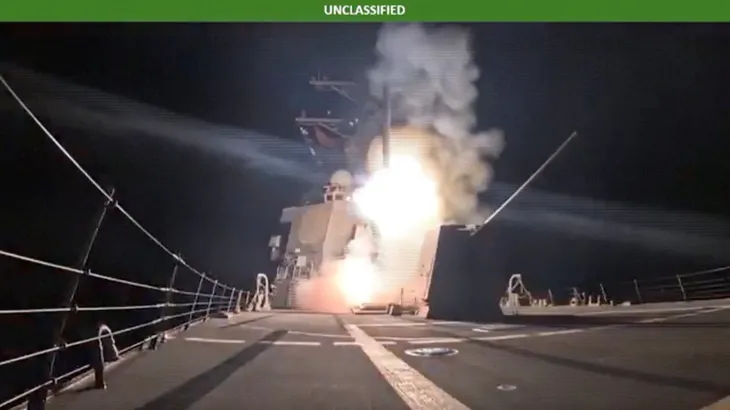
Today, Nigeria’s government confirmed that the United States carried out airstrikes against Islamic State-linked militants in Sokoto State, northwest Nigeria — part of a collaborative effort between the two countries to confront growing extremist threats.
According to statements released by both sides, the operation was conducted in coordination with Nigerian authorities, based on shared intelligence and ongoing security cooperation aimed at tackling terrorism and violent extremism in the region.
U.S. President Donald Trump framed the strikes as a response to attacks he described as targeting innocent Christian communities, while Nigerian officials stressed that extremist violence in the country affects all citizens — Muslims and Christians alike. The Foreign Ministry emphasized that Nigeria’s counter-terrorism efforts are guided by respect for human rights, national unity, and international law.
This development reflects a deepening security partnership between Abuja and Washington, but it also raises important conversations at home about national sovereignty, the complexities of Nigeria’s security challenges, and the best strategies to protect all communities from violence.
Get TikTok SEO Cheat here
More updates are expected as local and international reactions continue to unfold.
Read also:
Local and Expert Reactions: Fear, but No Surprise
For many local Christian leaders, the airstrikes were not shocking — they only confirmed what they say has been happening for years.
“These attackers are not ordinary bandits,” a Christian leader in northwest Nigeria told TruthNigeria, speaking anonymously for safety reasons. “They don’t just steal. They deliberately go after churches and Christian communities.”
Human rights advocate Kay Ajude also reacted to the development with irony, noting the contradictions in regional security efforts. “Nigeria carries out airstrikes in Benin Republic to restore stability, and now the U.S. carries out airstrikes in Nigeria for the same reason. It’s ironic,” he said.
Security experts argue that the government’s long-standing hesitation to clearly identify jihadist activity has given extremist groups room to grow, allowing them to blend into the broader narrative of banditry and general insecurity.
Meanwhile, human rights organizations reference data from the Observatory for Religious Freedom in Africa (ORFA) and the U.S. Commission on International Religious Freedom (USCIRF), which show that thousands of Christians have been killed in recent years. What began as a northeastern crisis linked to Boko Haram has now spread across multiple regions.
Judd Saul, founder of TruthNigeria.com, called on the United States to broaden its focus beyond ISIL, pointing instead to what he sees as a larger threat.
“President Trump targeted ISIS, but the group killing Christians across Nigeria hasn’t been confronted,” Saul said in a message to TruthNigeria. “Until the Fulani ethnic militia is addressed, the violence against Christians will continue.”
Why the United States Stepped In
The U.S. airstrikes did not happen in isolation.
Washington has been under increasing pressure to respond to religious violence in Nigeria, especially after redesignating the country as a Country of Particular Concern under the International Religious Freedom Act.
In recent months, the U.S. government imposed visa restrictions on Nigerian officials linked to large-scale violence. Surveillance flights reportedly increased, accompanied by diplomatic warnings behind closed doors.
As Nigeria continued to publicly reject claims of targeted religious persecution — even as attacks escalated — U.S. officials appear to have decided that action was more urgent than agreement on messaging.
The strikes signal a shift away from accepting Nigeria’s official narrative toward acting directly on U.S. intelligence assessments.
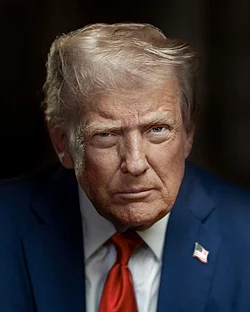
President Donald Trump announced the operation on social media, describing the strikes as a decisive response to ISIL fighters he said were responsible for brutal attacks on innocent Christians in northwest Nigeria. He warned that further violence would be met with even stronger action.
U.S. Secretary of War Pete Hegseth later echoed that position on social media, suggesting the operation marked the beginning of sustained U.S. involvement rather than a one-off strike.
What the Christmas Strike Reveals
Nigeria has long maintained that ISIS is not a major force within its borders. Yet the government approved U.S. airstrikes against ISIS targets in Sokoto State — a region far removed from Boko Haram’s traditional strongholds.
That contradiction speaks louder than any official statement.
According to Kay Ajude, the Christmas Day strike points to a deeper and more troubling reality: ISIS has gained a foothold in Nigeria’s northwest, taking advantage of official denial, porous borders, and large ungoverned spaces.
“Until Nigeria confronts this reality honestly,” Ajude told TruthNigeria, “foreign governments will keep stepping in where Nigerian narratives end, and civilians will continue to live between denial and danger. The issue is no longer whether ISIS operates in Nigeria. It’s why acknowledging it remains so difficult.”