

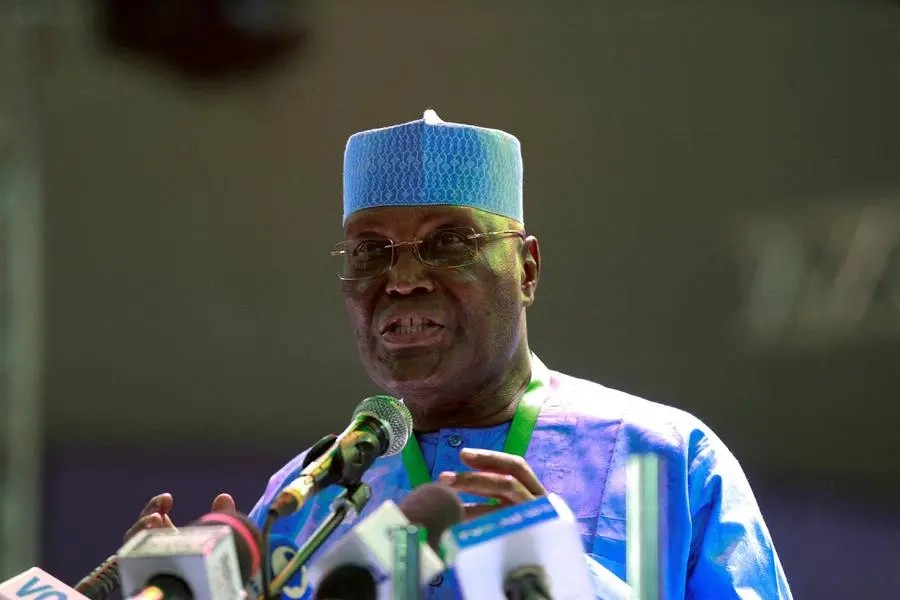
The atmosphere within Nigeria’s political landscape has shifted dramatically following a major declaration by the African Democratic Congress concerning the presidential ambitions of former Vice President Atiku Abubakar. What had long existed as speculation, quiet negotiations, and strategic whispers behind closed doors has now evolved into a public political statement carrying enormous national significance.
The confirmation that Atiku Abubakar has officially completed payment for the party’s presidential nomination forms has ignited conversations across political circles, media platforms, business communities, and among ordinary Nigerians searching for clarity about the nation’s future direction. The development is not merely another headline in the nation’s ever active political cycle. It represents a critical moment in the growing battle for power, influence, ideology, and national identity.
For months, opposition figures have been involved in intense consultations aimed at building a united platform capable of challenging the dominance of the ruling establishment. Political observers have watched carefully as alliances formed, fractured, and reformed in a complicated chess game driven by ambition, strategy, and survival. Amid this uncertainty, the African Democratic Congress has emerged as an increasingly influential platform attracting prominent political heavyweights determined to redefine the balance of power in the country.
At the center of this unfolding drama stands Atiku Abubakar, a veteran politician whose name has remained deeply woven into Nigeria’s democratic history for decades. His decision to proceed with the acquisition of the ADC presidential nomination forms sends a message that resonates far beyond party politics. Supporters see it as evidence of determination and political resilience. Critics view it as another chapter in a long presidential pursuit. Neutral analysts interpret it as a calculated move capable of reshaping opposition politics nationwide.
Get TikTok SEO Cheat here
The financial implication alone has become a major topic of discussion. The ₦90 million payment attached to the nomination process reflects the growing commercialization and seriousness of high level political contests within Nigeria. Yet beyond the monetary figure lies a more profound political implication. The payment symbolizes commitment, intent, and readiness for a potentially fierce electoral confrontation.
This latest development arrives at a time when millions of Nigerians continue to grapple with economic hardship, rising inflation, insecurity, unemployment, and declining purchasing power. Public frustration has intensified nationwide, creating fertile ground for opposition movements seeking to position themselves as credible alternatives. Within this atmosphere, every political move carries heightened weight and scrutiny.
The African Democratic Congress appears fully aware of the symbolic power surrounding this announcement. By publicly unveiling confirmation of Atiku’s payment, the party has strategically placed itself at the center of national political discourse. The message being projected is clear. The ADC no longer wishes to be seen as a fringe political organization operating on the margins of national politics. Instead, it seeks recognition as a serious contender capable of housing influential political actors and competing for the highest office in the land.
As Nigerians digest the implications of this announcement, several pressing questions now dominate public discourse. Can the ADC successfully unite the fragmented opposition? Will Atiku emerge as the party’s consensus candidate amid competing ambitions? Can the opposition truly overcome internal divisions long enough to challenge the ruling establishment effectively? Most importantly, are Nigerians willing to embrace another major political realignment in search of national transformation?
These questions now define the opening chapter of what is already shaping into one of the most intense political contests in modern Nigerian history.
ADC Publicly Confirms Atiku’s Payment
The confirmation from the African Democratic Congress came through official party communication channels, immediately triggering widespread reactions throughout the political ecosystem. Accompanying the announcement was evidence indicating that Atiku Abubakar had successfully completed payment for both the Expression of Interest form and the Presidential Nomination form required for participation in the party’s internal selection process.
Party officials described the moment as part of a broader national movement centered on democratic renewal, inclusive governance, and economic recovery. Within the language of the announcement was an attempt to frame the development not simply as an individual political ambition, but as a larger national mission designed to reposition the country.
For many political analysts, the optics of the announcement were equally important. The deliberate presentation of official receipts and formal documentation projected seriousness, structure, and organizational confidence. In Nigerian politics, symbolism matters enormously, and the ADC clearly intended to send a strong signal that it possesses both credibility and organizational ambition.
The financial commitment attached to the forms has also generated heated public debate.
Breakdown of the ADC Presidential Nomination Process
| Item | Details |
|---|---|
| Political Party | African Democratic Congress |
| Presidential Aspirant | H.E. Atiku Abubakar, GCON |
| Nomination Fee | ₦90 Million |
| Purpose of Payment | Expression of Interest and Presidential Nomination Forms |
| Expected Presentation Venue | ADC National Secretariat, Abuja |
| Political Objective | Securing ADC Presidential Ticket |
Supporters of the fee structure argue that such financial requirements help ensure that only serious candidates participate in the process. Critics, however, believe the growing monetization of Nigerian politics risks excluding competent leaders lacking enormous financial resources.
Nevertheless, within the context of Nigeria’s political environment, the payment instantly positioned Atiku as one of the most serious and prepared aspirants within the ADC structure.
Atiku’s Departure from the PDP and the Rise of a New Political Base
The road leading to Atiku’s emergence within the ADC did not happen overnight. It followed months of tension, disagreements, and internal fractures within the People’s Democratic Party.
For years, Atiku remained one of the most influential figures within the PDP framework. However, recurring disputes regarding internal democracy, leadership structure, strategic direction, and power balancing gradually widened cracks within the party. Political insiders repeatedly hinted that reconciliation efforts had become increasingly difficult.
Eventually, the former Vice President made the strategic decision to seek a new political home capable of accommodating both his presidential ambition and broader opposition coalition efforts.
That decision transformed the ADC almost immediately.
What was previously viewed by many Nigerians as a relatively smaller political platform suddenly became a gathering point for major opposition figures seeking relevance outside the dominant traditional structures. The party began attracting experienced politicians, former ministers, technocrats, and regional power brokers eager to participate in a fresh political movement.
Among the notable figures linked to the ADC project are former Minister of Transportation Rotimi Amaechi and respected economist Mohammed Hayatu-Deen. Their involvement has significantly increased the visibility and credibility of the party.
This growing concentration of influential personalities has transformed the ADC into one of the most closely watched opposition platforms in Nigeria.
The Struggle for Opposition Unity
Despite the excitement surrounding Atiku’s payment confirmation, deeper challenges remain unresolved within the opposition movement.
One of the most significant setbacks emerged following the breakdown of cooperation among Atiku Abubakar, Peter Obi, and Rabiu Kwankwaso. The inability of these influential figures to maintain a united front has raised concerns among supporters hoping for a consolidated opposition capable of maximizing electoral strength.
Political history in Nigeria repeatedly demonstrates that fragmented opposition structures often struggle against incumbency power. Consequently, many Nigerians viewed the possibility of a broad coalition as essential for any meaningful challenge to the ruling establishment.
The emergence of separate political calculations among major opposition actors has therefore complicated the path forward.
Still, Atiku’s latest move suggests he intends to push ahead regardless of alliance uncertainties.
Within his political camp, supporters insist that his nationwide political network, campaign experience, financial strength, and longstanding relationships across multiple regions place him in a uniquely competitive position.
Critics remain unconvinced.
Some argue that Nigerians increasingly desire generational political change and may resist returning to familiar political faces. Others question whether repeated coalition breakdowns indicate deeper trust deficits among opposition leaders themselves.
Yet regardless of differing opinions, one reality remains undeniable. Atiku’s formal entry into the ADC presidential process has fundamentally altered the political calculations of every major party.
The Ibadan Declaration and the Consensus Dilemma
One of the most ambitious political ideas surrounding the ADC movement has been the concept popularly referred to as the “Ibadan Declaration.”
The objective behind the initiative was straightforward yet enormously difficult. Opposition leaders hoped to build a consensus arrangement capable of producing a single strong presidential candidate rather than multiple competing contenders splitting votes across regions.
In theory, the strategy appeared politically logical.
In practice, however, managing the ambitions of powerful political figures has proven extremely complicated.
The ADC now faces a delicate balancing act. While attracting influential politicians strengthens the party’s national relevance, it simultaneously creates internal competition capable of generating tension and division.
Atiku Abubakar’s entry into the race significantly raises the stakes.
Rotimi Amaechi’s growing influence within southern political structures also adds another layer of complexity. Mohammed Hayatu Deen’s technocratic appeal further broadens the field.
The party leadership must therefore navigate the difficult challenge of conducting a credible and transparent internal process without triggering defections or internal fractures.
Political analysts warn that mishandling this process could weaken the very coalition momentum the ADC has worked hard to build.
Economic Hardship and the Opposition Narrative
Perhaps the most powerful fuel driving current opposition momentum is the widespread economic frustration experienced across Nigeria.
Rising living costs, unstable exchange rates, increasing transportation expenses, insecurity affecting agricultural production, and declining household purchasing power have intensified public dissatisfaction.
The ADC appears determined to position itself as the political platform most aligned with public frustration and national recovery aspirations.
Atiku’s expected campaign messaging is likely to focus heavily on economic revitalization, private sector growth, investment attraction, institutional reforms, and job creation. His supporters frequently emphasize his business background and previous economic policy experience as major strengths.
The ruling All Progressives Congress, however, continues to dismiss many opposition claims as politically motivated rhetoric lacking practical solutions.
This emerging battle over economic credibility may ultimately become one of the defining themes shaping national political discourse.
How the APC Is Likely to Respond
The ruling party is unlikely to underestimate the implications of Atiku’s movement into the ADC structure.
Although APC loyalists publicly portray the opposition coalition as a collection of recycled politicians seeking relevance, internal strategists understand the electoral significance of Atiku’s nationwide political machinery.
His influence across northern political networks, combined with growing dissatisfaction among sections of the population, creates potential challenges the ruling party cannot ignore.
Consequently, observers expect the APC to intensify grassroots mobilization, strengthen strategic alliances, and expand digital communication efforts aimed at countering opposition narratives.
The battle ahead will likely extend far beyond traditional rallies and television appearances. Social media engagement, digital propaganda, youth mobilization, regional negotiations, and issue based campaigns are expected to play increasingly central roles.
Growing Influence of Digital Political Campaigning
Modern Nigerian politics has entered a new communication era where digital influence carries enormous strategic value.
Political campaigns are no longer fought exclusively through physical rallies, newspaper headlines, or radio broadcasts. Online engagement now shapes public opinion at extraordinary speed.
Atiku’s media team has already demonstrated strong digital presence through coordinated messaging, campaign visuals, online supporter networks, and strategic branding efforts. The slogan emphasizing leadership, vision, and national renewal reflects an attempt to build emotional resonance with frustrated citizens.
The ADC itself appears increasingly aware that younger voters consume political information primarily through smartphones and digital platforms.
This means the coming political season may witness one of the most aggressive digital campaign battles in Nigerian history.
Major Political Figures Associated with the ADC Movement
| Political Figure | Political Significance |
|---|---|
| Atiku Abubakar | Former Vice President with nationwide political structure |
| Rotimi Amaechi | Former governor and influential southern political strategist |
| Mohammed Hayatu Deen | Technocrat with strong economic policy reputation |
| ADC Leadership | Seeking to reposition party as major national force |
Public Sentiment Across the Country
Public reaction to the announcement has been sharply divided.
Supporters of Atiku describe the development as evidence of resilience, consistency, and political experience. Many believe the former Vice President possesses the administrative exposure necessary to navigate Nigeria’s complex economic and security challenges.
Others remain skeptical.
Critics question whether the nation requires entirely new political leadership rather than another cycle involving long established political figures. Some also worry that internal opposition fragmentation could once again weaken attempts at broader political transformation.
Across markets, campuses, professional circles, and online platforms, debates continue to intensify.
Yet perhaps the most significant outcome of this latest development is that the ADC has successfully inserted itself into the center of national political conversation.
The Verdict
Atiku Abubakar’s ₦90 million presidential nomination payment represents far more than a routine political procedure. It is a declaration of intent carrying deep strategic implications for the future of opposition politics in Nigeria.
The announcement signals that the African Democratic Congress is no longer content with peripheral relevance. The party now seeks to establish itself as a genuine national political force capable of challenging established power structures.
Whether this ambition ultimately succeeds will depend on several critical factors. Opposition unity. Internal party management. Public trust. Economic messaging. Regional alliances. Youth engagement. Campaign discipline. Electoral credibility.
For now, however, one fact remains undeniable.
Nigeria’s political battlefield has entered a new and highly unpredictable phase, and the struggle for national leadership has only just begun.
Read More On: