


What the April 22 Deadline Means for E Commerce Brands
The digital advertising landscape is entering a critical transition phase, especially for businesses that rely heavily on automated workflows within Google Ads. A major change is underway that could significantly impact how e commerce brands manage product data, optimize campaigns, and maintain performance at scale.
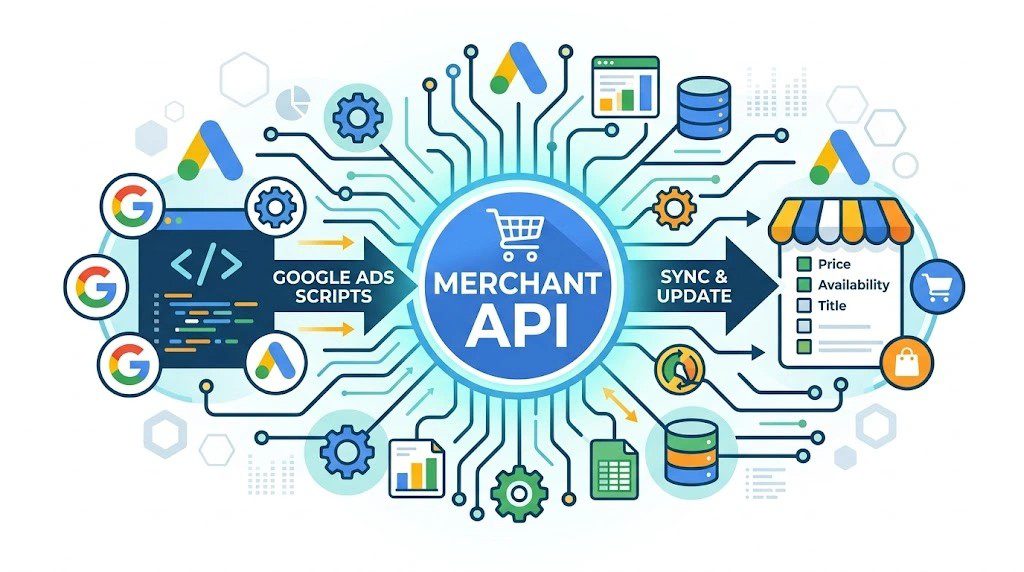
At the center of this shift is the introduction of the Merchant API into Google Ads scripts. This rollout begins on April 22, 2026 and marks the beginning of the end for the long standing Content API for Shopping.
For advertisers, agencies, and developers, this is not just a technical update. It is a structural transformation that requires immediate attention.
Understanding the Big Shift from Content API to Merchant API
For years, the Content API for Shopping has been the backbone of how businesses interact programmatically with product data inside Google’s ecosystem. It enabled automation across inventory updates, product listings, feed management, and reporting.
Get TikTok SEO Cheat here
However, Google has now confirmed that this legacy system will be retired on August 18, 2026 .
The replacement is the Merchant API, a more modern and flexible system designed to handle the growing complexity of e commerce operations.
What makes the Merchant API different
The Merchant API introduces a completely new architecture that improves how advertisers interact with product data:
- Modular system design that splits functions into specialized components
- Faster updates without disrupting entire workflows
- Better scalability for large product catalogs
- Improved data handling for multi channel and global commerce
- Built in support for new features such as AI tools and real time notifications
This is a major leap forward compared to the older monolithic structure of the Content API.
April 22 Rollout: Why This Date Matters
Starting April 22, 2026, Merchant API support will begin rolling out directly inside Google Ads scripts as an advanced API .
This is important because Google Ads scripts are widely used for:
- Monitoring product approvals and disapprovals
- Automating campaign adjustments
- Managing inventory updates
- Generating performance reports
- Connecting Merchant Center data to advertising strategies
Until now, these scripts relied heavily on the Content API. With the new rollout, users finally get a direct path to transition into the new system.
What this means in practical terms
- The Merchant API becomes accessible within the scripts editor
- The Content API will still function temporarily
- Businesses now have a transition window before the final shutdown
However, this transition period should not be mistaken for extra time to delay action.
Read More On: Beyond the Green Label: How BASF Uses TÜV Certification to Outpace the Competition

Key Features That Make Merchant API a Game Changer
The Merchant API is not just a replacement. It introduces powerful capabilities that were not previously available.
1. Modular Sub APIs for Better Control
Instead of one large system, the Merchant API is divided into smaller sub APIs. This allows:
- Easier maintenance
- Faster feature releases
- Reduced system disruptions
2. AI Powered Enhancements
One of the standout additions is integration with tools like Google Product Studio, which introduces generative AI capabilities for product content creation .
This opens up opportunities such as:
- Automated product descriptions
- Image enhancements
- Smarter content optimization
3. Reviews and Feedback Integration
The new API includes dedicated tools for managing product and store reviews, something that was limited in the older system.
4. Real Time Notifications
Instead of constantly checking for updates, the Merchant API introduces event driven notifications that alert users instantly when changes occur.
5. Advanced Data Source Management
Businesses can now manage multiple data streams more efficiently, including:
- Product feeds
- Local inventory
- Promotions
- Supplemental data
Why This Change Is Critical for Advertisers
This update is not optional. It is a mandatory evolution that affects how businesses operate within Google’s advertising ecosystem.
1. The Deadline Is Fixed
The Content API will officially stop working on August 18, 2026 .
Any business that fails to migrate before this date risks:
- Broken automation scripts
- Disrupted product listings
- Loss of campaign performance data
- Revenue loss from inactive Shopping campaigns
2. Scripts Are Central to Daily Operations
Many businesses depend on scripts more than they realize. These scripts often:
- Track product performance
- Identify errors in feeds
- Automate bidding strategies
- Manage large inventories
If these scripts stop working, operations can quickly become chaotic.
3. Increased Competition
Early adopters of the Merchant API will gain a competitive edge through:
- Faster data processing
- Improved campaign optimization
- Access to AI driven tools
- Better scalability
Read More On: AI Max Goes Global: The End of Traditional Keyword Targeting

How Businesses Should Prepare for the Transition
To stay ahead, companies need a structured migration strategy.
Step 1: Audit Existing Scripts
Identify all scripts that rely on the Content API. This includes:
- Feed monitoring scripts
- Reporting tools
- Inventory management automations
Step 2: Enable Merchant API Access
Test the Merchant API in a controlled environment before making full changes.
Step 3: Prioritize Critical Workflows
Focus on high impact areas first:
- Product approvals
- Inventory updates
- Revenue generating campaigns
Step 4: Update Data Structures
The Merchant API uses different naming systems and logic. Businesses must:
- Adjust field mappings
- Update identifiers
- Modify request formats
Step 5: Train Teams and Agencies
Ensure that:
- Developers understand the new API
- Marketing teams know how it affects campaigns
- Agencies align their strategies with the new system
A Shift Toward Scalable Commerce
This transition reflects a broader trend in digital marketing. Platforms are moving toward:
- Automation driven ecosystems
- AI powered optimization
- Real time data processing
- Scalable infrastructure for global commerce
The Merchant API is part of Google’s long term vision to support increasingly complex e commerce operations.
What Happens if You Wait?
If you ignore the August 18 deadline, the consequences for an e-commerce brand are severe:
- “Ghost” Inventory: Your store might show items as “In Stock” when they are sold out, leading to customer frustration and wasted ad spend.
- Price Discrepancy Disapprovals: If your site price and your ad price don’t match because the API failed to sync, Google will suspend your products.
- Performance Drop: Legacy scripts will fail to take advantage of the AI-driven “AI Mode Shopping” features, giving your competitors a massive edge in discovery.
Merchant API vs. Content API: The Comparison
| Feature | Content API (Legacy) | Merchant API (2026 Standard) |
|---|---|---|
| Structure | Monolithic (One big API) | Modular (Task-specific sub-APIs) |
| AI Integration | None | Native Product Studio (GenAI) support |
| Inventory | Separate Online/Local | Unified Omnichannel |
| Notifications | Manual Polling | Automatic Push Notifications |
| Sunset Date | August 18, 2026 | The Active Standard |
Review
The rollout of the Merchant API marks one of the most significant updates in recent years for advertisers using Google Ads scripts.
This is more than a technical upgrade. It is a complete shift in how product data is managed, optimized, and scaled across digital campaigns.
Businesses that act early will not only avoid disruption but also unlock new opportunities for growth, efficiency, and innovation.
Those who delay risk falling behind in an increasingly competitive digital marketplace.