


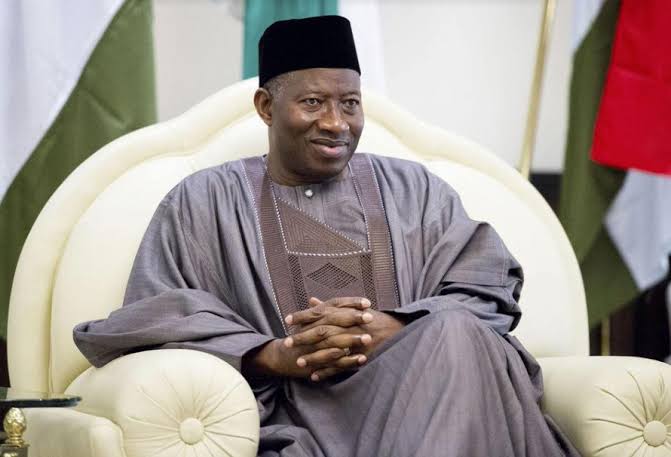
The Nigerian political atmosphere has once again shifted into a season of intense constitutional debate as former President Goodluck Jonathan finds himself at the center of a legal confrontation capable of reshaping the future of presidential eligibility in Nigeria.
Inside courtrooms, legal chambers, political gatherings, and policy think tanks, one question continues to dominate conversations:
Can Goodluck Jonathan legally seek the presidency again?
What initially appeared to be another routine political lawsuit has rapidly evolved into one of the most constitutionally sensitive disputes Nigeria has witnessed in recent times. The suit has not only revived old political divisions but has also reopened long standing arguments surrounding presidential tenure, constitutional interpretation, democratic fairness, and judicial precedent.
Get TikTok SEO Cheat here
For millions of Nigerians observing developments closely, this case is no longer just about one man’s political ambition. It has become a broader national conversation about how constitutional amendments should be interpreted and whether laws enacted after a political tenure can legally affect actions that occurred before those laws existed.
At the center of the storm lies a deeply contested constitutional question involving Section 137 of the Nigerian Constitution and the controversial interpretation of presidential term limits.
Supporters of Jonathan insist that the former president remains constitutionally qualified to contest because the amendment frequently cited against him came into effect long after he had already completed his administration. Opponents, however, maintain that allowing him to return would violate the spirit and moral intention of Nigeria’s two term presidential framework.
The implications are enormous.
A ruling in Jonathan’s favor could dramatically alter opposition calculations ahead of the next election cycle and potentially reposition him as a consensus candidate capable of uniting fractured political blocs. On the other hand, a judgment against him could establish a historic judicial precedent that permanently closes the door on any future presidential comeback attempt.
Across Nigeria’s political class, anxiety is rising.
Party strategists are quietly recalculating alliances. Regional power brokers are revisiting zoning equations. Civil society organizations are issuing competing statements. Constitutional lawyers are dissecting every line of the disputed amendment.
Meanwhile, the Federal High Court in Abuja has become the battleground where legal interpretation, political interests, and constitutional philosophy are colliding head on.
This developing case now stands as far more than an ordinary eligibility dispute.
It is rapidly becoming a defining test of constitutional democracy in Nigeria.
Inside the Legal Battle Shaking Nigeria’s Political Landscape
The current lawsuit challenging Jonathan’s eligibility emerged amid increasing speculation regarding his potential return to active presidential politics.
Although Jonathan himself has maintained relative silence concerning any formal ambition, mounting endorsements from political stakeholders and influential groups have continued to fuel national discussions about his possible candidacy.
That growing momentum appears to have triggered fresh legal resistance.
The plaintiffs behind the suit are seeking a judicial declaration that Jonathan is constitutionally barred from contesting for the office of President again based on provisions introduced through constitutional amendments.
Their argument centers on the belief that the Nigerian Constitution clearly intends to prevent any individual from occupying the presidency beyond the equivalent of two electoral mandates.
To understand the controversy, it is important to revisit the unusual circumstances that first brought Jonathan to power.
How Jonathan’s Presidency Created a Constitutional Puzzle
Jonathan’s political journey to the presidency remains one of the most extraordinary transitions in Nigeria’s democratic history.
Following the death of President Umaru Musa Yar’Adua, Jonathan, who was serving as Vice President at the time, constitutionally assumed leadership of the country.
He was sworn in to complete the unfinished tenure before later contesting and winning a full presidential mandate of his own.
That sequence of events now forms the foundation of the present legal controversy.
Critics insist that Jonathan has already taken the presidential oath on two separate occasions and should therefore be prevented from returning to office.
Supporters argue the opposite.
According to them, completing another leader’s unfinished tenure should not automatically be treated as a full constitutional term within the meaning of presidential limitations.
This disagreement has now evolved into a constitutional confrontation with enormous political implications.
The Constitutional Amendment Fueling the Dispute
The most contentious aspect of the lawsuit revolves around the constitutional alteration that introduced new restrictions regarding succession and presidential eligibility.
Opponents of Jonathan heavily rely on provisions stating that a person sworn in to complete another president’s tenure cannot subsequently be elected more than once.
To Jonathan’s critics, the interpretation appears straightforward.
They believe the constitutional language was specifically designed to prevent situations where an individual could remain president for periods extending beyond what Nigerians generally regard as the acceptable democratic limit.
Supporters of the suit argue that allowing Jonathan to contest again would undermine the philosophy behind tenure restrictions and weaken the constitutional safeguards intended to prevent prolonged occupancy of power.
Many legal analysts opposing Jonathan’s eligibility also insist that constitutional interpretation should prioritize democratic intention rather than narrow technicalities.
According to this perspective, the spirit of the law matters just as much as the literal wording.
Jonathan’s Legal Team Fires Back
Jonathan’s legal camp has responded aggressively, constructing its defense around one of the most recognized principles in constitutional law.
The principle of non retroactivity.
His lawyers maintain that laws cannot be applied backward in time to alter legal realities that existed before those laws were enacted.
According to the defense, Jonathan completed his presidency before the constitutional amendment in question came into existence.
Therefore, they argue, applying the amendment to his previous tenure would amount to retroactive punishment and a violation of established constitutional protections.
Senior legal practitioners close to the case insist that constitutional amendments should only operate prospectively unless expressly stated otherwise.
They further argue that Jonathan’s eligibility must be evaluated using the constitutional framework that existed during his administration rather than later amendments introduced afterward.
This argument has quickly become the central pillar of the defense strategy.
The Yenagoa Judgment Returns to the Spotlight
One of the strongest weapons in Jonathan’s defense is an earlier Federal High Court ruling delivered in Yenagoa.
That judgment reportedly concluded that the constitutional amendment restricting succession based presidential eligibility could not legally apply to Jonathan because his tenure had already ended before the amendment became law.
Legal experts supporting Jonathan describe that decision as highly significant.
According to them, the judgment established a judicial precedent that should ordinarily guide similar future disputes unless overturned by a higher court.
Jonathan’s lawyers are therefore insisting that reopening the matter amounts to unnecessary relitigation.
The defense argues that the issue has already been judicially settled and should not be repeatedly revived through fresh lawsuits in different jurisdictions.
Why the Abuja Court Case Could Become Historic
Although the Yenagoa judgment remains important, legal observers note that the Abuja proceedings could still become historic for several reasons.
First, the Federal High Court in Abuja carries enormous national political significance because of its central role in handling constitutional disputes involving federal authority and presidential matters.
Second, differing judicial interpretations between courts could eventually force appellate courts to intervene for final clarification.
Third, the case touches on unresolved constitutional questions capable of reaching the Supreme Court for definitive interpretation.
Should the dispute advance through higher judicial levels, Nigeria could witness one of the most consequential constitutional rulings in modern political history.
Claims of Political Motivation Intensify
Outside the courtroom, the legal battle has generated widespread political speculation.
Supporters of Jonathan increasingly believe the suit is politically motivated.
Many within his camp argue that the recurring legal attacks are designed to discourage him from entering the race or weaken his political acceptability before any official declaration.
Some civil society groups sympathetic to Jonathan have accused unnamed political interests of attempting to use the judiciary as a strategic weapon against potential rivals.
Opposition figures backing Jonathan also insist that the lawsuit reflects growing fears surrounding his possible electoral influence.
However, critics reject these claims entirely.
According to them, the case is fundamentally about constitutional integrity and protecting the sanctity of presidential term limits.
They argue that no democracy can survive if constitutional safeguards become selectively interpreted based on political convenience.
How the Case Could Reshape National Politics
The outcome of this legal battle may significantly transform Nigeria’s political calculations.
If Jonathan is declared eligible, several political consequences could immediately follow.
Many opposition blocs searching for a consensus figure may rally around him due to his national recognition, diplomatic image, and perceived moderate political identity.
His emergence could also disrupt existing party alignments and force major political actors to renegotiate coalition structures.
Regional calculations would equally become more complicated.
Questions surrounding power rotation between northern and southern political interests could return to the forefront of national discourse.
Political strategists are already privately debating whether Jonathan’s candidacy would stabilize or further complicate zoning expectations.
Comparative Breakdown of the Legal Arguments
| Arguments Supporting Disqualification | Arguments Supporting Eligibility |
|---|---|
| Jonathan has already been sworn in twice as President | The constitutional amendment cannot operate retroactively |
| Allowing another term could violate the spirit of tenure limitation | His presidency ended before the amendment existed |
| Constitutional morality requires limiting prolonged access to power | Existing judicial precedent reportedly supports his eligibility |
| Returning could create dangerous political precedent | His rights under earlier constitutional provisions remain protected |
| The amendment was designed specifically for succession scenarios | Laws should not punish actions completed before enactment |
What Legal Experts Are Watching Closely
Constitutional scholars monitoring the case are focusing on several key issues.
Interpretation of Constitutional Intent
One major issue involves whether judges will prioritize literal constitutional wording or broader democratic philosophy.
This distinction may ultimately determine the outcome.
Authority of Previous Judgments
Another major question concerns the legal weight of the earlier Yenagoa ruling.
If the Abuja court treats the earlier judgment as binding or highly persuasive, the current suit could face serious obstacles.
Scope of Constitutional Amendments
Legal analysts are also watching how the judiciary interprets the reach of constitutional amendments and whether future constitutional changes can alter previously completed political tenures.
The Judiciary Faces Intense National Attention
As proceedings continue, enormous public pressure now surrounds the judiciary.
The courts are being asked to balance constitutional interpretation, democratic fairness, judicial precedent, and political stability simultaneously.
Whatever judgment eventually emerges will likely shape future constitutional disputes far beyond Jonathan alone.
The case has already evolved into a national test of judicial independence and constitutional clarity.
For many Nigerians, the ruling will either reinforce confidence in democratic institutions or deepen concerns regarding political manipulation through legal channels.
What Happens Next
The Federal High Court in Abuja is expected to consider preliminary objections raised by Jonathan’s legal team before moving deeper into substantive constitutional interpretation.
If the objections succeed, the suit could be dismissed at an early stage.
If the court decides otherwise, Nigeria may witness an extended constitutional battle capable of reaching appellate courts and potentially the Supreme Court.
Either outcome will carry profound consequences.
Conclusion
The legal struggle surrounding Goodluck Jonathan is no longer merely about one politician’s future ambitions.
It has transformed into a defining constitutional debate about presidential tenure, judicial precedent, democratic intention, and the limits of retroactive legislation in Nigeria.
At stake is not only Jonathan’s political future but also the broader interpretation of constitutional democracy itself.
As lawyers prepare for courtroom confrontation and political stakeholders quietly reposition themselves, the nation watches closely.
The final judicial decision may ultimately redefine how Nigeria interprets presidential succession and constitutional eligibility for generations to come.
Read More On: