

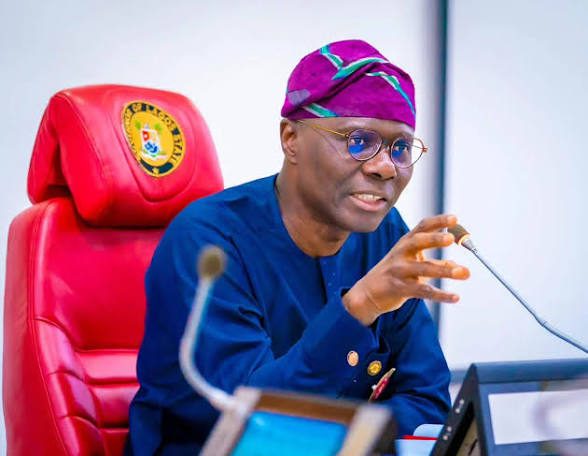
The economic landscape of Lagos has once again taken center stage following a major revelation by Governor Babajide Sanwo-Olu. In a high-level policy dialogue attended by government officials, private sector leaders, and development stakeholders, the governor disclosed that young people in the state contribute an estimated ₦4.5 trillion annually to its Gross Domestic Product.
This announcement has sparked renewed conversations about youth-driven growth, economic sustainability, and the role of human capital in shaping the future of Nigeria’s commercial capital.
A Defining Moment for Youth Economic Power
The revelation underscores a powerful shift in Nigeria’s economic narrative. Youths are no longer seen merely as future leaders but as active drivers of present-day economic performance.
According to Governor Sanwo-Olu, this ₦4.5 trillion contribution is not based on projections or assumptions. It reflects real measurable economic activity generated by young people across multiple sectors.
Get TikTok SEO Cheat here
This includes:
- Technology startups and digital innovation hubs
- Creative industries such as music, film, and fashion
- Small and medium scale enterprises across trade and services
- Informal sector activities that dominate urban commerce
The governor emphasized that these contributions are proof that strategic investment in youth development yields tangible economic returns.
70 Percent of New Businesses Led by Youths
One of the most striking insights from the announcement is the dominance of young entrepreneurs in Lagos’ business ecosystem.
Key highlights include:
- About 70 percent of new businesses in Lagos are founded by young people
- Youth-led ventures are driving innovation across sectors
- Startups are increasingly attracting both local and international investments
This statistic positions Lagos as one of Africa’s most vibrant startup ecosystems, reinforcing its reputation as a leading hub for entrepreneurship.
Lagos as Nigeria’s Economic Powerhouse
The role of youth becomes even more significant when viewed within the broader context of Lagos’ economic dominance.
Lagos remains:
- The largest economic center in Nigeria
- A contributor of roughly 30 to 35 percent of the country’s GDP
- A major hub for finance, technology, and trade in Africa
With a population estimated in the tens of millions, the city provides a fertile ground for innovation, commerce, and workforce expansion.
Youth participation has become a critical pillar supporting this economic strength.
Human Capital as Strategic Infrastructure
At the core of Governor Sanwo-Olu’s message is a strong emphasis on human capital development. He described youth leadership and empowerment as “strategic infrastructure” necessary for national transformation.
This perspective shifts the traditional focus from physical infrastructure such as roads and bridges to human development systems that sustain long-term growth.
Key initiatives highlighted include:
- Leadership training through structured programs
- Public sector exposure for young professionals
- Cross-sector mentorship opportunities
- Policy engagement and real-world problem solving
These efforts are largely driven through institutions like the Lateef Jakande Leadership Academy, which serves as a pipeline for grooming future leaders.
Read More On: Expert Labels World Bank Fuel Import Strategy a Violation of PIA.
Policy Dialogue and National Implications
The announcement was made during a strategic dialogue organized in collaboration with federal authorities. The event brought together:
- Members of the Federal Executive Council
- State government representatives
- Private sector stakeholders
- Leadership development experts
The central theme focused on scaling youth leadership as a tool for national transformation.
Stakeholders agreed that replicating Lagos’ youth development model across other states could significantly boost Nigeria’s overall economic performance.
The Link Between Youth Investment and Economic Growth
The ₦4.5 trillion contribution figure reinforces a broader economic principle: investing in people yields measurable growth.
Youth-driven economic activity contributes to:
- Job creation and employment expansion
- Increased tax revenues through business growth
- Innovation across industries
- Strengthening of the informal economy
In Lagos, where a significant portion of the workforce operates within informal and semi formal structures, youth participation is especially critical.
Challenges Facing Youth Contributions
Despite the impressive figures, several challenges remain that could limit the full potential of youth contributions:
- Limited access to funding for startups
- Infrastructure gaps affecting business operations
- Regulatory bottlenecks for new enterprises
- High cost of doing business in urban centers
Addressing these challenges will be essential to sustaining and expanding the current level of economic impact.
Opportunities for Expansion and Future Growth
Looking ahead, Lagos has significant opportunities to deepen youth participation in its economy.
Areas with high growth potential include:
- Digital economy and artificial intelligence
- Fintech and financial inclusion services
- Renewable energy and green innovation
- Creative industries targeting global markets
- E-commerce and logistics expansion
With the right policies and investments, youth contributions could surpass current levels in the coming years.
Read More On: Crude Oil Surges as Global Markets React to Rising Tensions in the Strait of Hormuz
Government Call for National Replication
Governor Sanwo-Olu urged other states and federal institutions to adopt structured frameworks for youth development.
Key recommendations include:
- Establishing national youth leadership programs
- Aligning educational systems with industry needs
- Creating funding channels for youth-led businesses
- Encouraging public and private sector collaboration
The goal is to build a nationwide ecosystem where young people are empowered to contribute meaningfully to economic growth.
Economic Significance Beyond Lagos
The implications of this development extend beyond Lagos.
If similar contributions are replicated across other states:
- Nigeria’s GDP could experience significant expansion
- Youth unemployment could decline sharply
- Innovation and entrepreneurship would increase nationwide
- Economic diversification efforts would gain momentum
This positions youth development as a central strategy for national economic transformation.
Youths as the Engine of Economic Transformation
The ₦4.5 trillion annual contribution by Lagos youths represents more than just a statistic. It is a clear indication that the future of Nigeria’s economy is already being shaped by its young population.
By recognizing youth as active contributors rather than passive beneficiaries, Lagos has created a model that combines innovation, entrepreneurship, and policy support.
As Nigeria continues to navigate economic challenges, the Lagos example offers a compelling roadmap for sustainable growth driven by human capital.
Read More On: SUNU Assurances Launches N2.08bn Rights Issue Following SEC Nod