



The internet is entering a new phase of transformation.
For years, search engines operated on a simple principle. Users typed in a query, algorithms scanned billions of web pages, and a list of links appeared. The responsibility then shifted to the user to separate credible information from misleading content. That system shaped the digital economy, built billion dollar advertising empires, and created the modern SEO industry.
Now, that foundation is rapidly evolving.
Artificial intelligence has introduced a completely different way for users to interact with information online. Instead of clicking through multiple tabs and websites, people increasingly expect immediate answers, summarized insights, and conversational experiences. However, this shift has also introduced a serious problem across the digital ecosystem. Users are becoming overwhelmed by inaccurate AI generated responses, manipulated summaries, fake expertise, and recycled content commonly referred to as AI slop.
Get TikTok SEO Cheat here
Trust in search is under pressure.
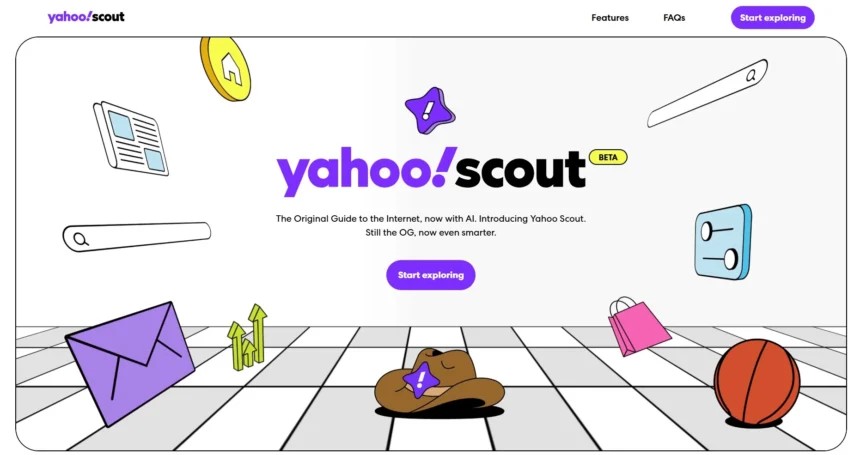
This is the environment in which Yahoo has made one of its boldest strategic moves in years with the launch of Yahoo Scout, an advanced AI answer engine built to reshape digital discovery through transparency, publisher attribution, and intelligent personalization.
Rather than competing as another chatbot attempting to dominate conversations, Yahoo is positioning Scout as a trusted intelligence layer for the open web. The company is betting that the future of search will not simply belong to the fastest AI model, but to the platform that users believe delivers reliable, source backed information without disconnecting them from original publishers.
For digital marketers, publishers, SEO specialists, advertisers, and technology analysts, this development signals something much larger than a product launch. It represents a deeper shift in how visibility, authority, and audience engagement may function in the next era of the internet.
Yahoo’s strategy combines powerful AI reasoning systems, real time search indexing, proprietary consumer data, and interactive citation models to create an experience designed around credibility and user confidence.
At the center of this initiative lies a fundamental question shaping the future of digital marketing:
Can AI powered search evolve without destroying the web ecosystem that feeds it?
Yahoo believes the answer is yes.
And Scout is its attempt to prove it.
Yahoo Scout AI Search Explained
Yahoo Scout is not merely another AI assistant layered onto a search engine. It is designed as a complete answer engine capable of synthesizing information from multiple trusted sources while openly revealing where those insights originate.
Instead of forcing users to browse endless pages of blue links, Scout generates contextual answers directly within the search experience while maintaining visible pathways back to publishers and creators.
This distinction is critical.
Many AI search products currently prioritize keeping users inside a closed environment. In those systems, original publishers often lose traffic because users consume summaries without visiting source websites. Yahoo is attempting to reverse that trend by building a citation first framework.
The company describes Scout as an intelligence platform rather than a chatbot.
That positioning reflects Yahoo’s broader ambition to become a trusted gateway to digital information again.
Why Yahoo’s Return to Search Matters
Yahoo remains one of the internet’s most recognizable legacy brands.
Even after losing dominance in the search wars, Yahoo still possesses enormous digital assets including Yahoo Finance, Yahoo Mail, Yahoo Sports, Yahoo News, and decades of behavioral and editorial data.
Most technology companies entering AI search are building from scratch.
Yahoo is not.
The company already owns deeply entrenched ecosystems with millions of active users who interact daily with financial news, sports updates, emails, entertainment content, and market analysis.
This gives Scout a major strategic advantage.
Instead of operating as a standalone AI interface disconnected from user behavior, Scout integrates directly into Yahoo’s broader ecosystem, allowing the platform to deliver highly contextual experiences.
This changes the dynamics of personalization entirely.
The Technology Infrastructure Behind Yahoo Scout
Yahoo’s approach to AI search depends heavily on strategic partnerships and hybrid intelligence architecture.
Rather than building every layer internally, the company assembled an ecosystem combining advanced reasoning, live web indexing, and proprietary data assets.
Core Technology Stack Overview
| Component | Function Inside Scout AI | Strategic Importance |
|---|---|---|
| Anthropic Claude | AI reasoning and language synthesis | Reduces hallucinations and improves clarity |
| Microsoft Bing API | Real time web indexing and search grounding | Ensures updated information retrieval |
| Yahoo Proprietary Data | Financial, sports, news, and behavioral insights | Creates unique personalization advantages |
| Interactive Citation Layer | Transparent source verification system | Builds user trust and publisher visibility |
| MyScout Personalization Engine | Behavioral recommendation framework | Enables predictive content experiences |
Anthropic Claude Integration and Why It Matters
Yahoo selected Claude as the foundational reasoning model powering Scout’s intelligence layer.
This decision is strategically significant.
Claude has developed a reputation for structured reasoning, nuanced responses, and safer conversational outputs compared to many competing large language models. Its constitutional AI framework emphasizes ethical alignment and reduced misinformation generation.
For Yahoo, this partnership solves a major challenge facing AI search today.
Users no longer simply want fast answers.
They want reliable answers.
The integration allows Scout to synthesize complex information while maintaining clarity, contextual depth, and logical coherence.
This becomes especially important in high trust categories such as:
- Financial analysis
- Market trends
- Business news
- Investment insights
- Sports analytics
- Current events
In these verticals, hallucinated information can seriously damage user confidence.
Yahoo is clearly positioning Scout as an AI engine where trust becomes a competitive advantage.
Microsoft Bing Provides Real Time Search Grounding
AI models alone are insufficient for accurate search experiences because static training data quickly becomes outdated.
To solve this, Yahoo uses Microsoft Bing’s search API as a grounding layer for live internet information.
This means Scout continuously references updated web content while generating answers.
The result is a system capable of responding to breaking developments, trending stories, and evolving search queries with greater accuracy.
This partnership also allows Yahoo to avoid rebuilding an expensive global web indexing infrastructure from scratch.
Instead, Yahoo focuses on user experience, personalization, and intelligence design while leveraging Bing’s established search capabilities.
Yahoo’s Hidden Weapon Is Its Proprietary Data Ecosystem
Perhaps the most underestimated advantage behind Scout is Yahoo’s decades of first party data.
Very few internet companies possess such deeply integrated vertical ecosystems.
Yahoo Finance alone contains enormous historical market data, analyst reports, editorial archives, and investment behavior patterns.
Yahoo Sports contributes live scores, team analytics, fan engagement signals, and historical sports content.
Yahoo News adds editorial credibility and large scale publishing infrastructure.
Yahoo Mail introduces behavioral context through receipts, travel bookings, subscriptions, and communication patterns.
When combined, these systems create an AI personalization engine far more context aware than generic standalone chatbots.
This transforms Scout into a highly adaptive intelligence layer rather than a simple question answering system.
The Source First Philosophy Changing AI Search
One of Yahoo Scout’s most important innovations is its emphasis on transparent sourcing.
This is where the platform sharply differentiates itself from many competing AI products.
Instead of hiding references behind summarized responses, Scout highlights original sources through interactive overlays, visible citations, and expandable verification tools.
How Scout’s Citation Model Works
| Traditional AI Search | Yahoo Scout Approach |
|---|---|
| AI summarizes content without visible attribution | AI prominently cites original publishers |
| Users remain inside AI interface | Users are encouraged to explore source websites |
| Publishers lose referral traffic | Publishers receive visibility through citations |
| Information often lacks transparency | Claims are traceable and verifiable |
| User trust depends entirely on AI output | User trust reinforced through source validation |
This design philosophy has major implications for publishers and SEO professionals.
Yahoo appears to recognize that sustainable AI search requires cooperation with content creators rather than extraction from them.
That approach may become increasingly attractive to publishers frustrated with declining organic traffic from other AI systems.
The Analyze Feature Creates Deeper Engagement
In verticals such as finance, Scout introduces an advanced feature known as Analyze.
Rather than stopping at surface level summaries, Analyze allows users to explore deeper interpretations tied directly to expert reporting and data analysis.
For example, users researching stock volatility may receive:
- Market performance summaries
- Analyst commentary
- Historical comparisons
- Earnings breakdowns
- Sector movement explanations
- Risk insights linked to original financial journalism
This transforms search from passive information retrieval into active analytical exploration.
For digital marketers, this represents a growing shift toward engagement depth metrics rather than simple click volume.
MyScout Reinvents the Personalized Homepage
Yahoo is also reviving one of its historic strengths.
The personalized homepage.
However, MyScout is far more sophisticated than traditional portal customization.
Instead of static widgets and manually selected interests, MyScout uses AI driven behavioral understanding to proactively surface relevant content.
What MyScout Can Potentially Integrate
| Data Source | Personalized Experience |
|---|---|
| Yahoo Mail | Flight reminders, receipts, reservations |
| Yahoo Finance | Portfolio tracking and market alerts |
| Yahoo Sports | Favorite team updates and live scores |
| Search Activity | Suggested comparisons and recommendations |
| Shopping Interests | Product monitoring and price tracking |
This creates a predictive digital dashboard rather than a passive homepage.
Users are no longer simply consuming content.
The platform begins anticipating intent.
The Rise of Agentic Search Experiences
Scout’s broader strategy aligns with the growing movement toward agentic AI systems.
Agentic systems do not merely respond to commands.
They anticipate needs, organize information proactively, and assist with decision making workflows.
For example, a user researching travel destinations may later receive:
- Hotel price comparisons
- Suggested itineraries
- Airline deal notifications
- Destination guides
- Weather insights
- Budget recommendations
This evolution changes how marketers think about customer journeys.
The future of search may become less transactional and more continuously assistive.
Digital Marketing Implications of Yahoo Scout AI Search
For digital marketers, Scout represents a major strategic shift.
SEO is evolving beyond keyword rankings toward answer engine visibility.
The platforms winning in AI search environments will likely prioritize:
- Structured data clarity
- Topical authority
- Citation worthy content
- Contextual relevance
- Trust signals
- Expert backed publishing
This means content optimization strategies must evolve significantly.
The Shift From Search Engine Optimization to Answer Visibility
Traditional SEO focused heavily on ranking positions.
AI answer engines introduce a different objective.
Content must now be easily interpretable, extractable, and synthesizable by AI systems.
New Optimization Priorities
| Traditional SEO | AI Answer Engine Optimization |
|---|---|
| Keyword density | Semantic clarity |
| Backlink quantity | Source authority |
| Meta tag optimization | Structured information architecture |
| Click through rates | Citation likelihood |
| SERP rankings | AI synthesis visibility |
| Broad traffic acquisition | Intent precision |
This fundamentally changes content creation strategy.
Publishers must now write not only for humans and search crawlers, but also for AI reasoning systems.
Sponsored Actions Could Redefine Advertising
Yahoo is also experimenting with AI integrated advertising models called Sponsored Actions.
Instead of displaying disconnected banner advertisements, Scout can integrate relevant commercial recommendations naturally into the user journey.
For example:
A user researching international travel might receive an AI generated itinerary accompanied by a sponsored booking recommendation from an airline or hotel platform.
This form of advertising feels less interruptive and more contextual.
For marketers, this opens entirely new possibilities around intent based targeting.
Why Publishers Are Watching Yahoo Closely
Many publishers are currently concerned about the future sustainability of digital journalism in AI driven ecosystems.
Closed AI systems often reduce direct traffic by summarizing articles without encouraging clicks back to original websites.
Yahoo’s citation heavy strategy may offer a more balanced alternative.
If Scout successfully drives meaningful referral traffic through transparent attribution, publishers may become more willing to participate in AI discovery ecosystems.
This could influence broader industry standards over time.
Can Yahoo Realistically Compete in AI Search?
Yahoo faces enormous competition from major technology giants.
However, Scout does not necessarily need to dominate global search volume immediately to succeed strategically.
The company appears focused on differentiation rather than direct replication.
Yahoo is targeting a specific market gap:
Users who want AI convenience without sacrificing transparency and trust.
That positioning may resonate strongly in an environment increasingly filled with misinformation fatigue and low quality AI generated content.
The Bigger Industry Shift Happening Behind Scout
The launch of Scout reflects a broader transformation occurring across the internet economy.
Search is no longer just about indexing pages.
It is becoming about:
- Contextual understanding
- Predictive assistance
- Personalized intelligence
- Source transparency
- Intent interpretation
- Conversational discovery
Yahoo’s strategy suggests the next battle in digital search will revolve around credibility rather than pure algorithmic dominance.
That is a very different competitive landscape from the one that defined the previous internet era.
Final Analysis
Yahoo Scout is more than an AI product launch.
It is a strategic attempt to redefine how trust functions in the age of generative search.
By combining advanced AI reasoning, live search grounding, transparent citations, and deeply integrated personalization, Yahoo is positioning itself as a more open and publisher conscious alternative in the rapidly evolving AI search market.
For digital marketers, this development reinforces an important reality.
The future of visibility online will increasingly depend on authority, clarity, contextual value, and machine readable expertise.
For publishers, Scout represents a potentially important experiment in balancing AI innovation with sustainable web traffic generation.
For users, it offers the possibility of a search experience that feels less chaotic, more intelligent, and significantly more trustworthy.
And for the broader technology industry, Yahoo’s move signals that the race for the future of search is far from over.
Read More On: