

LOCAL SEO CHECKLIST (GOOGLE MAPS & LOCAL RANKING STRATEGY)
Local SEO is the process of optimizing your online presence so your business appears in location-based search results, especially on Google Maps and “near me” searches.
It helps businesses attract customers within a specific geographic area by improving visibility in local search results.
For example, when someone searches:
- “electronics store near me”
- “best web design agency in Lagos”
- “real estate company near me”
Google shows local results based on relevance, proximity, and prominence. to get started Google My Business
There’s a lot more involved in local SEO, but claiming your listing in Google My Business and in Bing Places gets you started.
Why Local SEO is Important
Local SEO directly influences:
- Foot traffic to physical stores
- Local leads and inquiries
- Brand visibility in a specific area
- Map pack rankings (top 3 local results on Google)
For service-based and physical businesses, local SEO is often more powerful than traditional SEO.
40. Google Business Profile Optimization (Most Important Local SEO Factor)
Your Google Business Profile (formerly Google My Business) is the foundation of local SEO.
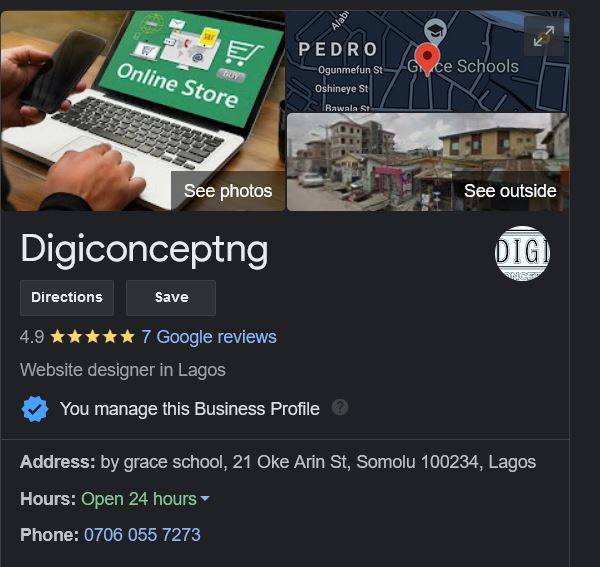
It determines how your business appears in:
- Google Maps
- Local search results
- Knowledge panels
Key optimization steps:
- Use your correct business name consistently
- Add accurate address and phone number
- Choose the correct business category
- Upload high-quality images regularly
- Write a clear business description
- Keep operating hours updated
A fully optimized profile increases your chances of appearing in the local 3-pack results.
41. Local Keyword Optimization Strategy
Local keywords help search engines understand your geographic relevance.
Examples:
- “SEO agency in Lagos”
- “electronics store in Nigeria”
- “web design company near Ikeja”
Best practices:
- Include location naturally in titles and content
- Create location-based landing pages
- Optimize service pages for cities or regions
- Avoid keyword stuffing
Local keyword targeting helps you rank for high-intent local searches.
42. NAP Consistency (Name, Address, Phone Number)
NAP consistency means your business details must be identical across all platforms.
This includes:
- Website
- Google Business Profile
- Online directories
- Social media pages
Why it matters:
Inconsistent NAP data confuses search engines and reduces trust in your business.
Best practice:
- Use the exact same formatting everywhere
- Avoid variations in spelling or phone numbers
- Regularly audit listings for accuracy
Consistency strengthens local ranking signals.
43. Local Citations (Business Directory Listings)
Local citations are mentions of your business on other websites, even without backlinks.
Examples:
- Online business directories
- Local listing websites
- Industry-specific platforms
Key citation elements:
- Business name
- Address
- Phone number
- Website URL
Why citations matter:
They help search engines verify that your business is legitimate and active in a specific location.
The more consistent citations you have, the stronger your local SEO authority.
There is a list from Bruceclay on local search ranking factors to help explain this further.
44. Local Schema Markup (Structured Local Data)
Local schema markup helps search engines understand your business details more clearly.
It improves how your business appears in search results.
Common local schema includes:
- Business name
- Address
- Phone number
- Opening hours
- Location coordinates
Benefits:
- Better visibility in local search
- Enhanced rich results
- Improved map relevance
Structured data strengthens your local SEO foundation.
45. Reviews and Reputation Management
Customer reviews are a strong ranking factor in local SEO.
Google uses reviews to determine:
- Trustworthiness
- Popularity
- Customer satisfaction
Best practices:
- Encourage satisfied customers to leave reviews
- Respond to all reviews professionally
- Maintain a steady flow of new reviews
- Avoid fake or spam reviews
Positive reviews increase both rankings and customer trust.
46. Local Link Building Strategy
Local backlinks come from websites within your geographic area or industry.
Examples:
- Local blogs
- News websites
- Business partnerships
- Community organizations
Why it matters:
Local backlinks signal to Google that your business is relevant and trusted within a specific location.
High-quality local links improve both authority and visibility.
47. Google Maps Ranking Factors
Ranking in Google Maps depends on three main factors:
- Relevance (how well your profile matches the search)
- Distance (how close you are to the searcher)
- Prominence (how well-known your business is online)
To improve ranking:
- Optimize your Google Business Profile
- Collect consistent reviews
- Build local citations
- Use local keywords effectively
48. Local Landing Pages (City-Based SEO Pages)
If your business serves multiple locations, create dedicated landing pages for each area.
Example:
- /seo-agency-lagos
- /web-design-ikeja
- /real-estate-lekki
Best practices:
- Unique content for each location
- Include local keywords naturally
- Add testimonials from local customers
- Embed Google Maps if possible
This improves your visibility across multiple regions.
49. Local Engagement Signals
Google also considers engagement signals from your local audience.
These include:
- Clicks on your listing
- Calls from Google Business Profile
- Direction requests on Maps
- Website visits from local searches
Higher engagement improves your local ranking potential.